
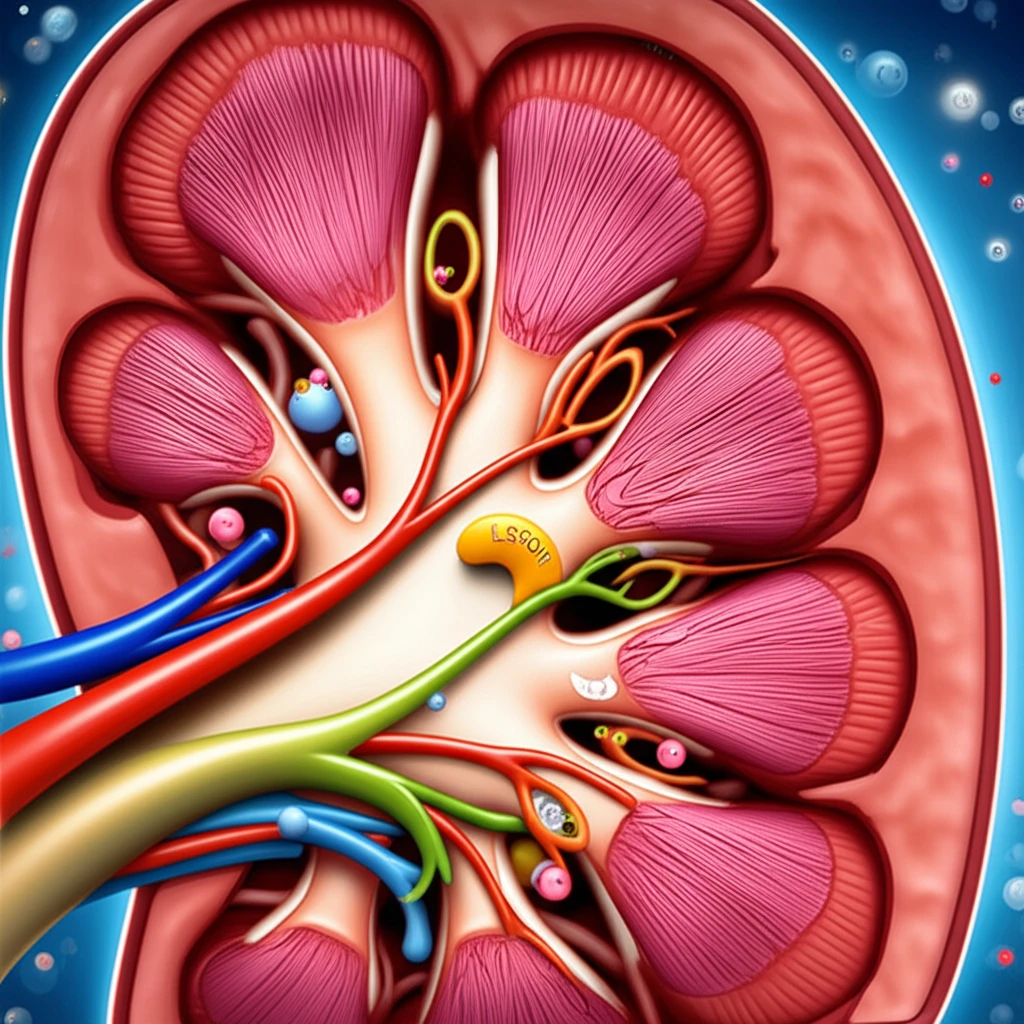
Kidney Stones and Your Genes: Unpacking the TRPV5 Mystery

"Unraveling the connection between a specific gene variant, TRPV5, and the increased risk of kidney stones."
Kidney stones, often described as one of the most excruciating medical conditions, affect millions worldwide. These hard deposits, formed from minerals and salts inside the kidneys, can cause severe pain and discomfort. While lifestyle factors like diet and hydration play a significant role, genetics also significantly contribute to the risk of developing kidney stones. Recent research has focused on a particular gene, TRPV5, and its link to these painful formations.
TRPV5, a calcium-selective channel, is vital for kidney function, specifically in the reabsorption of calcium ions. This channel acts as a gatekeeper, controlling how much calcium is retained by the body. Any disruption in TRPV5's function can significantly affect the delicate balance of calcium regulation. Now, scientists have discovered a rare variant of TRPV5, known as L530R, which has been linked to a higher risk of developing kidney stones.
This article explores the fascinating connection between the L530R variation and its impact on kidney health. We'll delve into the scientific research, explain the mechanics of TRPV5, and discuss how this genetic variation can alter kidney function, potentially increasing the risk of kidney stone formation. By understanding these genetic underpinnings, we can move closer to better prevention and treatment strategies for kidney stones.
Decoding TRPV5: The Kidney's Calcium Gatekeeper
TRPV5, or transient receptor potential vanilloid 5, is a channel protein mainly found in the distal convoluted tubule (DCT) and connecting tubule (CNT) of the kidneys. These parts of the kidney are responsible for filtering and reabsorbing essential substances from the urine, including calcium. The primary function of TRPV5 is to facilitate the reabsorption of calcium ions, preventing their loss through urine. This process is crucial for maintaining calcium balance in the body, which is vital for bone health, muscle function, and nerve transmission.
- Location: Primarily found in the DCT and CNT of the kidneys.
- Function: Reabsorbs calcium ions to maintain calcium balance.
- Importance: Essential for bone health, muscle function, and nerve transmission.
- Impact of Dysfunction: Can lead to calcium imbalances and increased risk of kidney stones.
Moving Forward: Implications and Future Directions
The discovery of the link between the L530R variation and kidney stones is a significant step toward understanding the genetic factors contributing to this common condition. Further research is needed to explore this connection, identify other genetic factors, and develop more targeted prevention and treatment strategies. This includes personalized approaches to diet and medication, based on an individual's genetic profile, offering hope for better management and prevention of kidney stones in the future.