
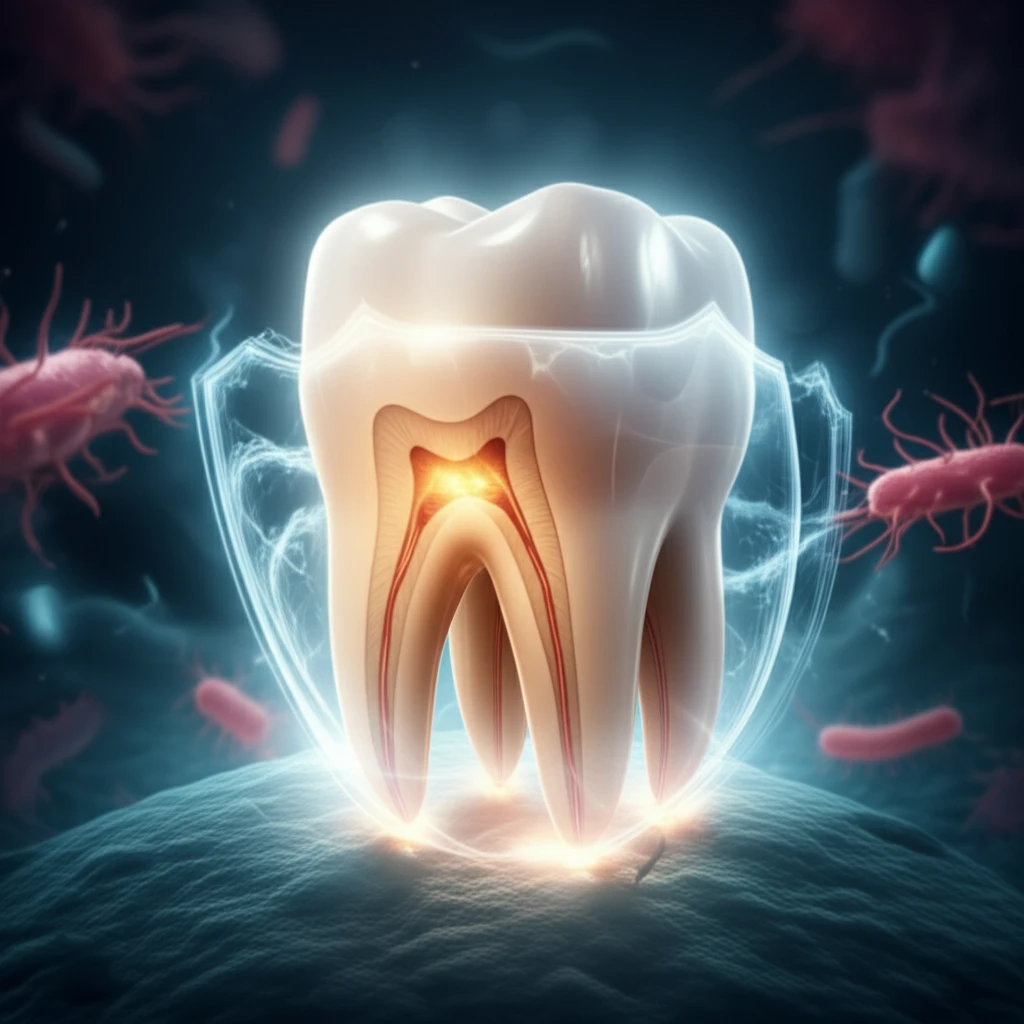
Fortified tooth with advanced dental sealant protecting the pulp chamber.

Keep Cavities Out: The Ultimate Guide to Sealing Your Pulp Chamber

"Learn how advanced dental adhesives can protect your teeth and prevent future complications"


Maintaining good oral health involves more than just brushing and flossing; it also requires protecting the inner structures of your teeth. The pulp chamber, which houses nerves and blood vessels, is particularly vulnerable to bacteria and decay. Once compromised, it can lead to significant pain, infection, and potentially more severe health issues.

One of the critical challenges in dentistry is ensuring a tight seal after procedures like root canals. This prevents bacteria from re-entering the tooth and causing further complications. Traditionally, materials like Cavit™ G have been used for temporary fillings, but questions remain about their long-term effectiveness.

This guide explores innovative techniques using advanced dental adhesives to enhance the sealing of the pulp chamber. We'll delve into a recent study comparing the efficacy of Cavit™ G alone versus when combined with modern bonding agents like Clearfil™ S3 Bond and Prime & Bond® NT, providing you with the insights you need to make informed decisions about your dental care.

Why Sealing Matters: The Importance of a Robust Pulp Chamber Seal

Fortified tooth with advanced dental sealant protecting the pulp chamber.

Think of your tooth as a fortress. The outer enamel is the first line of defense, protecting the vulnerable inner pulp chamber. When decay or damage breaches this defense—through a deep cavity or a crack—bacteria can invade the pulp chamber, leading to infection and inflammation. This is where a solid, reliable seal becomes crucial.

A compromised seal can lead to a host of problems:

  • Microleakage: Even tiny gaps can allow bacteria to seep in.
  • Re-infection: After procedures like root canals, a poor seal can undo all the work.
  • Pain and Sensitivity: Exposure of the pulp chamber can cause significant discomfort.
  • Costly Treatments: Addressing complications from a failed seal can be expensive and time-consuming.
That’s why dentists are constantly seeking better materials and techniques to ensure a hermetic seal, safeguarding your oral health and preventing future complications.

The Future of Dental Sealants: What This Means for You

The quest for the perfect dental sealant continues, driven by the desire to provide patients with the most effective and long-lasting protection against infection and decay. While materials like Cavit™ G have served dentistry well for many years, the integration of advanced adhesive systems represents a significant step forward. These innovations not only enhance the immediate seal but also offer the potential for improved long-term outcomes, reducing the need for repeat interventions and preserving your natural teeth for longer. As research progresses, expect to see even more sophisticated solutions that further minimize microleakage and promote optimal dental health.

About this Article -

This article was crafted using a human-AI hybrid and collaborative approach. AI assisted our team with initial drafting, research insights, identifying key questions, and image generation. Our human editors guided topic selection, defined the angle, structured the content, ensured factual accuracy and relevance, refined the tone, and conducted thorough editing to deliver helpful, high-quality information.See our About page for more information.

This article is based on research published under:

DOI-LINK: 10.4317/medoral.16.e556, Alternate LINK

Title: An In Vitro Evaluation Of Two Dentine Adhesive Systems To Seal The Pulp Chamber Using A Glucose Penetration Model

Subject: General Dentistry

Journal: Medicina Oral Patología Oral y Cirugia Bucal

Publisher: Medicina Oral, S.L.

Authors: S. Gonzalez-Castillo, Me. Bailon-Sanchez, Mp. Gonzalez-Rodriguez, R. Poyatos-Martinez, Cm. Ferrer-Luque

Published: 2011-01-01

Everything You Need To Know

1

What is the significance of sealing the pulp chamber in dental care?

Sealing the pulp chamber is crucial because it protects the inner structures of the tooth, which house nerves and blood vessels, from bacteria and decay. A compromised seal can lead to microleakage, re-infection after procedures like root canals, pain, sensitivity, and costly treatments. Ensuring a robust seal safeguards oral health and prevents future complications. If the pulp chamber isn't properly sealed, bacteria can invade, leading to infection and inflammation.

2

How effective is Cavit™ G when used alone for sealing the pulp chamber?

Cavit™ G has been traditionally used for temporary fillings, but its long-term effectiveness in providing a tight seal for the pulp chamber is questionable. Recent studies suggest that using Cavit™ G alone may not be as effective as when combined with advanced dental adhesives. The integration of advanced adhesive systems is a significant step forward, enhancing the immediate seal and offering potential for improved long-term outcomes. Materials like Clearfil™ S3 Bond and Prime & Bond® NT can offer improved protection.

3

What are some advanced dental adhesives that can enhance the sealing of the pulp chamber?

Advanced dental adhesives like Clearfil™ S3 Bond and Prime & Bond® NT are designed to improve the sealing of the pulp chamber. These bonding agents, when used in conjunction with traditional materials like Cavit™ G, can provide a more robust and hermetic seal, reducing the risk of microleakage and re-infection. The use of such adhesives is considered a step forward in ensuring long-term dental health and minimizing the need for repeat interventions.

4

What is microleakage, and why is it a concern in dental sealants?

Microleakage refers to the seepage of bacteria and fluids through tiny gaps in a dental sealant. It's a significant concern because even small gaps can allow bacteria to invade the pulp chamber, leading to infection, inflammation, and the failure of dental procedures like root canals. Preventing microleakage is a primary goal in dentistry, driving the development of advanced adhesive systems and techniques to ensure a hermetic seal. Materials such as Cavit™ G are not designed to stop all leakage.

5

How do advanced dental sealants contribute to long-term oral health and tooth preservation?

Advanced dental sealants, such as those using Clearfil™ S3 Bond and Prime & Bond® NT, contribute to long-term oral health by providing a more effective barrier against bacterial invasion. This reduces the risk of infection, inflammation, and the need for repeat dental interventions. By minimizing microleakage and promoting a hermetic seal, these innovations help preserve natural teeth for longer, ensuring better overall dental health and reducing the potential for costly and invasive treatments in the future. Unlike materials like Cavit™ G, they offer improved immediate and long-term protection.

Newsletter Subscribe

Subscribe to get the latest articles and insights directly in your inbox.