
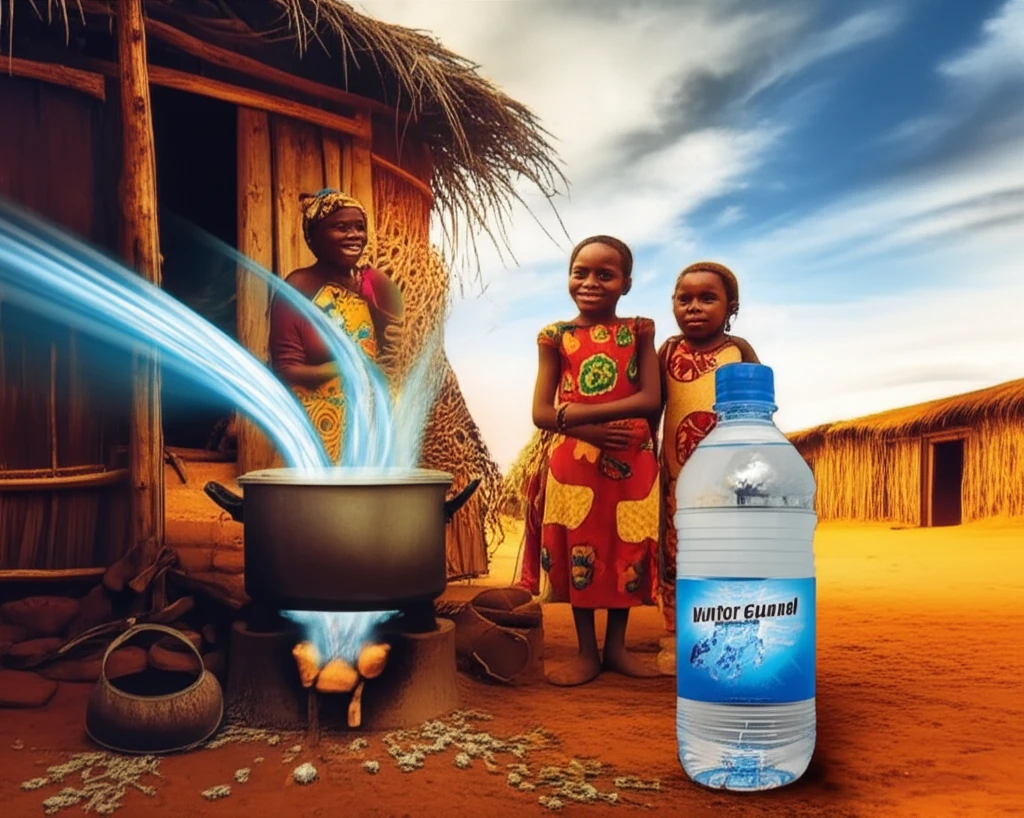
Family in rural Africa using household water treatment methods to purify water.

Is Your Water Safe? Simple Ways to Protect Your Family's Health

"Boiling vs. Water Guard: Unveiling the Best Household Water Treatment Methods"


Access to safe drinking water is a fundamental need, yet millions worldwide still struggle with this basic necessity. The quality of our water sources can be compromised by various factors, including natural contamination and human activities, posing significant health risks. In many developing regions, household water treatment methods become crucial for safeguarding public health.

In Nigeria, like many other countries in Sub-Saharan Africa, access to clean water remains a challenge, particularly in rural communities. While large-scale water treatment plants exist, their reach is often limited, making household-level interventions essential. Boiling and the use of water guard (sodium hypochlorite solution) are common practices, but how effective are they?

This article explores a research study conducted in a rural community in Kwara State, Nigeria, comparing the effectiveness of boiling and water guard in treating household water. We'll delve into the study's findings on water quality parameters, bacterial contamination, and the presence of metals, offering insights into the best practices for ensuring safe drinking water at home.

Boiling vs. Water Guard: What the Research Reveals

Family in rural Africa using household water treatment methods to purify water.

The study meticulously analyzed water samples from public taps and boreholes in the Kwara State community. Raw water samples, before any treatment, were assessed for various physicochemical parameters, including chloride, BOD (Biochemical Oxygen Demand), and dissolved oxygen. While most parameters were within the acceptable limits set by the World Health Organization (WHO) and the Standard Organization of Nigeria (SON), some concerning levels were observed.

Specifically, the BOD levels, an indicator of organic pollution, were higher in borehole water compared to public tap water. Additionally, the presence of metals like Zinc (Zn) and Iron (Fe) exceeded permissible limits in some samples. These findings highlight the need for effective water treatment to address these contaminants.

  • Bacterial Contamination: Untreated water samples from public taps showed the presence of coliform bacteria, indicating fecal contamination.
  • Boiling: Proved highly effective in eliminating coliform bacteria, resulting in a zero count after treatment.
  • Water Guard: Reduced coliform bacteria, but a small amount remained (1cfu/100mL).
  • Other Microorganisms: Boiling and water guard successfully removed Bacillus and Mucor species, other potentially harmful microorganisms, from the water samples.
These results suggest that while both boiling and water guard improve water quality, boiling offers a more complete elimination of bacterial contaminants. However, it's crucial to consider the practical implications and potential drawbacks of each method.

Protecting Your Family: Practical Steps for Safe Water

The study underscores the importance of household water treatment in ensuring access to safe drinking water, particularly in communities where centralized treatment is insufficient. While the specific findings relate to a rural community in Nigeria, the principles apply broadly to areas facing similar water quality challenges.

Based on the research, boiling appears to be the more effective method for eliminating bacteria. However, it requires a reliable energy source and can be time-consuming. Water guard offers a convenient alternative but may not completely eliminate all contaminants. The choice depends on individual circumstances and priorities.

Ultimately, informed decisions about water treatment are crucial for protecting your family's health. By understanding the potential risks and available solutions, you can take proactive steps to ensure access to safe and clean drinking water.

About this Article -

This article was crafted using a human-AI hybrid and collaborative approach. AI assisted our team with initial drafting, research insights, identifying key questions, and image generation. Our human editors guided topic selection, defined the angle, structured the content, ensured factual accuracy and relevance, refined the tone, and conducted thorough editing to deliver helpful, high-quality information.See our About page for more information.

This article is based on research published under:

DOI-LINK: 10.4314/njt.v33i1.18, Alternate LINK

Title: Comparative Study Of Household Water Treatment In A Rural Community In Kwara State, Nigeria

Subject: General Medicine

Journal: Nigerian Journal of Technology

Publisher: African Journals Online (AJOL)

Authors: Ao Sojobi, Hi Owamah, So Dahunsi

Published: 2014-02-13

Everything You Need To Know

1

How effective are boiling and Water Guard in removing bacterial contamination from household water, according to the research?

The research indicated that boiling is highly effective in eliminating coliform bacteria, resulting in a zero count after treatment. Water Guard, on the other hand, reduced coliform bacteria, but a small amount remained at 1cfu/100mL. Both methods were successful in removing Bacillus and Mucor species, but boiling provided a more complete elimination of bacterial contaminants in the studied environment.

2

What specific water quality issues were identified in the raw water samples before treatment, according to the study?

The study revealed that while most physicochemical parameters like chloride and dissolved oxygen were within acceptable limits set by the World Health Organization (WHO) and the Standard Organization of Nigeria (SON), some concerning levels were observed. Specifically, Biochemical Oxygen Demand (BOD) levels, which indicate organic pollution, were higher in borehole water compared to public tap water. The presence of metals like Zinc (Zn) and Iron (Fe) also exceeded permissible limits in some samples.

3

What factors influence the effectiveness of Water Guard and boiling as household water treatment methods?

Water Guard utilizes sodium hypochlorite to disinfect water. The effectiveness of Water Guard is influenced by factors such as the dosage applied, the contact time allowed, and the initial water quality. If the concentration of sodium hypochlorite is not properly managed, or the contact time is insufficient, it may not completely eliminate all pathogens. Organic matter in the water can also reduce its effectiveness. Boiling eliminates pathogens through high heat, but its effectiveness depends on reaching a rolling boil for an appropriate duration. Recontamination can occur if boiled water is not stored properly.

4

What are the broader implications of the Kwara State water quality study for communities facing similar water challenges?

The research in Kwara State highlights the critical need for household water treatment methods in areas where centralized water treatment is insufficient. Given that the study showed that raw water sources contained concerning levels of organic pollution and metal contamination and tested positive for fecal contamination, the implications are significant. Without effective treatment methods like boiling or Water Guard, residents are at increased risk of waterborne diseases. It also underscores the importance of regular water quality monitoring and community education on best practices for safe water handling and storage.

5

What does Biochemical Oxygen Demand (BOD) indicate about water quality, and what are the implications of elevated BOD levels?

Biochemical Oxygen Demand (BOD) is an indicator of the amount of organic matter present in a water sample. A higher BOD level suggests a greater degree of organic pollution. In the context of this study, elevated BOD levels in borehole water compared to public tap water indicate that the borehole water contains more organic pollutants, which could stem from agricultural runoff, sewage, or other sources. Untreated high BOD levels can deplete oxygen levels in water, harming aquatic life and posing risks to human health if the water is consumed.

Newsletter Subscribe

Subscribe to get the latest articles and insights directly in your inbox.