
Goodbye Water Contaminants: The Eco-Friendly Algae Solution You Need to Know!

"Discover how alginate aerogels, derived from algae, are revolutionizing water purification by effectively removing heavy metals and organic pollutants."
Water pollution is a growing global crisis. From industrial waste to agricultural runoff, our water sources are increasingly contaminated with harmful substances like heavy metals and organic dyes. Traditional methods of water treatment can be costly and sometimes ineffective, sparking a need for innovative, sustainable solutions.
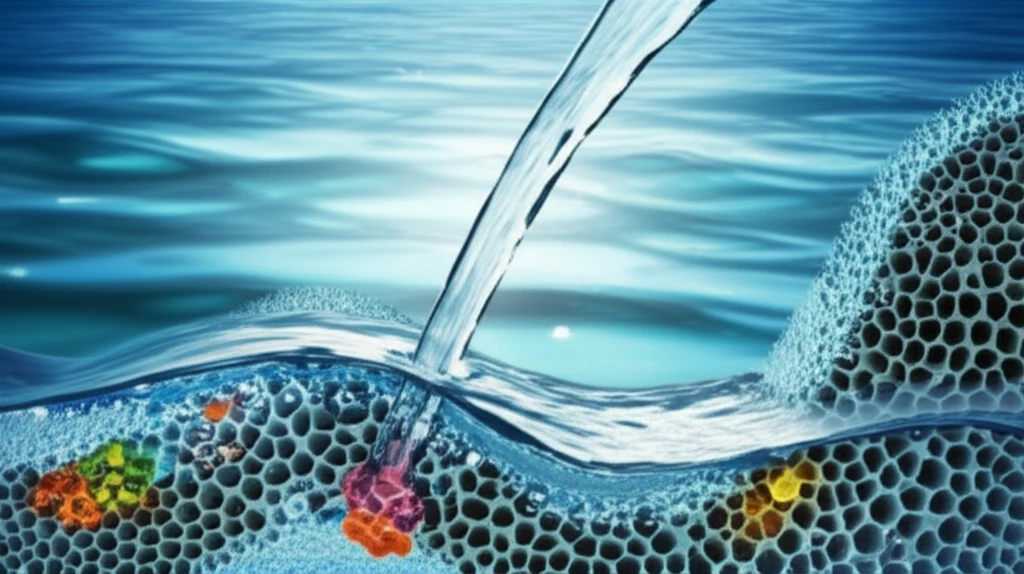
Enter alginate aerogels – a promising class of materials derived from algae. These lightweight, porous substances are proving to be remarkably effective at absorbing pollutants from water. Researchers are exploring their potential to revolutionize water treatment, offering a greener and more efficient way to purify our water supplies.
This article delves into the science behind alginate aerogels, exploring how they are made, how they work, and their potential to transform water purification. We'll also examine recent research highlighting their effectiveness in removing heavy metals and organic pollutants, paving the way for a cleaner, healthier future.
Scale of Water Contamination and Emerging Material Solutions
Water contamination by toxic organic pollutants and heavy metal ions remains a pressing global challenge requiring advanced remediation technologies. Aerogel-based materials have emerged as highly promising candidates for water treatment due to their exceptional porosity and unique physicochemical properties. Alginate-derived cryogels and aerogels, in particular, have attracted research attention for their ability to enhance water diffusion into gel networks and improve pollutant removal efficiency. These materials represent a growing class of eco-friendly solutions being explored for oil cleanup, toxic organic pollutant removal, and heavy metal remediation.
Conventional Hydrogel and Aerogel Methods and Their Drawbacks
Cellulose- and alginate-based hydrogels are widely studied for water and wastewater treatment, yet they face notable limitations including low mechanical performance and poor stability. Nanostructured aerogels—spanning silica, polymer, carbon-based, and hybrid composites—offer diverse adsorbent options but each category carries distinct advantages and disadvantages in pollutant removal. Current research focuses on strategies to improve the mechanical and stability shortcomings of these hydrogel systems. The field continues to seek formulations that balance effective pollutant capture with structural durability.
Early Development of Aerogel and Alginate Technologies
Aerogel research for water treatment has evolved considerably since the early 2000s, when these materials first demonstrated high potential in advanced technological applications. Over the past two decades, development of new processing techniques has expanded the range of aerogel types available for environmental remediation. Alginate, derived from brown seaweed, has a long history in water treatment as a natural biopolymer gel-forming agent. The convergence of aerogel science with biopolymer chemistry has created hybrid materials with enhanced capabilities for pollutant removal.
What are Alginate Aerogels and Why are They a Big Deal?
Alginate is a natural polysaccharide found in the cell walls of brown algae. It's composed of two main building blocks: mannuronic acid and guluronic acid. When dissolved in water, alginate can form a gel-like structure in the presence of divalent cations like calcium (Ca2+). This unique property is the foundation for creating alginate aerogels.
- Gelation: Alginate solutions are cross-linked using calcium ions to form a hydrogel.
- Solvent Exchange: The water within the hydrogel is replaced with alcohol.
- Freeze-Drying: The hydrogel is frozen, and the alcohol is removed through sublimation, leaving behind a lightweight, porous aerogel structure.
Sodium Alginate Composites for Sustainable Water Purification
Recent comprehensive reviews have systematically summarized sodium alginate composite preparation methods across multiple forms including hydrogels, aerogels, foams, films, and binders. These alginate-based functional materials are being developed for dual applications in water purification and energy storage while reducing environmental impact. Nanostructured aerogels for water decontamination have been reviewed in a comprehensive manner, covering silica, cellulose, chitosan, alginate, carbon-based, and hybrid aerogel types. The breadth of material classifications reflects the rapid expansion of aerogel research for environmental applications.
Challenges in Real-World Implementation
Despite promising laboratory results, aerogel-based materials face significant hurdles before widespread real-world deployment in water remediation. The gap between controlled laboratory performance and field-scale application remains a key concern for researchers and industry professionals. Alginate-nanoparticle systems, while showing potential as tools for managing water pollution, still require extensive validation beyond proof-of-concept studies. Scalability, cost-effectiveness, and long-term operational stability represent persistent barriers that current research has not fully resolved.
Alginate Aerogels vs. Hydrogels in Different Water Environments
Comparative studies have directly evaluated the stability of native M-alginate hydrogels against polyurea-crosslinked alginate aerogels across tap water, seawater, and air environments. These investigations use cobalt II rather than calcium II as the gelation cation to create pink-colored materials that enhance imaging contrast during stability assessments. The crosslinked aerogel formulations demonstrate improved structural integrity compared to their native hydrogel counterparts under varying environmental conditions. Such head-to-head comparisons provide valuable data for selecting appropriate material forms for specific water treatment contexts.
The Future is Clear: Alginate Aerogels Leading the Way
Alginate aerogels represent a significant step forward in sustainable water treatment technology. Their effectiveness in removing pollutants, combined with their eco-friendly nature, makes them a promising solution for addressing the global water crisis. As research continues and production methods are refined, we can expect to see alginate aerogels playing an increasingly important role in ensuring access to clean and safe water for all.
Converging Evidence on Alginate-Based Water Treatment Materials
The body of literature reviewed across multiple studies converges on several key themes regarding alginate-based materials for water treatment. Researchers consistently highlight both the promise and the persistent limitations of these eco-friendly materials, particularly around mechanical performance and scalability. The field appears to be at an inflection point where laboratory demonstrations must translate into validated field applications. Expert perspectives emphasize the need for interdisciplinary collaboration combining materials science, environmental engineering, and sustainability analysis to advance these technologies.
Smart Alginate Systems and Advanced Manufacturing Approaches
Future research directions point toward developing smart and functionalized alginate systems capable of responsive pollutant removal. Three-dimensional and four-dimensional printing technologies offer pathways for creating tailored alginate structures with optimized geometries for water treatment. Integration of alginate materials into hybrid treatment trains—combined with other remediation technologies—is identified as a promising approach for real-world implementation. Stronger field validation and comprehensive sustainability analyses are needed to transition these materials from promising lab-scale adsorbents to reliable large-scale solutions.
Scaling Eco-Friendly Materials for Global Water Security
Scaling algae-derived and alginate-based water treatment materials from laboratory curiosities to globally deployed solutions requires addressing systemic challenges beyond material science. Regulatory considerations, cost competitiveness with conventional treatment methods, and supply chain reliability for bio-based materials all factor into real-world adoption potential. Environmental impact assessments must account for the full lifecycle of these materials, from seaweed harvesting through end-of-life disposal or regeneration. The broader water treatment industry's inertia and existing infrastructure represent both barriers and opportunities for innovative eco-friendly solutions.
Practical Applications and Community-Level Benefits
Advanced aerogel materials derived from alginate and related biopolymers show tangible advantages over conventional sorbents in terms of treatment efficiency, environmental impact, and cost-effectiveness. Real-world applications already being explored include oil spill cleanup operations and industrial wastewater treatment scenarios. These practical deployments demonstrate that algae-based material solutions can address urgent water contamination challenges facing communities worldwide. Regulatory considerations and continued research directions will shape how quickly these promising technologies reach the people and places that need them most.