
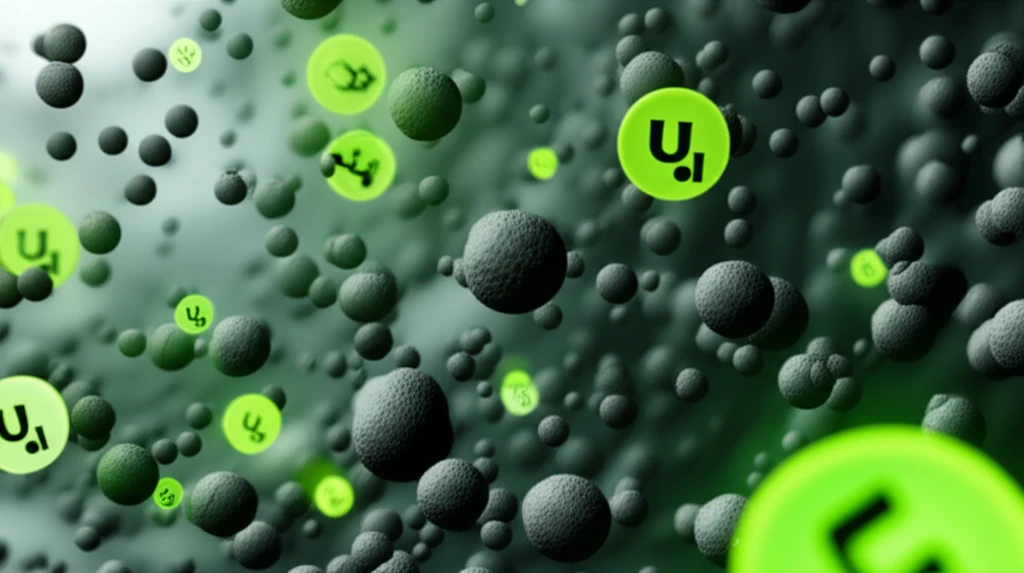
Microscopic iron particles purifying polluted water.

Is Your Water Safe? How Nanotechnology Can Help Remove Uranium

"Explore how zero-valent iron nanoparticles (nZVI) are emerging as a game-changing solution for cleaning up uranium-contaminated water sources, offering a promising path to safer drinking water."


Uranium, a naturally occurring radioactive element, poses a significant threat to both ecological health and human well-being. Its presence in water sources, stemming from mining activities and nuclear industries, raises serious concerns due to its chemical toxicity and radioactivity. When uranium dissolves in water, it forms various compounds that can contaminate our drinking water and natural ecosystems.

Traditional methods for removing uranium from water include membrane separation, ion exchange, and chemical precipitation. However, these methods can be costly and may not always be effective. Recently, scientists have been exploring innovative and cost-effective solutions for uranium removal, with a particular focus on nanotechnology.

One promising approach involves the use of zero-valent iron nanoparticles (nZVI). These tiny particles have demonstrated a remarkable ability to remove uranium from contaminated water. Let’s dive into how nZVI works and why it's becoming a game-changer in water treatment.

What are Zero-Valent Iron Nanoparticles (nZVI)?

Microscopic iron particles purifying polluted water.

Zero-valent iron nanoparticles are incredibly small particles of iron, typically ranging from 1 to 100 nanometers in diameter. Their minute size gives them a vast surface area relative to their mass, making them highly reactive and effective at capturing and neutralizing contaminants in water.

Compared to larger iron particles, nZVI offers several advantages, including increased removal capacity and enhanced reactivity. The large surface area allows for more contact with uranium, leading to faster and more efficient removal.

  • Large Surface Area: nZVI's tiny size provides a massive surface area for interacting with contaminants.
  • High Reactivity: The iron nanoparticles readily react with uranium, facilitating its removal.
  • Cost-Effective: nZVI offers a potentially lower-cost alternative to traditional water treatment methods.
The key to nZVI's effectiveness lies in its ability to both adsorb and reduce uranium. Adsorption involves the nanoparticles capturing uranium ions on their surface, while reduction transforms the uranium into a less soluble form that precipitates out of the water. This dual action makes nZVI a powerful tool for water remediation.

The Future of Water Purification

Zero-valent iron nanoparticles represent a significant step forward in our ability to address uranium contamination in water sources. As research continues, nZVI technology holds the potential to provide safer, cleaner water for communities around the globe, offering a sustainable solution to one of our most pressing environmental challenges.

About this Article -

This article was crafted using a human-AI hybrid and collaborative approach. AI assisted our team with initial drafting, research insights, identifying key questions, and image generation. Our human editors guided topic selection, defined the angle, structured the content, ensured factual accuracy and relevance, refined the tone, and conducted thorough editing to deliver helpful, high-quality information.See our About page for more information.

This article is based on research published under:

DOI-LINK: 10.1007/s10967-018-6293-3, Alternate LINK

Title: Removal Of U (Vi) From Acidic And Alkaline Aqueous Solutions By Zero-Valent Iron Nanoparticles

Subject: Health, Toxicology and Mutagenesis

Journal: Journal of Radioanalytical and Nuclear Chemistry

Publisher: Springer Science and Business Media LLC

Authors: Fotini Noli, Anastasia Babaiti, Panagiotis Misaelides, Nikolaos Pliatsikas, Nikolaos Vouroutzis

Published: 2018-11-01

Everything You Need To Know

1

What makes zero-valent iron nanoparticles (nZVI) effective at removing uranium from water?

Zero-valent iron nanoparticles (nZVI) are effective due to their incredibly small size, ranging from 1 to 100 nanometers, which provides a vast surface area. This large surface area enhances their reactivity, allowing them to efficiently capture and neutralize contaminants like uranium. The nZVI both adsorbs uranium ions onto its surface and reduces the uranium into a less soluble form, causing it to precipitate out of the water, effectively removing it. Compared to larger iron particles, nZVI's increased removal capacity and reactivity make it a potent tool for water remediation. However, the long-term environmental impact and potential for nZVI aggregation, which could reduce its effectiveness, are aspects that would need further study.

2

How do zero-valent iron nanoparticles (nZVI) compare to traditional methods of uranium removal from water?

Traditional methods for removing uranium from water include membrane separation, ion exchange, and chemical precipitation. While these methods are established, they can be costly and may not always be as effective as desired. Zero-valent iron nanoparticles (nZVI) offer a potentially lower-cost alternative with increased removal capacity and enhanced reactivity due to their large surface area. The nZVI's dual action of adsorption and reduction provides a powerful means of uranium removal. However, traditional methods may have well-understood long-term effects, a contrast to the relatively newer nZVI technology, where long-term studies are ongoing.

3

Why is uranium in water a health concern?

Uranium, a naturally occurring radioactive element, poses a significant threat to both ecological health and human well-being. Its presence in water sources, often stemming from mining activities and nuclear industries, raises serious concerns due to its chemical toxicity and radioactivity. When uranium dissolves in water, it forms various compounds that can contaminate drinking water and natural ecosystems. Exposure to uranium can lead to kidney damage, increased cancer risk, and other adverse health effects, making its removal from water sources essential for public safety and environmental protection. The persistence of uranium in the environment amplifies these concerns.

4

What is the process of uranium removal using zero-valent iron nanoparticles (nZVI)?

The process involves two primary mechanisms: adsorption and reduction. First, zero-valent iron nanoparticles (nZVI) capture uranium ions on their surface through adsorption, owing to their large surface area. Simultaneously, nZVI reduces the uranium into a less soluble form. This reduction causes the uranium to precipitate out of the water, effectively removing it from the solution. This dual action makes nZVI a powerful tool. The effectiveness of this process depends on factors like the concentration of uranium, the dosage of nZVI, and the pH of the water. Further research can explore optimizing these parameters.

5

What are the potential implications of using zero-valent iron nanoparticles (nZVI) for water purification on a global scale?

If zero-valent iron nanoparticles (nZVI) technology continues to develop as a cost-effective and efficient method for uranium removal, it holds the potential to provide safer, cleaner water for communities around the globe. This could significantly reduce the health risks associated with uranium contamination, such as kidney damage and increased cancer risk. Widespread adoption of nZVI could lead to more sustainable water treatment practices, particularly in regions affected by mining activities and nuclear industries. However, careful consideration must be given to the long-term environmental impacts of nZVI, including its potential effects on aquatic ecosystems and the development of regulations to ensure its safe and responsible use.

Newsletter Subscribe

Subscribe to get the latest articles and insights directly in your inbox.