
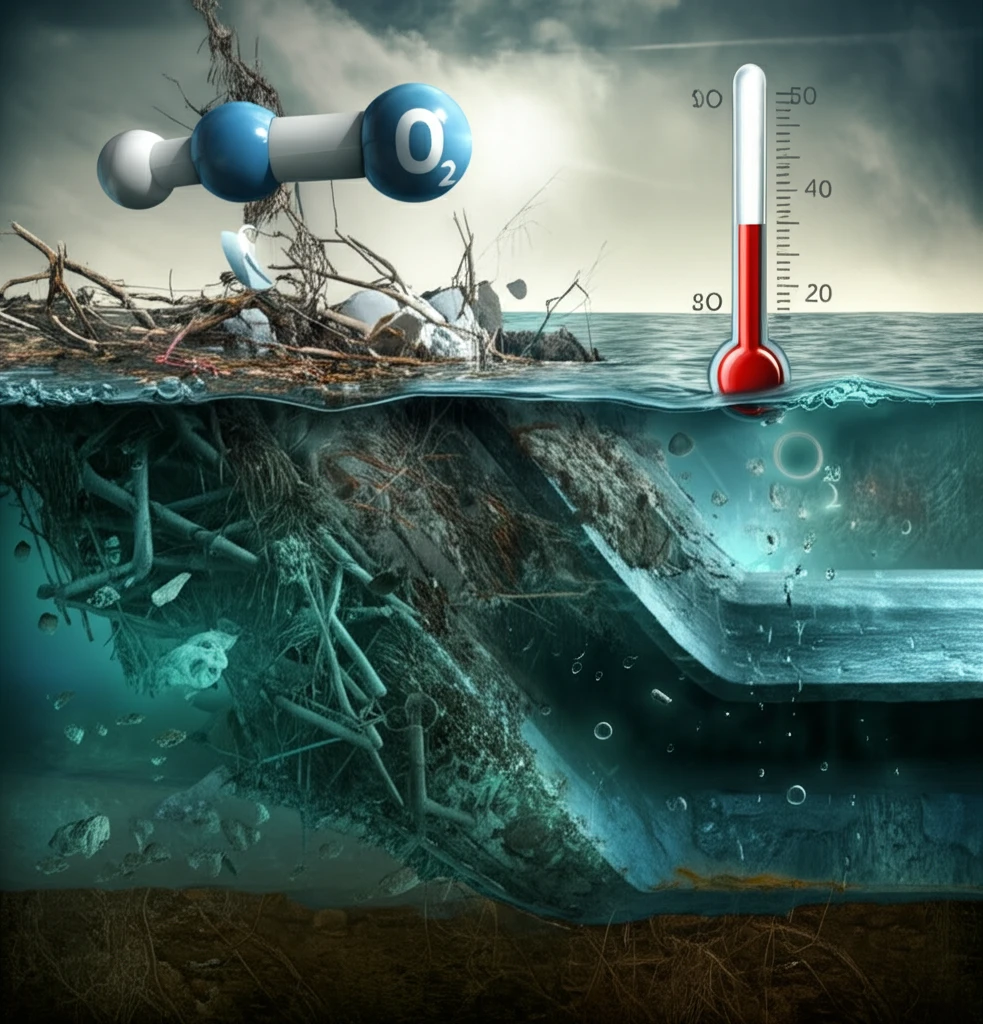
Reservoir cross-section during a flash flood illustrating water quality changes.

Is Your Water Safe? How Climate Change Impacts Reservoir Quality

"Uncover the hidden threats to our water supply as flood fluctuations and environmental shifts compromise reservoir health and what it means for your drinking water."


Clean and accessible water is fundamental to life, but what happens when the sources we rely on become threatened? Reservoirs, artificial lakes designed to store water, are increasingly vulnerable to the impacts of climate change, particularly through flood and inflow fluctuations. These changes can dramatically alter water quality, affecting everything from ecosystem sustainability to the safety of our drinking water.

Heavy rainfalls are becoming more frequent and intense, leading to what scientists call "flash floods"—sudden and forceful increases in water volume. These events don't just fill reservoirs; they disrupt the delicate balance within them. Flash floods introduce large amounts of debris and sediment, sharply altering thermal structures and mixing layers deep within the water. The consequences of these changes can be far-reaching, impacting water temperature, dissolved oxygen levels, and overall water quality.

This article explores the critical findings of a recent study investigating how flood and inflow fluctuations affect water quality in reservoirs. By examining two stratified reservoirs in Iran—Rajae and Minab—the research provides valuable insights into the challenges and potential solutions for maintaining healthy water supplies in a changing world. Understanding these dynamics is crucial for anyone concerned about the future of our water resources.

Why Does Reservoir Stratification Matter?

Reservoir cross-section during a flash flood illustrating water quality changes.

Reservoirs often develop distinct layers, a phenomenon known as thermal stratification. In simple terms, this means the water separates into layers of different densities, much like oil and vinegar in a salad dressing. The surface layer (epilimnion) is typically warmer, while the bottom layer (hypolimnion) is colder. A transitional layer called the metalimnion lies in between.

This stratification affects how oxygen and nutrients are distributed throughout the reservoir. The hypolimnion, cut off from the atmosphere, can become depleted of oxygen, leading to poor water quality. When floods occur, they disrupt this stratification, mixing the layers and potentially worsening water quality issues.

  • Temperature: Influences the chemical, biological, and physical characteristics of water.
  • Dissolved Oxygen (DO): Crucial for aquatic life; lower concentrations can release nutrients and produce sulfide.
  • Thermal Stratification: Affects water quality and ecosystem health significantly.
The study focused on how flash floods impact these parameters in the Rajae and Minab reservoirs. Researchers used the CE-QUAL-W2 model, a sophisticated tool for simulating water dynamics, to analyze the effects of increased inflow on water temperature and dissolved oxygen levels.

Protecting Our Water Future

The research underscores the vulnerability of our water resources to climate change and extreme weather events. By understanding the complex interactions within reservoirs and employing advanced modeling techniques, we can develop strategies to mitigate the negative impacts of flood fluctuations and ensure the long-term health of our water supplies. Continuous monitoring, adaptive management, and community involvement are crucial steps in safeguarding this vital resource for future generations. As climate change continues to pose challenges, our commitment to protecting water quality must remain unwavering.

About this Article -

This article was crafted using a human-AI hybrid and collaborative approach. AI assisted our team with initial drafting, research insights, identifying key questions, and image generation. Our human editors guided topic selection, defined the angle, structured the content, ensured factual accuracy and relevance, refined the tone, and conducted thorough editing to deliver helpful, high-quality information.See our About page for more information.

Everything You Need To Know

1

How do flash floods affect the different layers in reservoirs?

Flash floods disrupt thermal stratification within reservoirs. These sudden increases in water volume introduce large amounts of debris and sediment, sharply altering thermal structures and mixing the epilimnion, metalimnion, and hypolimnion layers. This mixing can affect water temperature and dissolved oxygen levels, impacting overall water quality and aquatic life.

2

What role does thermal stratification play in reservoir water quality, and why is it important?

Thermal stratification is where water in a reservoir separates into layers of different densities: the warmer epilimnion at the surface, the colder hypolimnion at the bottom, and the metalimnion in between. This stratification affects how oxygen and nutrients are distributed. The hypolimnion, cut off from the atmosphere, can become depleted of oxygen, leading to poor water quality and affecting aquatic life. Disruptions to stratification, like those caused by flash floods, can worsen these water quality issues.

3

What are the primary factors that determine the quality of water in reservoirs, and why are they important?

Several factors determine reservoir water quality, including water temperature, dissolved oxygen (DO) levels, and thermal stratification. Temperature influences the chemical, biological, and physical characteristics of water. Dissolved oxygen is crucial for aquatic life; lower concentrations can release nutrients and produce sulfide, leading to poor water quality. Thermal stratification affects how oxygen and nutrients are distributed, impacting ecosystem health significantly. These factors interact to determine the suitability of reservoir water for various uses, including drinking water.

4

How can advanced modeling techniques, like the CE-QUAL-W2 model used in the study of Rajae and Minab reservoirs, help in managing reservoir water quality under climate change conditions?

Advanced modeling techniques, such as the CE-QUAL-W2 model, simulate water dynamics to analyze the effects of increased inflow on water temperature and dissolved oxygen levels in reservoirs like Rajae and Minab. These models help us understand the complex interactions within reservoirs and predict how flood fluctuations impact water quality. By using these insights, we can develop strategies to mitigate the negative impacts of extreme weather events and ensure the long-term health and sustainability of water supplies. However, the models need to be constantly updated to account for new data and changing environmental conditions.

5

What are the long-term implications if reservoir water quality continues to decline due to climate change and increased flood events?

If reservoir water quality continues to decline due to climate change and increased flood events, there could be significant long-term implications for both ecosystems and human populations. Declining water quality can harm aquatic life, disrupt ecosystem balance, and reduce the availability of clean drinking water. This may also lead to increased costs for water treatment, potential health risks from contaminated water, and water scarcity issues in regions dependent on these reservoirs. Addressing these challenges requires continuous monitoring, adaptive management strategies, community involvement, and a steadfast commitment to protecting water resources.

Newsletter Subscribe

Subscribe to get the latest articles and insights directly in your inbox.