
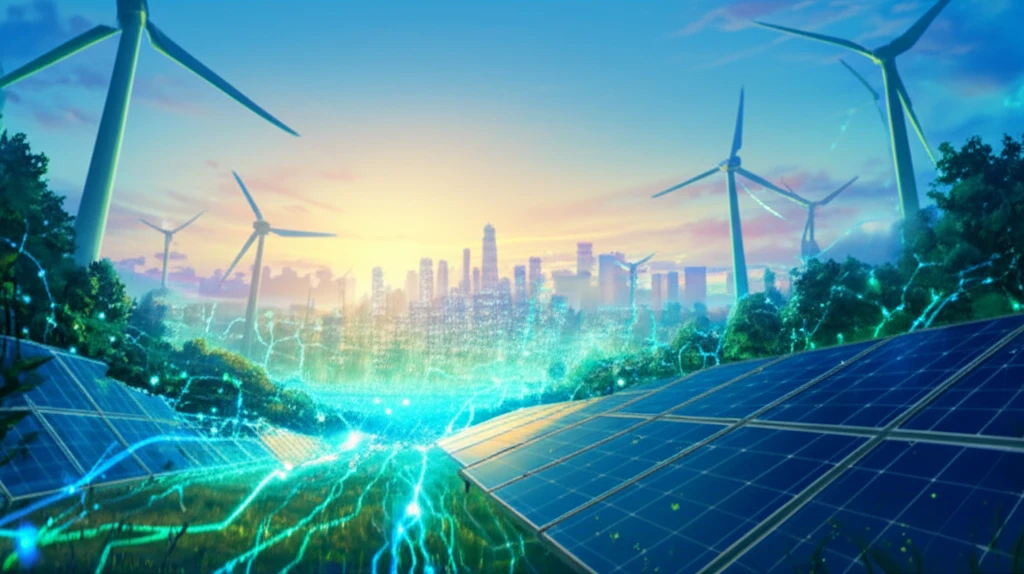
Sustainable solar energy distribution

Is Your Solar Investment Sustainable? How to Ensure Long-Term Returns

"A Deep Dive into Photovoltaic Plant Performance and Distribution Network Impacts"


Renewable energy sources, particularly solar photovoltaic (PV) plants, are increasingly vital for global electricity production. Solar power offers a clean and sustainable alternative to fossil fuels, promising reduced carbon emissions and energy independence. However, the long-term performance and integration of solar PV plants into existing distribution networks require careful evaluation to ensure sustained benefits.

Integrating solar power into distribution networks isn't without challenges. The intermittent nature of solar irradiance and potential impacts on grid stability necessitate thorough planning and assessment. Without proper strategies, the anticipated benefits of solar energy can be undermined by operational inefficiencies and infrastructure degradation. Therefore, it's important to understand the factors influencing the long-term viability of solar investments.

This article explores the factors affecting the sustainability of solar PV plant outputs and their impact on distribution networks. By examining the case of the Quaid-e-Azam Solar Park (QASP) in Pakistan, we shed light on the critical considerations for ensuring long-term returns on solar energy investments. This includes understanding seasonal variations, managing system losses, and maintaining network quality.

Decoding Solar PV Performance: What Factors Really Matter?

Sustainable solar energy distribution

Several factors influence the real-world performance of solar PV plants. These include the quality of solar modules, inverter efficiency, local climate conditions, and the design of the distribution network. Understanding these elements is crucial for assessing the economic viability and sustainability of solar projects.

Climate conditions, particularly solar irradiance and ambient temperature, play a key role in PV system performance. Solar irradiance is the amount of solar power received per unit area and directly impacts the electricity generated. Ambient temperature, however, has an inverse relationship with PV module efficiency; higher temperatures can reduce power output. Optimizing PV plant locations to balance irradiance and temperature is essential.

  • Module Degradation: Over time, the efficiency of PV modules degrades, reducing their power output.
  • System Losses: Energy losses occur in various components of the system, including inverters, transformers, and transmission lines.
  • Voltage Stability: Solar PV integration can affect voltage levels in the distribution network, potentially causing instability.
  • Seasonal Variations: Solar irradiance varies significantly throughout the year, impacting energy production.
Effective management of these factors is essential for maintaining the sustainability of solar PV plants. Regular maintenance, technology upgrades, and strategic grid integration can help mitigate potential performance declines and ensure continued efficiency. Moreover, detailed assessments and planning are crucial for the sizing of distributed generation to optimize network performance.

Securing Your Solar Future: Key Steps for Sustainable Performance

Ensuring the long-term sustainability of solar energy investments requires a proactive approach. By carefully evaluating the factors influencing PV plant performance and implementing appropriate strategies, stakeholders can maximize the benefits of solar energy and contribute to a cleaner, more sustainable future. Time-varying detailed assessments during the calculations of sizing of distributed generation are important for maintaining the quality of the network.

About this Article -

This article was crafted using a human-AI hybrid and collaborative approach. AI assisted our team with initial drafting, research insights, identifying key questions, and image generation. Our human editors guided topic selection, defined the angle, structured the content, ensured factual accuracy and relevance, refined the tone, and conducted thorough editing to deliver helpful, high-quality information.See our About page for more information.

Everything You Need To Know

1

What are the primary factors that affect the performance of solar PV plants, and how do they impact long-term returns?

The performance of solar photovoltaic (PV) plants is influenced by several key factors. These include the quality of solar modules, inverter efficiency, local climate conditions (solar irradiance and ambient temperature), and the design of the distribution network. Solar irradiance directly affects electricity generation, while higher ambient temperatures can reduce power output. Module degradation over time, system losses in components like inverters and transformers, voltage stability issues, and seasonal variations in solar irradiance also play crucial roles. Effective management of these factors is essential for maintaining the sustainability of solar PV plants and ensuring long-term returns on investment.

2

How does climate, specifically solar irradiance and ambient temperature, influence the efficiency of a solar PV system?

Climate conditions significantly affect solar PV system performance. Solar irradiance, which is the amount of solar power received per unit area, directly correlates with electricity generation; the higher the irradiance, the more power is produced. Conversely, ambient temperature has an inverse relationship with PV module efficiency. Higher temperatures can reduce the power output of PV modules. Therefore, optimizing PV plant locations to balance irradiance and temperature is critical for maximizing energy production and overall system efficiency.

3

What challenges are associated with integrating solar PV plants into existing distribution networks, and how can these be addressed?

Integrating solar PV plants into distribution networks presents several challenges. The intermittent nature of solar irradiance, meaning the availability of sunlight fluctuates, can impact grid stability. The article specifically mentions voltage stability, which is crucial. Additionally, the introduction of solar power can affect voltage levels. To address these issues, thorough planning and assessment are essential. Strategies include regular maintenance, technology upgrades, strategic grid integration, and detailed assessments during the calculations of sizing of distributed generation. These measures help mitigate performance declines and ensure the continued efficiency and stability of the network.

4

What are the implications of module degradation and system losses on the long-term viability of solar energy investments?

Module degradation, where the efficiency of PV modules declines over time, directly reduces the power output of solar plants. System losses occur in various components, including inverters, transformers, and transmission lines, further reducing the overall energy yield. The implications are significant; reduced power output means lower returns on investment. To mitigate these effects, regular maintenance, the use of high-quality components, and possibly technology upgrades are necessary. These steps help to maintain the efficiency and longevity of solar PV plants, ensuring the long-term viability of solar energy investments. Specifically, time-varying detailed assessments during the calculations of sizing of distributed generation are important for maintaining the quality of the network.

5

How can stakeholders ensure the long-term sustainability of solar energy investments, and what proactive steps are necessary?

Ensuring the long-term sustainability of solar energy investments requires a proactive approach. This includes carefully evaluating the factors influencing PV plant performance, such as module quality, inverter efficiency, climate conditions, and network design. Implementing appropriate strategies, such as regular maintenance, technology upgrades, and strategic grid integration, is essential. Detailed assessments and planning are crucial for the sizing of distributed generation to optimize network performance. Stakeholders need to be mindful of module degradation, system losses, voltage stability, and seasonal variations. By taking these steps, stakeholders can maximize the benefits of solar energy and contribute to a cleaner, more sustainable future.

Newsletter Subscribe

Subscribe to get the latest articles and insights directly in your inbox.