
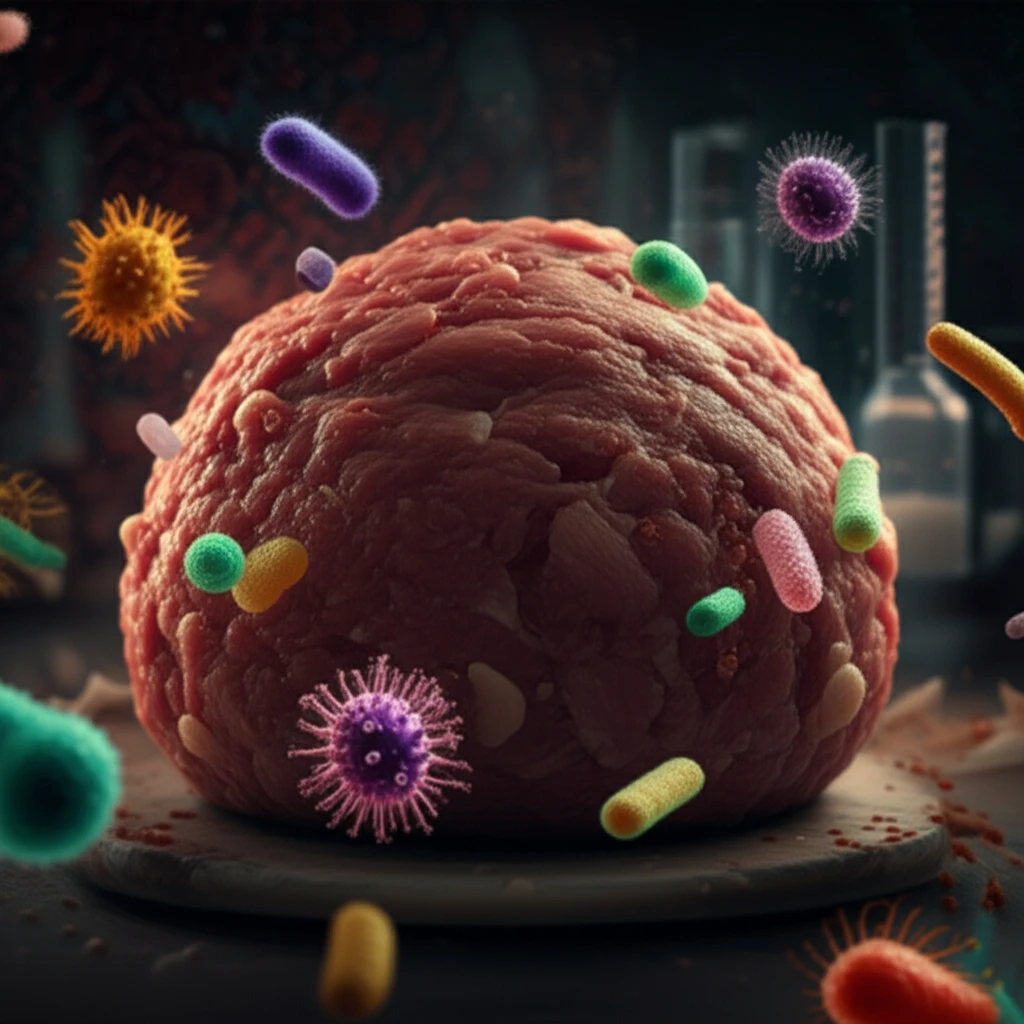
Raw meatball with microscopic bacteria, symbolizing hidden dangers

Is Your Raw Meatball Safe? A Deep Dive into Brucella Risks

"Uncover the hidden dangers in traditional raw meatballs and how to protect yourself from foodborne illnesses."


Raw meatballs, a traditional delicacy, hold a special place in many cultures. Yet, this culinary delight can pose significant health risks if not prepared and handled correctly. One of the primary concerns is the survival and potential spread of harmful bacteria, such as Brucella abortus and Brucella melitensis, which can cause brucellosis, a severe and debilitating illness.

Brucellosis is a zoonotic infection prevalent worldwide, affecting both animals and humans. It's primarily contracted through the consumption of unpasteurized milk or dairy products. Brucella can also spread through contaminated meat products. Given that raw meatballs don't undergo thermal treatment to kill bacteria, understanding the behavior of Brucella in these foods is critical for public health.

This article delves into a study that examines the survival and reproducibility of Brucella abortus and Brucella melitensis in raw meatball samples. By understanding the conditions under which these bacteria can thrive or diminish, we can gain valuable insights into how to minimize the risk of infection and enjoy traditional foods more safely.

Understanding the Brucella Threat in Raw Meatballs

Raw meatball with microscopic bacteria, symbolizing hidden dangers

The study focused on çiğ köfte (raw meatball), a traditional dish in Turkey and Southeastern Anatolia. These meatballs typically consist of finely ground lean mutton or beef, mixed with bulgur (fine wheat groats), onions, garlic, paste, parsley, and various spices. The absence of a cooking process means that any bacteria present in the raw ingredients can survive and potentially cause illness.

Researchers aimed to determine how long Brucella abortus and Brucella melitensis could survive in raw meatball samples stored over 24 hours. They contaminated samples with known levels of these bacteria (104 and 106 CFU/g) and monitored their populations under controlled conditions.

  • Sample Preparation: Raw meatballs were prepared following a traditional recipe, ensuring consistency in ingredients and method.
  • Bacterial Inoculation: Samples were contaminated with Brucella abortus and Brucella melitensis strains at specified concentrations.
  • Storage Conditions: Meatballs were stored at +4°C to mimic typical refrigeration.
  • Monitoring: Samples were analyzed at 0, 6, 12, and 24-hour intervals to track bacterial survival and reproduction.
  • Chemical Analysis: pH, water activity (aw), and moisture content were measured to understand their impact on bacterial behavior.
The study's results indicated that Brucella's survival is influenced by several factors, including storage time, temperature, pH, and moisture content. While the bacterial populations initially remained stable, changes occurred over the 24-hour storage period. Understanding these dynamics is essential for developing strategies to mitigate risks.

Protecting Yourself: Practical Tips for Safe Consumption

Given the potential risks associated with consuming raw meatballs, several precautions can minimize the likelihood of infection. These strategies range from ensuring high-quality ingredients to modifying preparation methods:

About this Article -

This article was crafted using a human-AI hybrid and collaborative approach. AI assisted our team with initial drafting, research insights, identifying key questions, and image generation. Our human editors guided topic selection, defined the angle, structured the content, ensured factual accuracy and relevance, refined the tone, and conducted thorough editing to deliver helpful, high-quality information.See our About page for more information.

Everything You Need To Know

1

What are the primary bacteria of concern in raw meatballs, and what illness do they cause?

The primary bacteria of concern in raw meatballs are *Brucella abortus* and *Brucella melitensis*. These bacteria can cause brucellosis, a severe zoonotic infection that affects both animals and humans. This illness can be debilitating and is contracted through the consumption of contaminated food products, among other means.

2

How does the absence of cooking in raw meatballs contribute to the risk of infection from *Brucella*?

The absence of thermal treatment in raw meatballs is a significant factor in the risk of *Brucella* infection. Since the raw ingredients are not cooked, any *Brucella abortus* or *Brucella melitensis* present in the meat or other components can survive. This allows the bacteria to potentially cause illness when consumed, unlike cooked meat products where heat kills the bacteria.

3

What factors influence the survival of *Brucella* in raw meatballs, according to the study?

The study indicated that several factors influence the survival of *Brucella* in raw meatballs. These include storage time, temperature, pH level, and moisture content. The bacterial populations were monitored over a 24-hour period under controlled conditions, revealing how these environmental aspects impact the bacteria's viability and potential for reproduction within the meatball samples.

4

What is the significance of monitoring *Brucella* in *çiğ köfte* (raw meatball) samples and what are the implications of the study's findings?

Monitoring *Brucella* in *çiğ köfte* samples is crucial because it helps assess the risk of foodborne illness associated with consuming this traditional dish. The study's findings on the survival and behavior of *Brucella abortus* and *Brucella melitensis* under different storage conditions can inform strategies to mitigate risks. This includes providing insights into safe preparation practices, the importance of ingredient quality, and the need for careful handling and storage to minimize the chances of bacterial growth and transmission.

5

What are some practical steps one can take to minimize the risk of brucellosis when consuming raw meatballs?

To minimize the risk of brucellosis when consuming raw meatballs, consumers should focus on several key precautions. These include ensuring the use of high-quality ingredients, particularly meat that is sourced from reputable suppliers and free from contamination. Furthermore, careful handling and preparation are essential, as well as proper storage at refrigeration temperatures (+4°C). While cooking is the most effective method to eliminate *Brucella*, understanding these steps offers additional safety measures to enjoy traditional foods like *çiğ köfte* more safely.

Newsletter Subscribe

Subscribe to get the latest articles and insights directly in your inbox.