
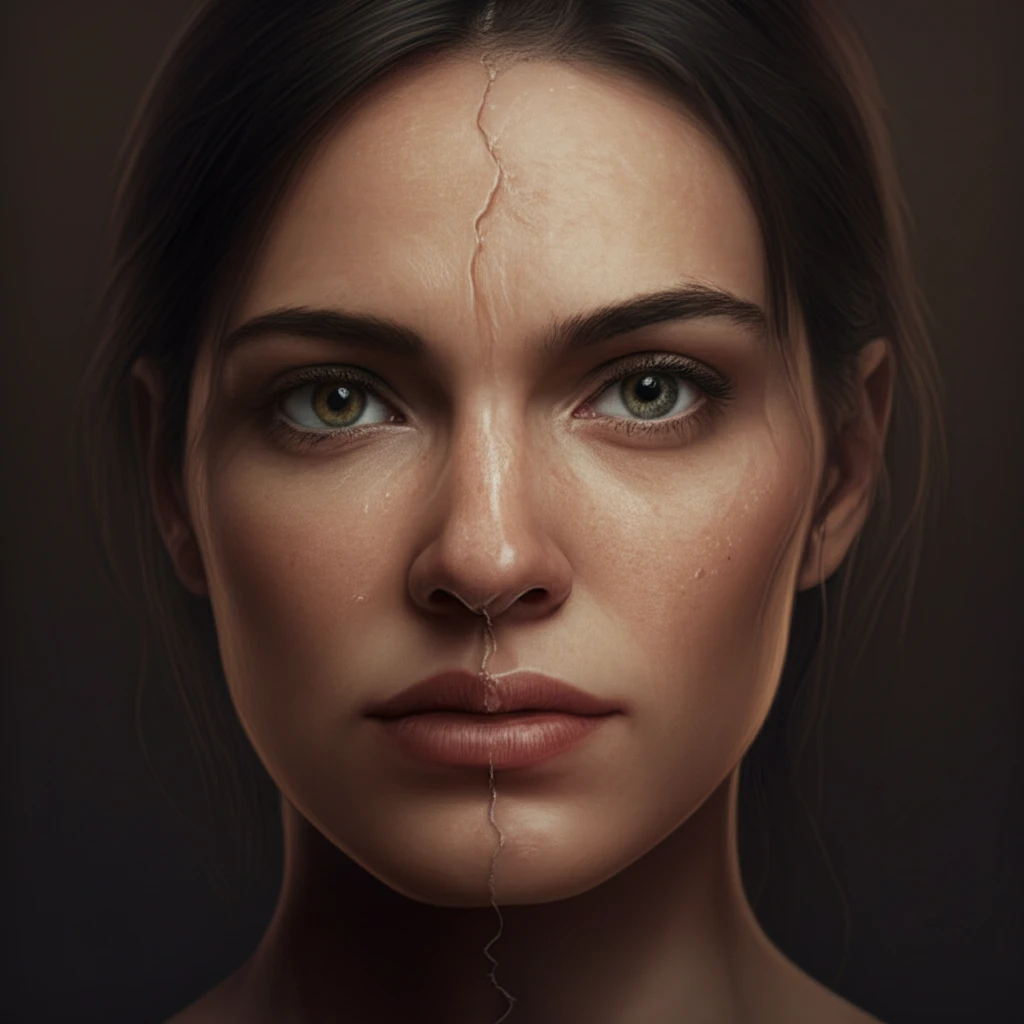
Is Your Photo Editing Software Making You Look Fake? The Truth About Natural Image Smoothing

"Discover the secrets to achieving flawless, yet authentic, images with innovative scale-aware filtering techniques."
In today's visually saturated world, images are more than just memories; they are a crucial part of our personal and professional brand. Whether it’s a profile picture on social media, a headshot for a corporate website, or images for marketing campaigns, the quality and authenticity of these visuals matter. However, achieving that perfect balance between polished and natural can be a daunting task.
Traditional image editing techniques often fall short, either blurring away essential details or leaving behind distracting artifacts. The challenge lies in removing unwanted noise, textures, and imperfections without sacrificing the unique characteristics that make an image genuine and relatable. This is where advanced image smoothing techniques come into play, offering a sophisticated solution that preserves the integrity of your photos.
This article explores cutting-edge methods in image smoothing, designed to strike the perfect balance between enhancement and authenticity. We'll delve into the innovative use of scale-aware filters and adaptive L0 norm techniques, which promise to revolutionize the way we approach image editing. Discover how these methods can help you achieve flawless yet natural-looking images, enhancing your visual presence without compromising on genuineness.
Why Natural Smoothing Matters
Natural image smoothing is a balance between reducing distracting texture and preserving the visual details that make a face recognizable. Excessive editing can make a photograph appear artificial, while restrained adjustments may support a more realistic result. The impact depends on the image, the intended use, and how strongly the software applies its corrections.
Balancing Smoothness and Detail
Common image-enhancement methods include thresholding, sharpening, and morphological erosion, with performance evaluated using measures such as Mean Squared Error (MSE), compression ratio, and Peak Signal-to-Noise Ratio (PSNR). Smoothing can make an image overly soft and remove fine details, while excessive sharpening can amplify noise or create artifacts. More recent work identifies texture variation and the effective use of edge structure as limitations of existing approaches, motivating methods such as the texture intensity adaptive edge consistency network model (TIAEC-Net).
From Darkrooms to AI
Photo editing has developed from early darkroom techniques into digital tools, Photoshop, and current AI-based systems. Historical accounts trace photography editing and manipulation back to 1826, before Photoshop existed. Across that progression, editing has carried artistic, political, and ethical implications as well as technical ones.
What is Scale-Aware Image Smoothing and Why Should You Care?
Scale-aware image smoothing represents a significant leap forward in image processing. Unlike conventional filters that apply uniform smoothing across an entire image, scale-aware filters intelligently adapt to different scales and features within the photo. This means small, fine details are preserved while larger areas of noise and unwanted texture are effectively smoothed out.
- Preserves Natural Details: Unlike traditional methods, scale-aware filters retain essential fine details, ensuring images look authentic.
- Removes Complex Details Simultaneously: Efficiently eliminates noise, textures, and imperfections in one go.
- Mimics Human Perception: By focusing on overall structural features, it provides results that align with natural human vision.
- Enhances Visual Appeal: Creates balanced, polished images that are both visually pleasing and genuine.
Researching Smarter Smoothing
Recent image-smoothing research is exploring models that reduce unwanted texture while retaining important image structure. A May 2026 paper proposes a deep unsupervised smoothing model with dynamic guidance and reports improved smoothing quality. Another study proposes a method based on global gradient sparsity and local structure to address the challenge of removing texture while preserving the main structure of an image.
When Retouching Goes Too Far
Editing mistakes can reduce the impact of an otherwise strong photograph, particularly when adjustments become visibly excessive. The cited guidance highlights over-stylizing as one major problem and emphasizes achieving a natural, professional-looking result. Other common retouching discussions similarly focus on avoiding edits that make images look overdone rather than improved.
Choosing Tools by the Job
Photo-editing software differs according to the work it is designed to handle, so comparisons should consider the photographer's actual task rather than a single universal ranking. PCMag describes its 2026 recommendations as based on extensive testing of major industry software. For maximum image quality, Digital Camera World points to powerful Raw processors such as DxO PhotoLab, while traditional layer-based applications such as Adobe Photoshop are suited to retouching and compositing.
The Future of Image Smoothing: More Natural, More Authentic
As technology continues to evolve, the future of image smoothing looks promising. With ongoing research and development, we can expect even more sophisticated techniques that offer greater control over the smoothing process, while still maintaining the authenticity of the original image. Whether you're a professional photographer, a social media enthusiast, or simply someone who enjoys taking pictures, these advancements will undoubtedly transform the way we capture and share visual content.
What Good Smoothing Requires
Skin-smoothing tools combine practical editing controls with underlying image-processing techniques intended to reduce unwanted variation while maintaining a believable appearance. A technical survey of photo-editor skin smoothers covers their algorithms, evaluation methods, production guidance, and ethical and legal considerations. Common approaches discussed in image-smoothing research include mean, median, Gaussian, and bilateral filtering, each used to study different forms of image noise.
Toward More Adaptive Editing
Future photo-editing tools will likely continue moving toward more adaptive smoothing that responds to texture, edges, and the intended visual result. Progress may make natural-looking corrections easier, but the quality of those results will still depend on how systems distinguish genuine detail from unwanted variation. Human judgment is therefore likely to remain important as editing becomes more automated.
Beyond the Filter
Image smoothing is both a technical and social issue because editing tools affect how people represent bodies, identity, and selfhood. Research on newer smartphones and dedicated editing apps examines how image-editing capabilities have become standard and may be changing the relationship between bodies and selfhood. On the technical side, an unsupervised framework combines attention mechanisms, multiple loss constraints, and a cycle-consistent generative adversarial network for unpaired data, illustrating the complexity of building systems that can learn without matched examples.
Editing in Practice
Real-world photo-editing work extends beyond individual portraits to commercial workflows involving enhancement, retouching, and background removal. Cutout Partner reports using image-editing expertise to help global businesses scale, improve operational efficiency, and strengthen brand identity. In one case study, Flatworld Solutions edited more than 80,000 raw hotel and property images using High Dynamic Range (HDR) techniques within 20 days for a US-based company.