
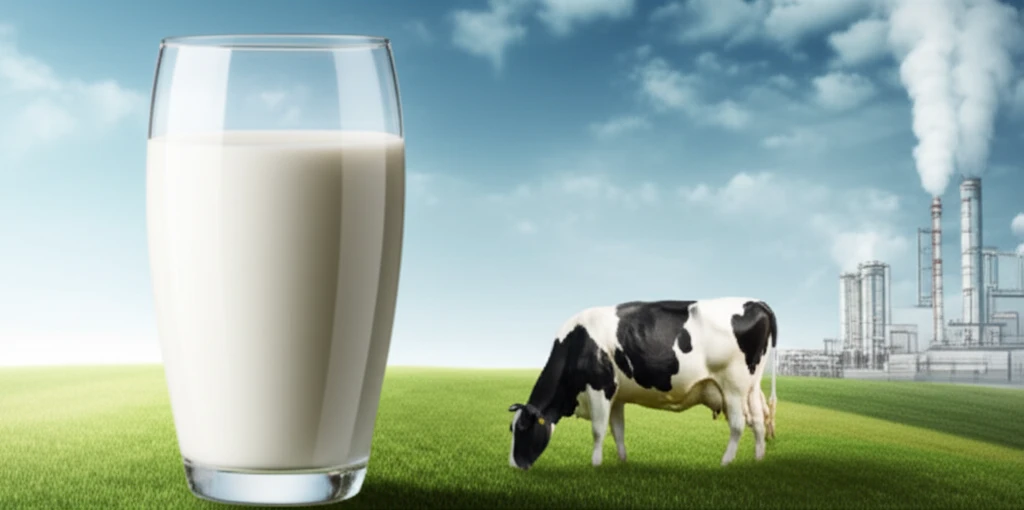
Illustration showing the journey of milk from the farm to the table, highlighting dairy processing stages.

Is Your Milk Safe? Unpacking the Hidden Risks of Dairy and How It's Processed

"From Farm to Fridge: A Deep Dive into Dairy Production and the Potential Contaminants You Should Know About."


Dairy products are a staple in many diets, celebrated for their nutritional benefits and versatility. But have you ever stopped to consider the journey your milk takes from the farm to your fridge? This journey involves multiple processing steps, and while these steps are designed to ensure safety and extend shelf life, they can also introduce complexities regarding potential contaminants.

Recent research has brought to light the presence of pyrrolizidine alkaloids (PAs), toxic compounds found in certain plants, which can potentially contaminate milk when cows graze on these plants. This has spurred a closer look at how dairy processing methods affect these compounds and whether they pose a risk to consumers. The good news is that many processes are in place to minimize risks.

This article delves into the world of dairy production, exploring the science behind milk processing, the potential for contaminants, and what it all means for you and your family. We'll examine each step, from the farm practices to the final product, providing a comprehensive understanding of milk safety.

The Dairy Journey: From Pasture to Processing Plant

Illustration showing the journey of milk from the farm to the table, highlighting dairy processing stages.

The journey of milk begins on the farm, where the health and diet of dairy cows play a crucial role. Cows that graze on pastures containing certain plants, such as ragwort, can ingest pyrrolizidine alkaloids. These alkaloids are naturally occurring toxins produced by plants as a defense mechanism. If ingested, they can potentially make their way into the milk.

Once the milk is collected, it moves to a processing plant, where it undergoes several key steps, including thermization, pasteurization, and sterilization. These processes are designed to eliminate harmful bacteria, extend shelf life, and ensure the milk is safe for consumption. However, these processes can also affect the levels of any existing contaminants. For example, high-heat treatments, like those used for UHT (Ultra-High Temperature) milk, can alter the chemical structure of some compounds.

  • Thermization: A mild heat treatment to prevent spoilage before further processing.
  • Pasteurization: Heating milk to a specific temperature for a short time to kill harmful bacteria.
  • Sterilization (UHT): Heating milk at very high temperatures for a short time to eliminate nearly all microorganisms, extending shelf life.
  • Homogenization: Breaking down fat globules to prevent cream separation, resulting in a consistent texture.
Beyond these core processes, milk can be further transformed into a variety of products, such as yogurt and cheese. Each of these transformations brings its own set of variables that can influence the presence and concentration of potential contaminants. The specific methods used, such as fermentation for yogurt or curdling and ripening for cheese, all impact the final product composition.

Making Informed Choices About Dairy

Understanding the complexities of dairy production and the potential for contaminants like pyrrolizidine alkaloids empowers consumers to make informed choices. While the dairy industry employs rigorous safety measures, being aware of these factors enables you to evaluate different products, understand the implications of various processing methods, and make choices that align with your health and dietary preferences. By staying informed, you can confidently enjoy the benefits of dairy while being mindful of its potential risks.

About this Article -

This article was crafted using a human-AI hybrid and collaborative approach. AI assisted our team with initial drafting, research insights, identifying key questions, and image generation. Our human editors guided topic selection, defined the angle, structured the content, ensured factual accuracy and relevance, refined the tone, and conducted thorough editing to deliver helpful, high-quality information.See our About page for more information.

This article is based on research published under:

DOI-LINK: 10.1080/19440049.2017.1364432, Alternate LINK

Title: Fate Of Pyrrolizidine Alkaloids During Processing Of Milk Of Cows Treated With Ragwort

Subject: Health, Toxicology and Mutagenesis

Journal: Food Additives & Contaminants: Part A

Publisher: Informa UK Limited

Authors: Monique De Nijs, Patrick P. J. Mulder, Mirjam D. Klijnstra, Frank Driehuis, Ron L. A. P. Hoogenboom

Published: 2017-08-25

Everything You Need To Know

1

What are pyrrolizidine alkaloids, and why are they a concern in dairy production?

Pyrrolizidine alkaloids (PAs) are naturally occurring toxins produced by certain plants as a defense mechanism. They become a concern in dairy production when cows graze on pastures containing these plants, such as ragwort. If ingested, pyrrolizidine alkaloids can potentially contaminate milk, posing a risk to consumers. Although processes are in place to minimize this risk, their presence necessitates a closer look at dairy processing methods and their effect on these compounds. Monitoring cow diets and pasture management are essential to mitigating PA contamination.

2

Can you explain the differences between thermization, pasteurization, and sterilization (UHT) in milk processing?

Thermization, pasteurization, and sterilization (UHT) are all heat treatments used in milk processing, but they differ in intensity and purpose. Thermization is a mild heat treatment used to prevent spoilage before further processing. Pasteurization involves heating milk to a specific temperature for a short time to kill harmful bacteria while preserving its flavor and nutritional value. Sterilization, particularly Ultra-High Temperature (UHT) processing, heats milk at very high temperatures for a short time to eliminate nearly all microorganisms, extending its shelf life significantly, although this can alter the chemical structure of some compounds and potentially affect flavor.

3

How does homogenization affect the composition of milk?

Homogenization is the process of breaking down fat globules in milk to prevent cream separation, resulting in a consistent texture. This process doesn't eliminate the fat content, but it distributes the fat more evenly throughout the milk. While homogenization primarily affects the physical properties of milk, altering its texture and appearance, it is a standard procedure and makes milk more palatable for many consumers.

4

How do different dairy products like yogurt and cheese influence the presence and concentration of potential contaminants?

The transformation of milk into products like yogurt and cheese introduces variables that can influence the presence and concentration of potential contaminants, such as pyrrolizidine alkaloids. For example, in yogurt production, fermentation can alter the composition of milk and potentially affect the levels of contaminants. Similarly, in cheese production, curdling and ripening processes can either concentrate or degrade these compounds. The specific methods and ingredients used in each product play a significant role in the final composition.

5

What steps can consumers take to make informed choices about dairy consumption, considering potential contaminants?

Consumers can take several steps to make informed choices about dairy consumption. Start by staying informed about dairy production practices and potential contaminants like pyrrolizidine alkaloids. Evaluate different dairy products and understand the implications of various processing methods (thermization, pasteurization, UHT). Consider the source of the milk and whether the dairy employs rigorous safety measures, including pasture management to minimize pyrrolizidine alkaloid contamination. Balancing these factors allows consumers to confidently enjoy the nutritional benefits of dairy while being mindful of its potential risks. Researching brands and their commitment to safety and sustainable practices is highly recommended.

Newsletter Subscribe

Subscribe to get the latest articles and insights directly in your inbox.