
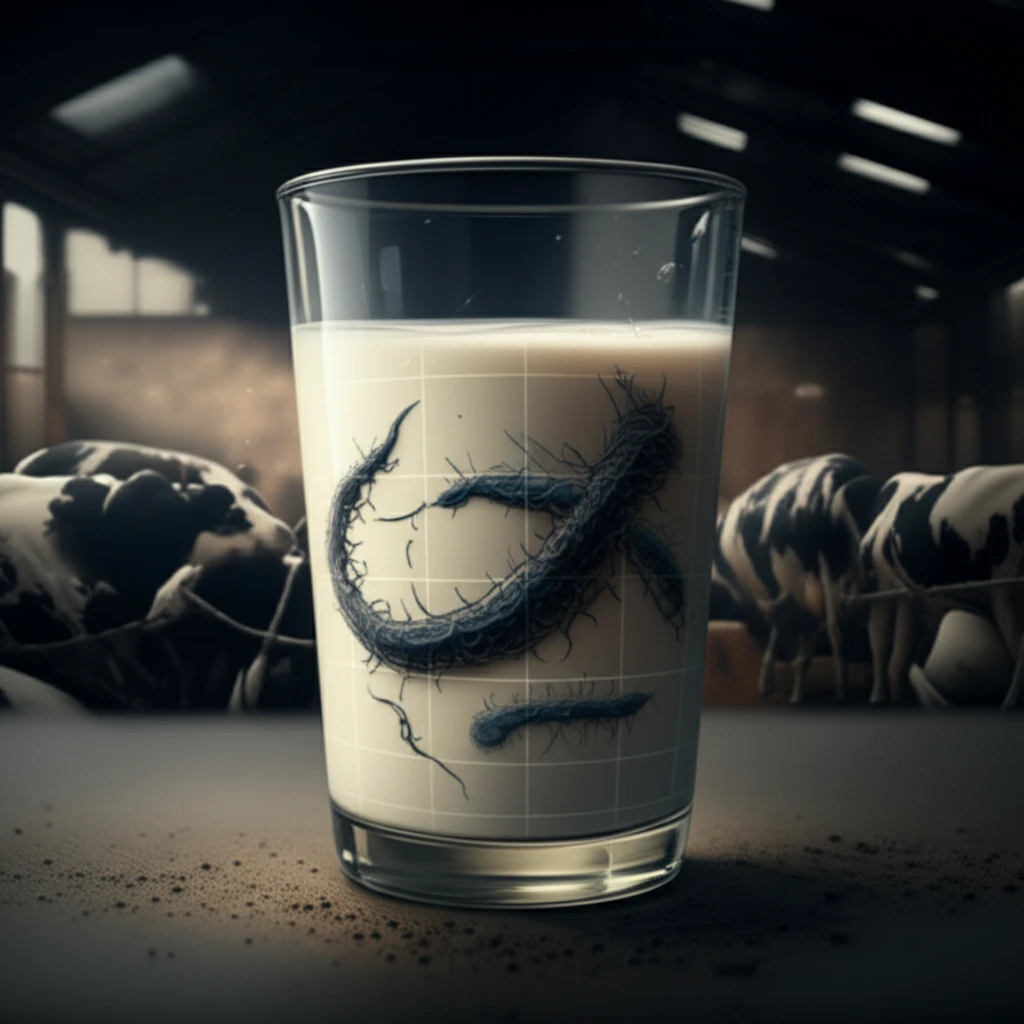
Surreal illustration of drug-resistant bacteria in milk.

Is Your Milk Safe? Drug-Resistant Bacteria Found in Cow Milk

"A new study reveals the alarming presence of drug-resistant Staphylococcus aureus in milk. Learn how to protect yourself and your family."


Milk, a staple in many diets, is vulnerable to contamination from various microbial pathogens. While pasteurization, boiling, and refrigeration help minimize these risks, the presence of Staphylococcus aureus, a common cause of cow mastitis, continues to be a concern. Recent reports have found this bacteria in pasteurized, raw, and ultra-high temperature (UHT) milk, linking it to potential foodborne illnesses.

Staphylococcus aureus possesses virulence factors that allow it to form biofilms—complex communities of attached organisms encased in a protective matrix. These biofilms shield the bacteria from antimicrobials, making them difficult to eliminate. Biofilm formation is considered a significant virulence property, enhancing the bacteria's ability to cause harm.

A new study has investigated the prevalence of Staphylococcus aureus in cow milk and its resistance to common drugs. The findings reveal concerning trends and highlight the importance of proper hygiene practices in milk production.

The Alarming Reality: Drug-Resistant Bacteria in Your Milk

Surreal illustration of drug-resistant bacteria in milk.

Researchers collected 90 cow milk samples from retail locations, including raw, pasteurized, and UHT milk. They tested these samples for the presence of Staphylococcus aureus and assessed the bacteria's ability to form biofilms. Additionally, they determined the drug resistance profiles of the isolated bacteria using a disc-diffusion method.

The results revealed that Staphylococcus aureus was present in 24.4% of the milk samples, with the highest prevalence found in pasteurized milk. Biofilm production was observed in all Staphylococcus aureus isolates from pasteurized and UHT milk, and in 81.8% of the strains from raw milk. Furthermore, 46.7% of the Staphylococcus aureus strains exhibited resistance to common drugs.

  • Pasteurized Milk: Staphylococcus aureus was found in 11 out of 30 samples, with all isolates producing biofilms. A staggering 75% of these isolates were resistant to at least one drug.
  • Raw Milk: Seven out of 30 raw milk samples contained Staphylococcus aureus, with 81.8% forming biofilms. 45.4% of these isolates showed drug resistance.
  • UHT Milk: Four out of 30 UHT milk samples tested positive for Staphylococcus aureus, and all isolates formed biofilms. 28.6% of these isolates were drug-resistant.
These findings are particularly concerning because they indicate that even milk treated with pasteurization or UHT processes is not entirely free from potentially harmful bacteria. The presence of drug-resistant strains further complicates the issue, as common antibiotics may not be effective in treating infections caused by these bacteria. The high prevalence of biofilm formation also adds to the challenge, as biofilms protect bacteria from antimicrobial agents and make them more difficult to eradicate.

Protecting Yourself: What You Can Do

The study underscores the importance of implementing stringent hygiene practices throughout the milk production chain, from dairy farms to processing plants. Consumers can also take steps to minimize their risk of exposure to drug-resistant bacteria in milk. Always ensure that milk is properly pasteurized or boiled before consumption. While UHT milk is generally considered safe, it's still wise to store it properly and consume it before the expiration date. By staying informed and taking proactive measures, you can protect yourself and your family from the potential dangers of drug-resistant bacteria in milk.

About this Article -

This article was crafted using a human-AI hybrid and collaborative approach. AI assisted our team with initial drafting, research insights, identifying key questions, and image generation. Our human editors guided topic selection, defined the angle, structured the content, ensured factual accuracy and relevance, refined the tone, and conducted thorough editing to deliver helpful, high-quality information.See our About page for more information.

This article is based on research published under:

DOI-LINK: 10.1007/s00003-018-1186-5, Alternate LINK

Title: Biofilm-Formation By Drug-Resistant Staphylococcus Aureus From Cow Milk

Subject: Agronomy and Crop Science

Journal: Journal of Consumer Protection and Food Safety

Publisher: Springer Science and Business Media LLC

Authors: Renata Albuquerque Costa, Jeniffer Vasconcelos De Lira, Márcia Facundo Aragão

Published: 2018-09-29

Everything You Need To Know

1

What is Staphylococcus aureus and why is it a concern in milk?

Staphylococcus aureus is a type of bacteria that is a common cause of cow mastitis, which can contaminate milk. The presence of Staphylococcus aureus is concerning because it can cause foodborne illnesses. Moreover, certain strains exhibit drug resistance, making infections harder to treat. The bacteria's ability to form biofilms further complicates the situation, as these structures protect the bacteria from antimicrobials, increasing the risk to consumers.

2

How does milk processing, such as pasteurization and UHT treatment, affect the presence of Staphylococcus aureus?

Pasteurization, and Ultra-High Temperature (UHT) treatment are designed to kill harmful bacteria in milk. However, the study shows that Staphylococcus aureus was still detected in pasteurized and UHT milk samples, although at varying rates. Pasteurization is designed to reduce, but not necessarily eliminate all bacteria. UHT milk, though treated at higher temperatures, also showed the presence of Staphylococcus aureus in samples, highlighting that these processes do not always guarantee complete removal of the bacteria, particularly the drug-resistant strains which pose significant challenges.

3

What are biofilms, and how do they contribute to the danger of drug-resistant Staphylococcus aureus in milk?

Biofilms are complex communities of bacteria encased in a protective matrix. In the context of milk contamination, Staphylococcus aureus forms biofilms that shield the bacteria from antimicrobials, making them harder to eliminate. This protection is a significant virulence property because it enhances the bacteria's ability to cause harm. Therefore, the presence of biofilms in drug-resistant strains of Staphylococcus aureus increases the risk of infections that are difficult to treat, potentially leading to more severe health outcomes.

4

What percentage of milk samples tested positive for Staphylococcus aureus, and how does the prevalence vary among different milk types?

The study found that Staphylococcus aureus was present in 24.4% of all milk samples. The prevalence varied across different milk types: Pasteurized milk had the highest prevalence, with the bacteria found in 11 out of 30 samples. Raw milk had Staphylococcus aureus in 7 out of 30 samples. UHT milk had the lowest prevalence with 4 out of 30 samples testing positive. These findings suggest that while processing methods reduce the presence of Staphylococcus aureus, they do not always eliminate it completely, especially with drug-resistant strains.

5

What practical steps can consumers take to minimize their risk of exposure to drug-resistant bacteria in milk?

Consumers can take several steps to minimize their risk. First, ensure that milk is properly pasteurized or boiled before consumption. While UHT milk is generally considered safe, it's crucial to store it properly and consume it before the expiration date. It's also important to stay informed about food safety issues and follow recommended hygiene practices. Supporting milk production practices that prioritize hygiene throughout the milk production chain, from dairy farms to processing plants, can further enhance the safety of the milk supply.

Newsletter Subscribe

Subscribe to get the latest articles and insights directly in your inbox.