
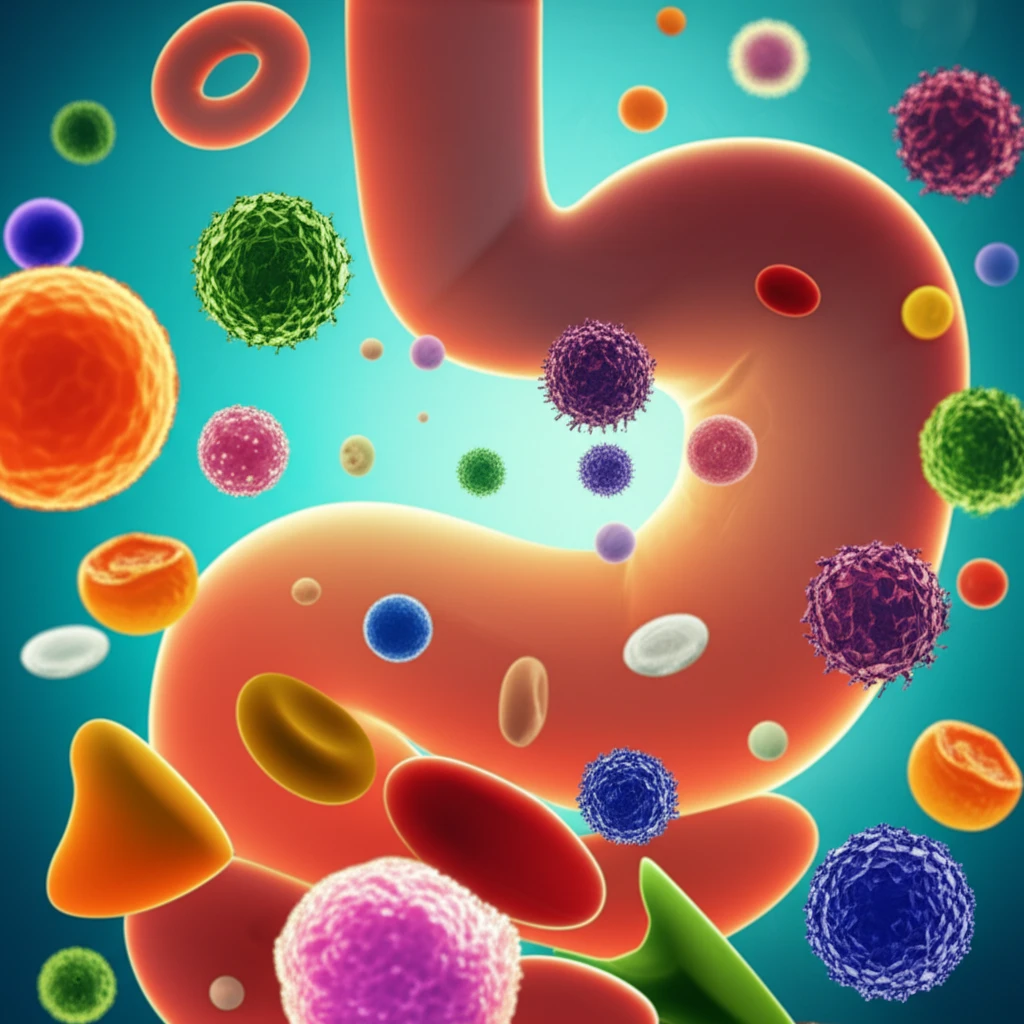
Microscopic view of nanoparticles interacting with food in the digestive system, highlighting potential food safety concerns.

Is Your Food Safe? The Impact of Nanomaterials on Gut Health

"Discover how scientists are standardizing food models to understand and mitigate the potential risks of ingested nanomaterials."


In today's world, nanotechnology is everywhere, from printer toners to the food we eat. Engineered nanomaterials (ENMs) are increasingly used in the food and agriculture industries to enhance food quality, improve sensory appeal, extend shelf life, and ensure safety. These tiny particles can be intentionally added to food products or unintentionally enter them through packaging materials. As a result, it's crucial to understand how these materials affect our health, especially when ingested.

When ENMs enter our bodies, they pass through the gastrointestinal tract (GIT), where they can interact with various biological systems. The properties of ENMs change significantly as their dimensions are reduced to the nanoscale, making it essential to establish their safety profiles. Studies suggest that certain nanoparticles may have pathogenic potential, causing genotoxicity, cytotoxicity, oxidative stress, and immunotoxicity. However, the biological effects of nanoparticles depend on their immediate environment, including the food matrix they are ingested with.

Recognizing the importance of food matrix effects, scientists are working to develop standardized food models that can help evaluate the potential toxicity and fate of ingested ENMs. This research aims to create reliable methods for comparing results across different laboratories and assessing the impact of food matrix effects on human health. By understanding how ENMs interact with the food we eat, we can better assess and mitigate potential risks.

Why a Standardized Food Model Matters for Nanomaterial Safety

Microscopic view of nanoparticles interacting with food in the digestive system, highlighting potential food safety concerns.

The food matrix, which includes a variety of molecular and colloidal species, can significantly alter the way ENMs behave in the GIT. This matrix influences properties such as solubility, surface composition, electrical charge, and aggregation state. Consequently, the gastrointestinal fate and potential toxicity of nanoparticles can be heavily influenced by the food we eat them with. Therefore, there's a need for standardized food models that researchers can use to reliably compare results across different laboratories.

A recent study published in the journal NanoImpact details the development of such a standardized food model (SFM) designed to evaluate the toxicity and fate of ingested ENMs. The SFM is formulated to mimic the average composition of the U.S. diet, including proteins, sugars, carbohydrates, fats, and minerals. This model is versatile, suitable for use in both wet and dried forms, and can be used to simulate the conditions of the mouth, stomach, and small intestine.

  • Protein: Sodium caseinate (3.4%)
  • Sugar: Sucrose (4.6%)
  • Digestible Carbohydrates: Modified corn starch (5.2%)
  • Dietary Fiber: Pectin (0.7%)
  • Fat: Corn oil (3.4%)
  • Minerals: Sodium chloride (0.5%)
The researchers behind the NanoImpact study rigorously characterized their SFM, measuring particle size, surface charge, viscosity, color, and microstructure. They also examined its hydration properties, flowability, and moisture sorption isotherms. The study further explored the SFM's gastrointestinal fate using a simulated digestion process, confirming that converting the SFM into a powdered form did not impact its behavior in the digestive tract.

The Future of Food Safety: Standardized Models and Beyond

The development of standardized food models represents a significant step forward in the field of food safety and nanotoxicology. By providing a consistent and reliable method for evaluating the potential risks of ingested ENMs, these models can help researchers better understand the impact of food matrix effects on human health. While in vitro models offer valuable insights, future studies should also include animal models to provide a more comprehensive assessment of the pathogenicity of ingested ENMs.

About this Article -

This article was crafted using a human-AI hybrid and collaborative approach. AI assisted our team with initial drafting, research insights, identifying key questions, and image generation. Our human editors guided topic selection, defined the angle, structured the content, ensured factual accuracy and relevance, refined the tone, and conducted thorough editing to deliver helpful, high-quality information.See our About page for more information.

Everything You Need To Know

1

What are engineered nanomaterials (ENMs) and why are they a concern in food?

Engineered nanomaterials (ENMs) are tiny particles used in the food and agriculture industries to improve food quality, shelf life, and safety. However, their small size allows them to interact with biological systems in unique ways. The potential health concerns arise because ENMs can cause genotoxicity, cytotoxicity, oxidative stress, and immunotoxicity when ingested. This is why scientists are studying their effects, specifically how they interact with our gastrointestinal tract (GIT).

2

How do the properties of engineered nanomaterials (ENMs) change at the nanoscale and what impact does it have?

When materials are reduced to the nanoscale, their properties change significantly. This is due to their high surface area-to-volume ratio, which allows for different interactions with the environment, including biological systems. These changes can alter the solubility, surface composition, electrical charge, and aggregation state of the ENMs. As a result, the gastrointestinal fate and potential toxicity of these nanoparticles are heavily influenced, making understanding their behavior within the body crucial.

3

Why is a Standardized Food Model (SFM) important for studying nanomaterials in food?

A Standardized Food Model (SFM) is essential because the food matrix, composed of proteins, sugars, carbohydrates, fats, and minerals, significantly alters how Engineered Nanomaterials (ENMs) behave within the gastrointestinal tract (GIT). The SFM helps researchers understand how these interactions affect the toxicity and fate of ENMs. By using a consistent model, scientists can reliably compare results across different laboratories, leading to more accurate assessments of ENMs' impact on human health. The SFM mimics the average composition of the U.S. diet including components like Sodium caseinate, Sucrose, Modified corn starch, Pectin, Corn oil and Sodium chloride.

4

What are the key components of the Standardized Food Model (SFM) and how is it used?

The Standardized Food Model (SFM) is designed to mimic the average U.S. diet, including key components such as Sodium caseinate (3.4% protein), Sucrose (4.6% sugar), Modified corn starch (5.2% digestible carbohydrates), Pectin (0.7% dietary fiber), Corn oil (3.4% fat), and Sodium chloride (0.5% minerals). Researchers use the SFM to evaluate the toxicity and fate of ingested Engineered Nanomaterials (ENMs). The SFM is versatile, usable in both wet and dried forms, and simulates conditions in the mouth, stomach, and small intestine to observe how ENMs behave during digestion.

5

What steps are being taken to ensure the safety of food concerning nanomaterials, and what are the future directions?

To ensure food safety, researchers are developing Standardized Food Models (SFMs) to study the effects of Engineered Nanomaterials (ENMs) within the gastrointestinal tract (GIT). These models help in evaluating the potential toxicity of ENMs. Future directions involve utilizing both in vitro models, such as the SFM, and in vivo studies using animal models to provide a comprehensive assessment of the potential pathogenicity of ingested ENMs. This will allow for a more detailed understanding of how ENMs affect human health and will help to mitigate any risks associated with their use.

Newsletter Subscribe

Subscribe to get the latest articles and insights directly in your inbox.