
Is Your Food Container Really New? How to Spot Recycled Plastics

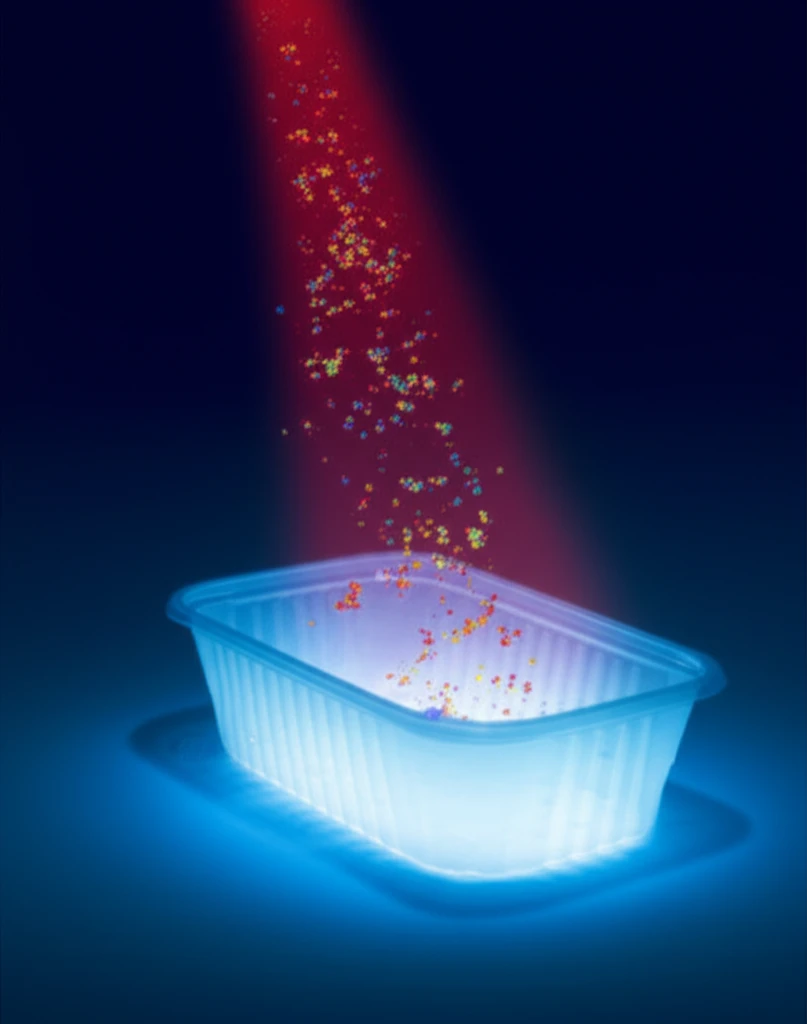
"New tech uses infrared light to quickly tell if your EPS food container has been recycled, helping ensure food safety and quality."
In today's world, the reliance on plastics is undeniable, yet the environmental consequences of our plastic consumption are becoming increasingly clear. While recycling efforts are vital, the process of mechanical recycling can lead to the degradation of plastics, potentially compromising their safety and suitability for food contact. This raises a critical question: how can we ensure that the food containers we use are truly virgin and free from harmful contaminants?
Expanded polystyrene (EPS) containers, commonly used for takeout and street food, are particularly susceptible to this issue. Some manufacturers may incorporate recycled materials into EPS production to boost profits, but recycled plastics can harbor impurities and contaminants that could migrate into food, posing health risks to consumers. Current regulations in many regions, including China and Europe, restrict or regulate the use of recycled plastics in direct food contact, underscoring the importance of reliable methods for distinguishing between virgin and recycled EPS.
Fortunately, a recent study has unveiled a promising solution: a rapid and sensitive method leveraging Fourier transform infrared (FTIR) spectroscopy and chemometrics to classify virgin and recycled EPS food containers. This innovative approach offers a way to quickly and accurately assess the composition of EPS containers, helping to ensure food safety and protect consumers from potential health hazards.
How Does Infrared Light Expose Recycled Plastics?
The core of this new method lies in the analysis of infrared spectra. Here's how it works:
- Carbonyl Region: The key to distinguishing virgin and recycled EPS lies in the carbonyl region of the infrared spectrum. Recycling processes often cause oxidative degradation of the plastic, leading to the formation of carbonyl groups (C=O).
- Chemometrics: The intensity of these carbonyl groups, as revealed by FTIR, serves as a variable for multivariate data analysis. Chemometrics, which employs mathematical and statistical methods, helps to process the complex data and build classification models.
- PCA: Principal Component Analysis (PCA) is used to reduce the data dimension and visualize sample similarities.
- Classification Models: Algorithms like SIMCA (Soft Independent Modeling of Class Analogy), PLS-DA (Partial Least Squares-Discrimination Analysis), and LDA (Linear Discrimination Analysis) are applied to construct classification models. These models are trained to differentiate between virgin and recycled EPS based on their spectral fingerprints.
What Does This Mean for You?
This research has significant implications for both consumers and the food industry. By providing a reliable method for identifying recycled EPS, it empowers consumers to make informed choices about the food containers they use. It also allows manufacturers and regulatory bodies to ensure compliance with food safety standards and regulations.
The study revealed that approximately 45% of commercially available EPS containers tested contained recycled polystyrene resins. This highlights the prevalence of recycled materials in food containers and underscores the need for greater transparency and stricter enforcement of regulations.
While this FTIR-chemometrics method offers a promising solution, it's important to note that the wide range of recycled EPS materials and varying levels of adulteration can make it challenging to build universally robust classification models. Further research and the collection of more diverse samples are needed to refine these models and enhance their accuracy. The development of portable FTIR instruments could further expand the usability of this method, making it easier to conduct routine quality control checks on EPS food containers.