
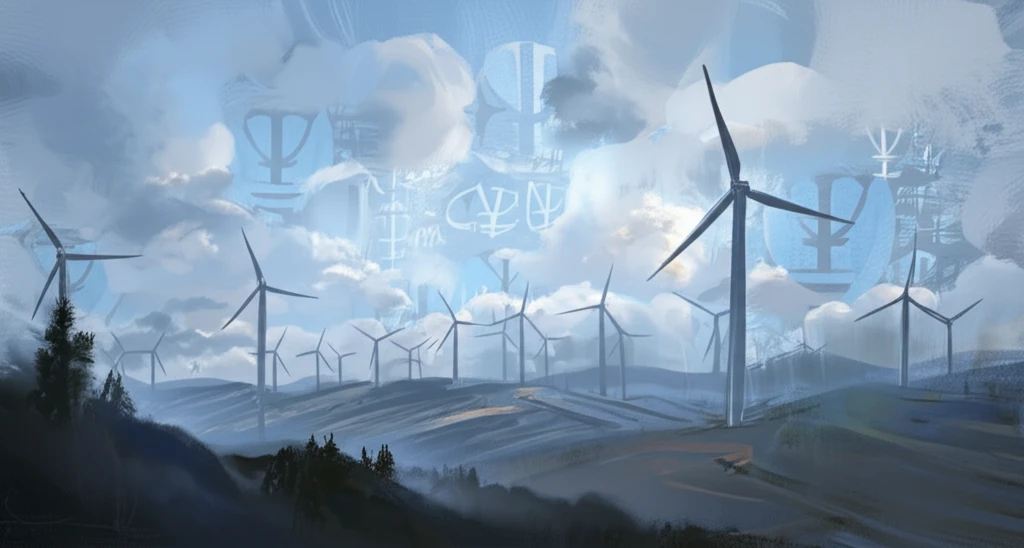
Is NIMBYism Blocking Green Energy? New Research Uncovers Surprising Truths

"A groundbreaking study from Italy challenges the common belief that local opposition ('Not In My Backyard' or NIMBY) significantly hinders wind energy development, revealing unexpected political dynamics and the real drivers behind renewable energy adoption."
The transition to renewable energy is often portrayed as a battle against public resistance. It's widely assumed that local communities, armed with NIMBY (Not In My Backyard) sentiments, actively block the installation of wind turbines and other green energy infrastructure, stalling progress toward a sustainable future. But what if this narrative isn't entirely accurate?
A recent study challenges this conventional wisdom. Federica Daniele, Guido de Blasio, and Alessandra Pasquini have meticulously examined the dynamics of wind turbine installations and electoral outcomes across municipalities in Southern Italy from 2000 to 2020. Their findings present a nuanced perspective on the relationship between local opposition and renewable energy development, suggesting that the NIMBY effect may be weaker and more politically driven than previously thought.
The research delves into whether local acceptance truly drives the deployment of wind energy plants. By analyzing 20 years' worth of data, researchers measured the extent of local acceptance in relation to wind turbine development and regional elections, challenging the assumption that NIMBY-type behavior is a major roadblock.
Does Political Alignment Trump NIMBYism When It Comes to Wind Energy?
The study's methodology involved analyzing administrative data on wind turbine installations and electoral results. The researchers focused on regional elections and employed an instrumental variable strategy, using wind speed as a key factor to determine the genuine impact of wind turbines on electoral support. This approach helped to isolate the effect of wind turbine installations from other potentially influencing variables.
- Left-Leaning Support: Voters reward left-leaning administrations that support wind turbine projects.
- Right-Leaning Hesitation: Right-leaning administrations don't see a significant backlash, suggesting NIMBYism isn't a major deterrent.
- Nuance is Key: The impact isn't uniform; it varies based on political context and local factors.
The Future of Wind Energy: Beyond NIMBYism
This research provides valuable insights for policymakers and energy developers. By understanding the nuanced dynamics of local acceptance and political alignment, stakeholders can develop more effective strategies for promoting renewable energy projects. Instead of solely focusing on combating NIMBYism, efforts should be directed toward fostering community engagement, addressing local concerns, and aligning projects with the values of the communities they serve. Ultimately, a more nuanced approach is needed to ensure a smooth and equitable transition to a sustainable energy future.