
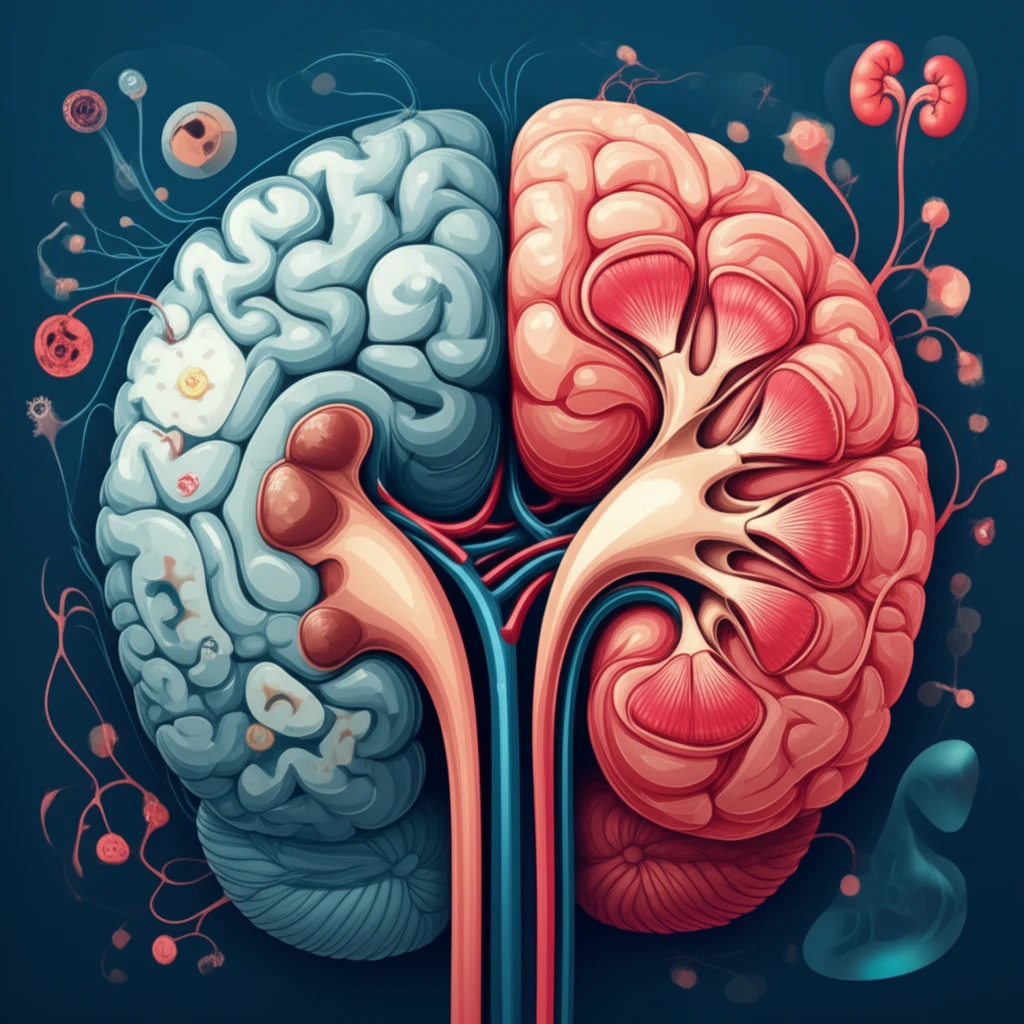
Brain and kidney intertwined, symbolizing the connection between cognitive function and kidney health.

Is Kidney Disease Silently Stealing Your Brainpower? The Hidden Link You Need to Know

"Uncover the surprising connection between chronic kidney disease and cognitive decline, and what you can do to protect your mental sharpness."


We're increasingly aware of how interconnected our bodily systems are. Recent studies shed light on a concerning link between chronic kidney disease (CKD) and cognitive decline, meaning that kidney problems might affect your thinking and memory skills.

It's not just about aging; even in the earlier stages of CKD, cognitive abilities can decrease. This connection highlights the importance of understanding how kidney health can impact overall brain health.

This article explores the link between CKD and cognitive impairment. We'll break down the research, explain why this connection matters, and outline steps you can take to protect your cognitive function if you have CKD.

The Surprising Ways Kidney Disease Impacts Your Brain

Brain and kidney intertwined, symbolizing the connection between cognitive function and kidney health.

The relationship between CKD and cognitive decline is complex, but research points to several key factors. As kidney function declines, the body struggles to filter waste and regulate vital substances, leading to a cascade of effects that can impact the brain.

Several factors may be involved in this decline:

  • Uremia: The buildup of toxins in the blood due to impaired kidney function can directly harm brain cells.
  • Inflammation: CKD is often associated with chronic inflammation, which can damage brain tissue and impair cognitive function.
  • Oxidative Stress: An imbalance between free radicals and antioxidants can lead to cellular damage in the brain.
  • Anemia: Reduced kidney function can lead to anemia, depriving the brain of the oxygen it needs to function properly.
  • Cardiovascular Issues: CKD increases the risk of hypertension and other cardiovascular problems, which can further impair cognitive function.
These factors can lead to a range of cognitive issues, including problems with memory, attention, and executive function (planning and decision-making). Recognizing these connections is the first step toward taking proactive measures.

Protecting Your Brain: What You Can Do if You Have CKD

If you have CKD, taking steps to protect your cognitive function is essential. Early intervention and proactive management can make a significant difference.

Here are some strategies to consider:

<ul> <li><b>Work Closely with Your Doctor:</b> Regular monitoring of kidney function and overall health is crucial. Discuss any cognitive changes or concerns with your healthcare provider.</li> <li><b>Manage Blood Pressure and Cardiovascular Risk Factors:</b> Keeping blood pressure under control and managing cholesterol levels can protect both your kidneys and your brain.</li> <li><b>Control Blood Sugar:</b> If you have diabetes, maintaining stable blood sugar levels is vital for preventing further kidney damage and cognitive decline.</li> <li><b>Follow a Kidney-Friendly Diet:</b> Limiting sodium, phosphorus, and potassium intake can help reduce the burden on your kidneys.</li> <li><b>Stay Active:</b> Regular physical activity can improve cardiovascular health, reduce inflammation, and boost cognitive function.</li> <li><b>Engage Your Mind:</b> Activities like puzzles, reading, and social interaction can help keep your brain sharp.</li> </ul>

About this Article -

This article was crafted using a human-AI hybrid and collaborative approach. AI assisted our team with initial drafting, research insights, identifying key questions, and image generation. Our human editors guided topic selection, defined the angle, structured the content, ensured factual accuracy and relevance, refined the tone, and conducted thorough editing to deliver helpful, high-quality information.See our About page for more information.

This article is based on research published under:

DOI-LINK: 10.1111/jch.13402, Alternate LINK

Title: Arterial Damage And Cognitive Impairment In Patients With Chronic Kidney Disease

Subject: Cardiology and Cardiovascular Medicine

Journal: The Journal of Clinical Hypertension

Publisher: Wiley

Authors: Despina Karasavvidou, Rigas Kalaitzidis, Moses Elisaf

Published: 2018-10-07

Everything You Need To Know

1

How does Chronic Kidney Disease impact brain function and cognitive abilities?

Chronic Kidney Disease (CKD) can impact cognitive abilities through several pathways. Uremia, the buildup of toxins in the blood, can directly harm brain cells. Chronic inflammation associated with CKD can also damage brain tissue. Oxidative stress, an imbalance of free radicals, contributes to cellular damage. Anemia, often resulting from reduced kidney function, deprives the brain of necessary oxygen. Finally, CKD increases the risk of cardiovascular issues like hypertension, further impairing cognitive function. These factors can lead to memory problems, attention deficits and impaired executive functions.

2

What is the role of Uremia, inflammation, oxidative stress and Anemia in cognitive decline related to Chronic Kidney Disease?

The progression of Chronic Kidney Disease (CKD) leads to a decline in kidney function, which in turn causes a buildup of toxins in the blood. This condition, known as Uremia, can directly damage brain cells, contributing to cognitive impairment. Additionally, CKD often results in chronic inflammation throughout the body, which can further harm brain tissue and impair cognitive processes. Oxidative stress and Anemia can also lead to impairment.

3

Can cognitive decline occur even in the early stages of Chronic Kidney Disease?

Yes, even in the early stages of Chronic Kidney Disease (CKD), cognitive abilities can be affected. Research indicates that the connection between kidney health and brain health is significant, and cognitive decline can occur even before the disease progresses to more advanced stages. This highlights the importance of early detection and management of CKD to protect cognitive function. Early intervention is important.

4

What are the strategies for protecting cognitive function if I have Chronic Kidney Disease?

If you have Chronic Kidney Disease (CKD), it's crucial to take proactive steps to protect your cognitive function. Early intervention and management of the underlying conditions, such as controlling hypertension and anemia, can make a significant difference. Since Uremia, inflammation, and oxidative stress contribute to cognitive decline, treatments aimed at managing these factors are helpful.

5

How does the decline in kidney function directly contribute to cognitive issues in Chronic Kidney Disease?

Chronic Kidney Disease (CKD) can trigger a cascade of issues that lead to cognitive decline. The kidneys' reduced ability to filter waste results in Uremia, directly harming brain cells. CKD-related inflammation damages brain tissue, while oxidative stress causes cellular damage. Anemia deprives the brain of needed oxygen, and cardiovascular issues exacerbate cognitive decline. These interconnected problems highlight the importance of comprehensive CKD management for brain health.

Newsletter Subscribe

Subscribe to get the latest articles and insights directly in your inbox.