
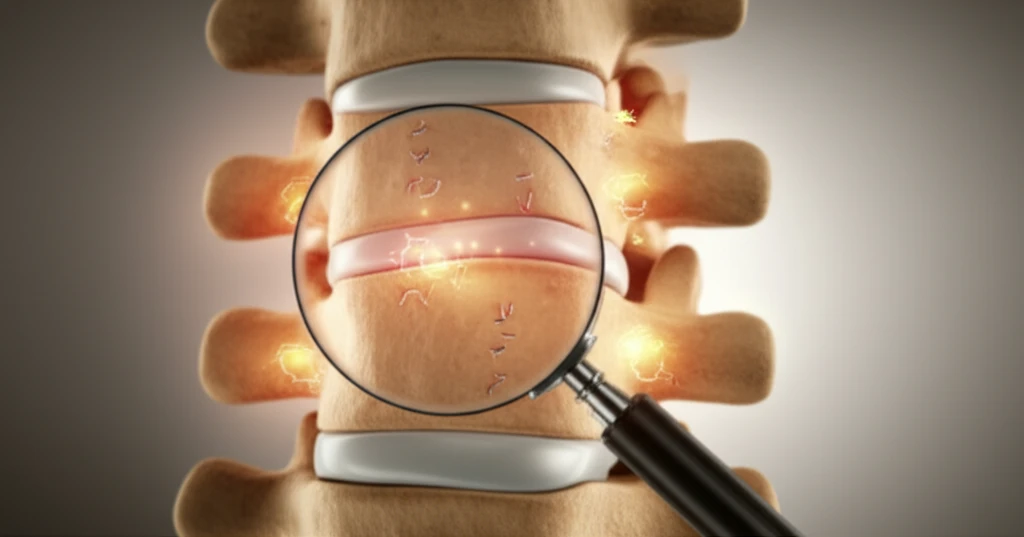
Is Hidden Bacteria Sabotaging Your Back?

"Research links low-grade infections to disc degeneration and chronic back pain. Uncover the potential connection and what it means for your spine health."
Chronic back pain is a widespread problem, often attributed to disc degeneration – a process where the intervertebral discs break down, leading to pain and functional limitations. While imaging techniques can reveal disc degeneration, there's often a disconnect between what's seen on scans and the actual pain experienced. This has led researchers to investigate other potential factors contributing to back pain, including the intriguing possibility of low-grade bacterial infections.
For years, the idea that bacteria could play a role in disc degeneration has been controversial. However, emerging evidence suggests that certain low-virulence anaerobic bacteria, those that thrive in the absence of oxygen, might be more involved than previously thought. These bacteria, often difficult to detect, could be contributing to inflammation and other processes that accelerate disc breakdown.
A recent study delved into this question, examining the presence of these bacteria in degenerated intervertebral discs and exploring their connection to Modic changes – alterations in the vertebral bone marrow seen on MRI, often associated with back pain. The findings shed light on the potential role of these hidden infections and open new avenues for understanding and managing chronic back pain.
The Hidden Culprit: Low-Virulence Anaerobic Bacteria
The research, published in BMC Musculoskeletal Disorders, investigated 80 patients undergoing discectomy (surgical removal of a damaged disc) for disc herniation. Researchers carefully collected disc samples during surgery, ensuring sterile conditions to avoid contamination. These samples were then analyzed to identify any bacteria present, with additional tissue samples taken from surrounding muscles and ligaments as contamination markers.
- Propionibacterium acnes (P. acnes): This bacterium, commonly found on the skin, was the most prevalent type identified in the study.
- Coagulase-negative staphylococci (CNS): While less common than P. acnes, CNS was also detected in some of the degenerated discs.
What Does This Mean for Your Back Pain?
This research adds to the growing body of evidence suggesting a potential link between low-grade bacterial infections and disc degeneration. While more research is needed to fully understand the mechanisms involved, these findings open new possibilities for diagnosing and treating chronic back pain.
If you're experiencing persistent back pain, especially if accompanied by Modic changes on an MRI, it's worth discussing these findings with your doctor. While antibiotics aren't a guaranteed solution, understanding the potential role of bacterial infections could lead to more targeted and effective treatment strategies.
The study authors suggest that these infections might play a crucial role in the pathophysiology of Modic changes and disc herniation. Further research could explore new therapeutic strategies that target these infections, potentially offering relief to those suffering from chronic back pain.