
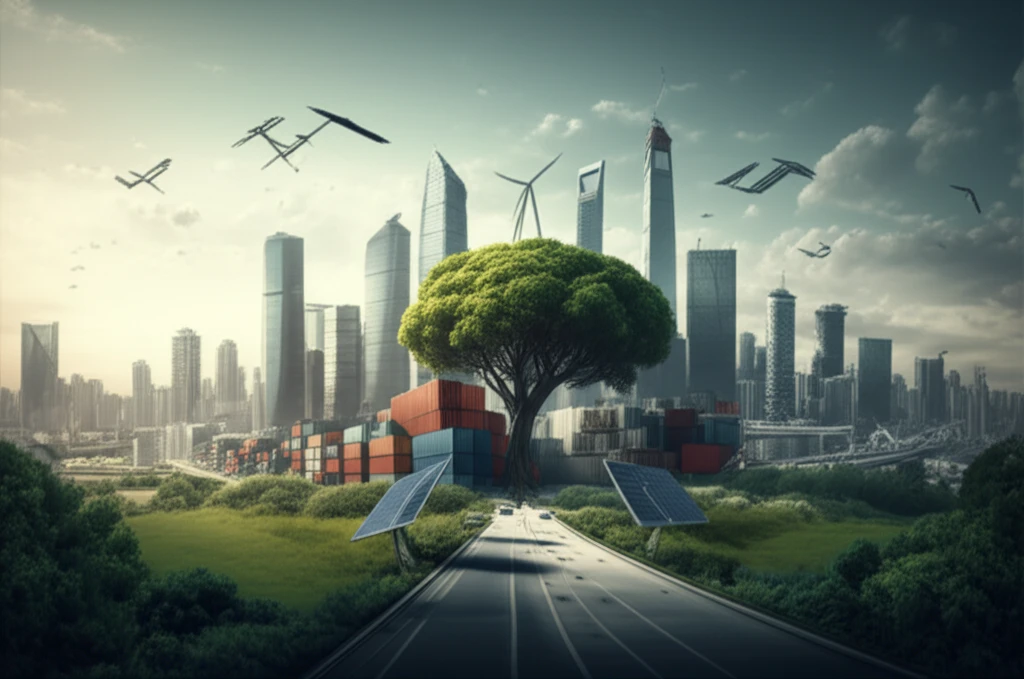
Is China's Trade Boom Hurting the Environment? Unpacking the Environmental Impact

"A deep dive into how China's foreign trade affects its environment, balancing economic growth with ecological costs."
Since its reform and opening up, China has experienced remarkable economic growth, fueled in large part by foreign trade. This growth, however, has not been without its challenges, particularly concerning the environment. The environmental impact of trade has become a central point of academic and public debate, with varying perspectives on whether trade helps or harms the country's ecological well-being.
The core of the debate revolves around whether trade liberalization leads to environmental deterioration, particularly in developing countries like China. Some environmentalists argue that the pursuit of trade advantages often comes at the expense of environmental protection. Others contend that trade can drive environmental improvements through technology transfer, efficient resource allocation, and higher environmental standards.
This article explores these dynamics, drawing from empirical analysis to understand the multifaceted impact of China's foreign trade on its environment. We'll examine how trade affects the environment through scale, technology, and structural changes, offering insights into the complex relationship between economic development and environmental sustainability.
Decoding Trade's Environmental Effects: Scale, Technology, and Structure
To fully understand the environmental consequences of trade, it's essential to consider three key effects: scale, technology, and structure. Each plays a distinct role in shaping environmental outcomes as trade expands.
- Scale Effect: Increased economic activity leads to more pollution.
- Technology Effect: Access to cleaner technologies reduces pollution per unit of output.
- Structural Effect: Shifts in the economy towards cleaner industries.
Charting a Sustainable Path: Trade, Technology, and Environmental Balance
The analysis reveals a nuanced picture of how trade influences China's environment. While trade can stimulate economic growth and facilitate the adoption of cleaner technologies, it can also exacerbate environmental problems through increased scale and structural shifts towards pollution-intensive industries. Therefore, policymakers face the challenge of harnessing the benefits of trade while mitigating its environmental costs.
To promote sustainable development, China needs to prioritize policies that encourage technological innovation, promote cleaner production processes, and foster the growth of environmentally friendly industries. This includes investing in research and development, enforcing stricter environmental regulations, and incentivizing businesses to adopt sustainable practices.
Ultimately, achieving a balance between economic prosperity and environmental protection requires a holistic approach that integrates environmental considerations into trade policies and promotes sustainable development across all sectors of the economy. By embracing innovation and prioritizing environmental stewardship, China can pave the way for a greener and more sustainable future.