
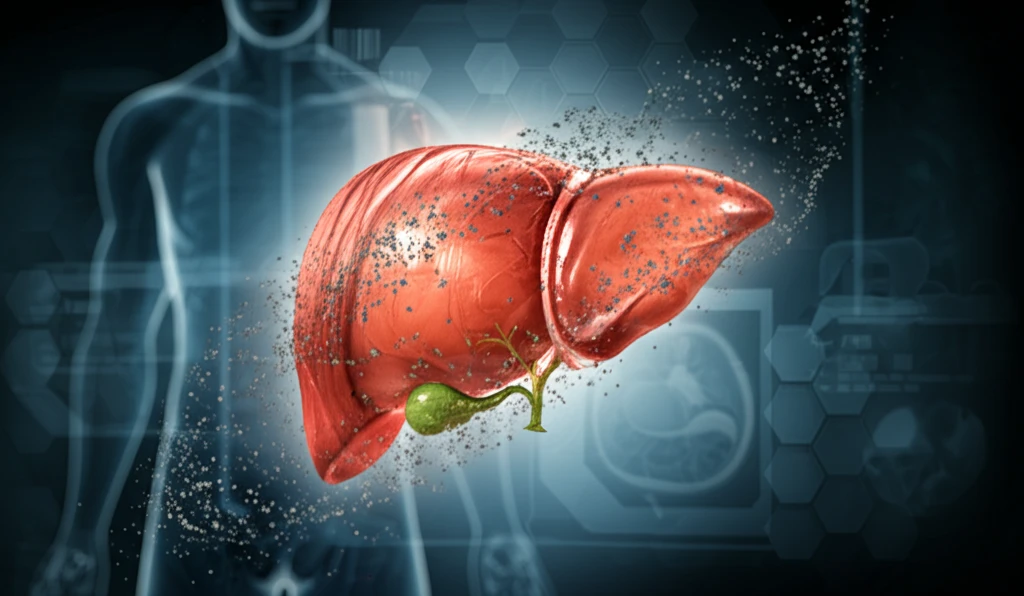
Iron Overload: A Silent Threat? How to Spot and Treat Acute Iron Intoxication

"Unintended iron overdose can lead to severe health risks. Learn how new diagnostic tools and treatments are changing the game."
Iron, while essential for life, can be dangerous in excess. Iron poisoning, though more commonly seen in children, can also occur in adults due to accidental overdose or improper administration. Recognizing the signs and acting quickly is vital to prevent severe complications.
The primary concern with iron overload is its potential to cause systemic toxicity, damaging organs like the liver, gastrointestinal tract, and even the heart. Traditional methods of assessing iron levels, such as measuring serum iron concentration, may not always reflect the true extent of tissue damage. This is where newer diagnostic tools come into play.
This article delves into a case of acute intravenous iron intoxication in a young woman and highlights the effectiveness of oral chelation therapy, alongside the use of liver Ferriscan®, a non-invasive method for diagnosing and monitoring liver iron content (LIC).
Prevalence, Presentation, and the Overlap Problem
Iron overload disorders are a variety of conditions that raise total body iron stores and produce end-organ damage, with an elevated ferritin and transferrin-iron saturation commonly encountered in the evaluation of elevated liver enzymes. Among non-chronically blood transfused preschool children with sickle cell anaemia, chronic haemolysis increases the availability of iron released from red blood cell destruction, making this group a focus for prevalence research. Symptom presentation is notoriously misleading: the complaints of iron overload closely resemble those of anaemia and iron deficiency, as well as other conditions such as CFS, menopause, and depression. In iron-loaded patient groups there is a strong prevalence of male patients, and studies found no correlation between potential genetic modifiers and phenotypes, nor any additional mutation of HFE.
The Diagnostic Arsenal and Its Gaps
For detecting myocardial iron overload, T2* measurement is presently the gold standard for monitoring and tailoring chelation therapy in thalassaemia patients, though native T1 mapping has been proposed as an alternative because iron is known to reduce native T1 values. Standard management differs sharply from that of iron deficiency: vitamin C-rich foods may improve iron absorption during meals, so iron overload requires a different approach, generally limiting such absorption rather than supplementing. A major limitation is that haemochromatosis, the iron overload condition at issue, too often goes undiagnosed, and the liver is particularly vulnerable, with excess iron causing inflammation, irreversible scarring and damage and, in advanced cases, liver cancer. Joint pain is a common manifestation, and treatment options hinge on testing and management strategies.
From Fenton Chemistry to Diagnostic Thresholds
Iron overload is the abnormal and increased accumulation of total iron in the body, leading to organ damage, with oxidative stress as the primary mechanism since elevated intracellular iron levels increase free radical formation via the Fenton reaction. Understanding of the causes has long been organised around haemochromatosis, iron-loading anaemias such as thalassaemia and sideroblastic anaemia, multiple blood transfusions, and excessive iron administration. A foundational clinical milestone is the transferrin saturation threshold, since iron overload can generally be excluded when TSAT is below 45%, a recommendation adapted from the 2018 British Journal of Haematology guideline. Commercial attention has also grown, with market reports tracking iron overload treatment practices and market size from 2020 to 2034 across seven major markets.
Understanding Iron Intoxication: Symptoms and Diagnosis
Acute iron intoxication occurs when the serum iron concentration exceeds 300 µg/dL within 12 hours of ingestion. The symptoms can vary, appearing in progressive stages, and systemic toxicity is expected with an intake of 60 mg/kg. Initial signs include abdominal pain, vomiting, diarrhea, and gastrointestinal bleeding. If not addressed, it can lead to more severe issues such as shock, acidosis, and liver damage.
- Clinical symptoms: Abdominal pain, vomiting, and diarrhea.
- Liver function tests: Elevated liver enzymes indicate damage.
- Newer diagnostic tools: Ferriscan® provides a direct measure of liver iron content.
Recent Findings Across Disease Groups
Recent research presented at the annual meeting of the American Society of Hematology found that iron overload is prevalent among adults with sickle cell disease. Reviews in the field also identify osteoarthritis as an important complication in patients suffering from iron overload-related diseases and conditions, summarising findings from both clinical and basic research on iron overload-related OA. A 2026 review in Heart Failure Reviews surveys iron overload cardiomyopathy, building on earlier work by Kumfu, Fucharoen, Chattipakorn and Chattipakorn (2022) that used the latest evidence to inform future applications. Together these reports point to expanding recognition of iron overload's reach beyond classic haematologic presentations.
Why Iron Overload Keeps Being Missed
Iron overload frequently masquerades as simple exhaustion, and in post-menopausal women it most often shows up as debilitating fatigue, joint pain (especially in the hands), new type-2 diabetes, darkening skin, and unexplained liver test elevations. Diagnosis therefore depends on transferrin saturation and serum ferritin, and if these suggest an iron overload disorder, a gene test will confirm the diagnosis, after which close relatives also need to be checked. The genetic story is more complex than single-gene testing implies: a 2018 study identified a variant of the PIEZO1 gene carried by up to a third of people of African background, making it much more common than the classic HFE mutation, and it has been proposed as a silent cause of iron overload. These findings counter the assumption that symptoms alone, or HFE testing alone, can reliably catch the condition.
Weighing Supplementation and Chelation Strategies
For iron deficiency anaemia, the choice between daily and alternate-day oral iron supplementation has been examined in a randomised controlled trial and in a systematic review and meta-analysis, providing comparative evidence on dosing schedules for management of anaemia in the general population. For iron-loaded patients, a randomised comparison of deferasirox versus deferoxamine has been conducted for transfusional iron overload in sickle cell disease, and sex and gender differences in iron chelation are an emerging area of analysis. At the bench, minihepcidin has been shown not only to reverse the typical iron overload of hereditary haemochromatosis in mice but also to stop the high susceptibility to infections—particularly to bacteria that grow well in iron-rich environments—seen both in these mice and in haemochromatosis patients.
The Future of Iron Overload Treatment
This case highlights the effectiveness of oral chelation therapy, specifically deferasirox, in managing iron overload when traditional methods are refused or not feasible. It also emphasizes the importance of using advanced diagnostic tools like Ferriscan® for accurate assessment and monitoring of liver iron content. With ongoing research and advancements, the future of iron overload treatment looks promising, offering more effective and less invasive options for patients.
Hepcidin, Chelators, and a Changing Map of the Disease
Expert commentary increasingly positions hepcidin as a therapeutic target in iron overload, reflecting a shift toward regulating iron metabolism rather than treating consequences alone. The older assumption of uniform distribution of iron in overload, both between organs and within each organ, is no longer considered valid, which has direct implications for how diagnostic findings and treatment responses are interpreted. Deferasirox stands out among established agents as an oral, once-daily iron chelator whose efficacy and safety were demonstrated in heavily iron-overloaded patients with β-thalassaemia in the ESCALATOR study, including those requiring long-term transfusions for a serious and potentially fatal condition. Adjunctive strategies are also under study, such as coadministering silymarin with iron chelators.
A Growing Pipeline and Commercial Momentum
Pipeline analyses for iron overload forecast a widening development landscape, with commercial assessments covering collaborations, licensing, and acquisition deal-value trends across therapeutic drugs. The 2025 pipeline insight report goes further, cataloguing unmet needs, future perspectives, and analyst review sections alongside the drug-by-drug pipeline. Regional market data, such as the Hong Kong iron chelation drug sales market, are segmented by type, application, end-user industry, distribution channel, and geography, signalling commercial growth opportunities at the local level. Expert video discussions of future directions round out the outlook, underscoring the field's trajectory beyond current chelation therapy.
Multi-Organ Damage and Genotype Interactions
Iron overload leads to increased deposition of iron and causes organ damage in the liver, the pancreas, the heart, and the synovium, arising from either genetic abnormalities or acquired causes such as excess transfusions or chronic liver diseases. The systemic consequences extend to endocrine function: although the pathogenesis of gonadal dysfunction in thalassaemia is known to be a consequence of iron overload, a study demonstrated that genotype acts as an independent variable, contributing to the development of this complication in thalassaemic women. Such interactions complicate prevention and management, since the same iron burden can produce very different clinical outcomes depending on an individual's genetic background. Effective care therefore has to address iron burden, genotype, and the chronic conditions that drive transfusional iron loading simultaneously.
From Bone Loss to Height: Iron's Everyday Consequences
In practice, transfusion-induced iron overload is often assessed with T2* MRI, yet some studies find no MRI evidence of cardiac iron overload even with liver iron overloading, explained by the fact that the liver is the dominant storage organ, mobilising iron rapidly and efficiently in times of demand. The consequences reach beyond the classic organs: iron overload is a documented risk factor for osteoporosis, though systematic studies of its effect on osteocytes and its role in iron overload-induced bone loss are still lacking. In myelodysplastic syndromes, where anaemia is the most common finding, repetitive red blood cell transfusions and disease-related low hepcidin levels induce secondary iron overload. Even an unexpected observation has emerged—an association between HFE haemochromatosis and increased adult height—illustrating how broadly iron metabolism can touch everyday life.