
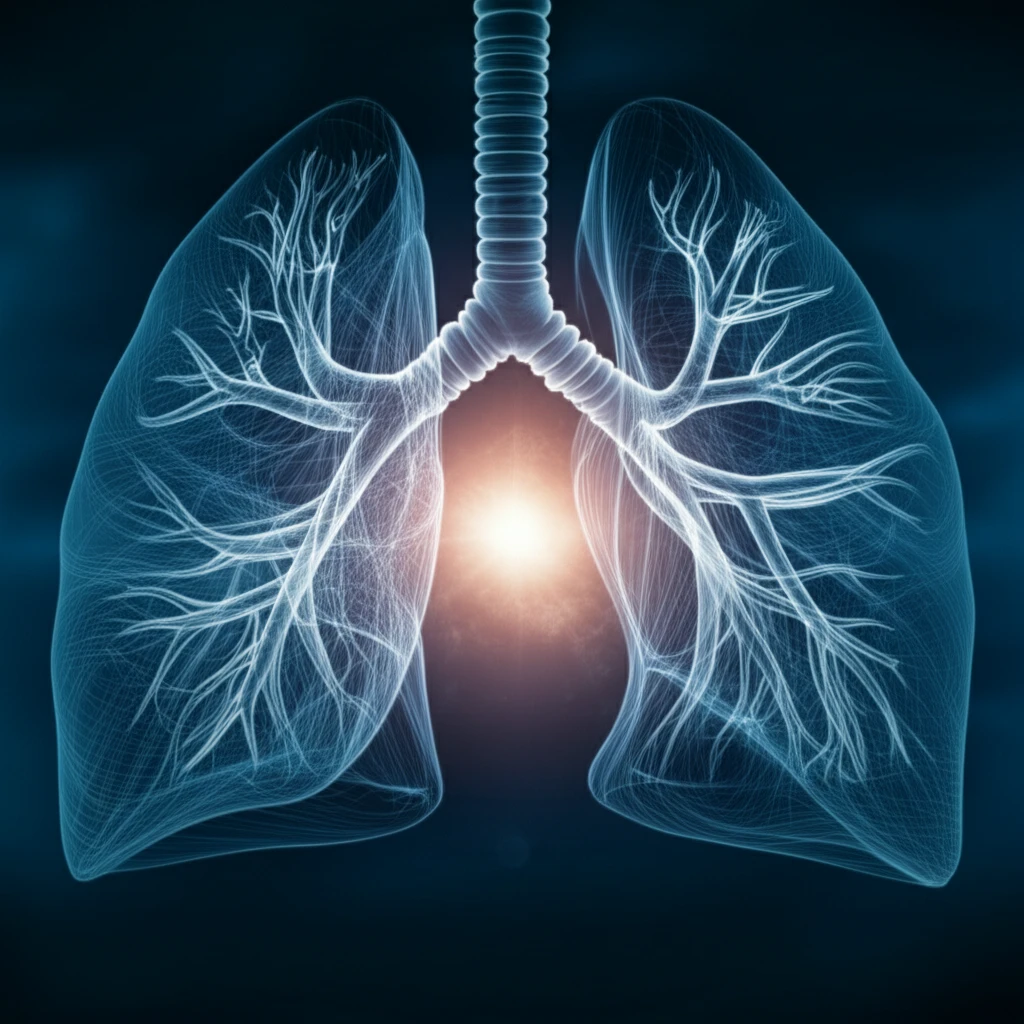
Lungs with interwoven threads symbolizing IPF treatment.

IPF Breakthroughs: How New Therapies Are Changing the Fight Against Lung Fibrosis

"Discover the latest experimental treatments for idiopathic pulmonary fibrosis (IPF) and how they're offering new hope for patients."


Idiopathic pulmonary fibrosis (IPF) is a relentless disease characterized by progressive scarring of the lungs, leading to a decline in respiratory function and, ultimately, a poor prognosis. For many years, treatment options were limited, leaving patients and their families with little recourse. However, recent advancements in understanding the complex mechanisms driving IPF have paved the way for the development of novel therapies, offering a beacon of hope in the fight against this devastating condition.

IPF is no longer viewed as a simple inflammatory condition but rather as a multifaceted process involving genetic predispositions, epigenetic modifications, and environmental factors. This intricate interplay results in ongoing damage to the alveolar epithelium, the delicate lining of the lungs, triggering an abnormal healing response that leads to fibrosis.

While there's currently no cure for IPF, two drugs, pirfenidone and nintedanib, have been approved by the FDA and are used in clinics, demonstrating effectiveness in slowing disease progression. These medications, while not reversing or halting the disease, provide valuable tools for managing IPF and improving patients' quality of life. This article offers an overview of experimental studies on the effects of pirfenidone and nintedanib on IPF.

Decoding Pirfenidone and Nintedanib: How These Antifibrotic Drugs Combat IPF

Lungs with interwoven threads symbolizing IPF treatment.

Pirfenidone and nintedanib represent a significant advancement in the treatment of IPF. These medications work through different mechanisms to target the fibrotic processes that characterize the disease. Understanding how these drugs function at the molecular level is crucial for optimizing their use and exploring potential combination therapies.

Pirfenidone, a synthetic compound, has demonstrated anti-inflammatory, antioxidant, and antifibrotic effects. Research suggests it works by:

  • Reducing the production of pro-collagen, a key component of scar tissue
  • Suppressing the expression of transforming growth factor-beta (TGF-β), a potent profibrotic cytokine
  • Modulating the activity of inflammatory cells and reducing oxidative stress
Nintedanib, on the other hand, is a multiple tyrosine kinase inhibitor that targets several growth factor receptors involved in fibrosis, including:

The Future of IPF Treatment: A Path Towards Personalized Therapies

While pirfenidone and nintedanib have improved the landscape of IPF treatment, there's a clear need for more effective and personalized therapies. Ongoing research efforts are focused on identifying novel drug targets, developing combination therapies, and tailoring treatment strategies to individual patient characteristics. Biomarker discovery, as illustrated in Figure 2, is a critical component of this endeavor, offering the potential to identify patients who are most likely to respond to specific treatments and to monitor treatment efficacy. By continuing to unravel the complex mechanisms driving IPF and translating these findings into innovative therapies, researchers and clinicians can offer new hope and improved outcomes for individuals affected by this challenging disease.

About this Article -

This article was crafted using a human-AI hybrid and collaborative approach. AI assisted our team with initial drafting, research insights, identifying key questions, and image generation. Our human editors guided topic selection, defined the angle, structured the content, ensured factual accuracy and relevance, refined the tone, and conducted thorough editing to deliver helpful, high-quality information.See our About page for more information.

Everything You Need To Know

1

What is Idiopathic Pulmonary Fibrosis (IPF), and why is it considered a serious condition?

Idiopathic Pulmonary Fibrosis (IPF) is a progressive and fatal lung disease characterized by the relentless scarring of the lungs. This scarring, or fibrosis, leads to a decline in respiratory function. The poor prognosis of IPF is due to its progressive nature and the limitations it places on breathing, which ultimately affects the ability to perform basic daily activities and survival rates. The alveolar epithelium, the delicate lining of the lungs, is damaged, triggering an abnormal healing response that leads to fibrosis.

2

How do Pirfenidone and Nintedanib work to treat IPF?

Pirfenidone and Nintedanib are both used to treat IPF, but they work through different mechanisms. Pirfenidone has anti-inflammatory, antioxidant, and antifibrotic effects. It reduces the production of pro-collagen, suppresses the expression of transforming growth factor-beta (TGF-β), and modulates the activity of inflammatory cells while reducing oxidative stress. Nintedanib is a multiple tyrosine kinase inhibitor that targets growth factor receptors involved in fibrosis.

3

Are there any cures for IPF? If not, what are the current treatment options?

Currently, there is no cure for IPF. However, the FDA has approved two drugs, Pirfenidone and Nintedanib, which are used to slow disease progression. While these medications do not reverse or halt the disease, they are valuable tools for managing IPF and improving patients' quality of life. These antifibrotic drugs have shown effectiveness in managing the disease.

4

What is the significance of TGF-β and pro-collagen in the context of IPF treatment?

In the context of IPF treatment, both TGF-β and pro-collagen are very important. TGF-β is a potent profibrotic cytokine, and its suppression by Pirfenidone is a key mechanism in reducing lung scarring. Pro-collagen is a key component of scar tissue. Pirfenidone's ability to reduce pro-collagen production helps limit the formation of scar tissue in the lungs, thus helping in disease management.

5

What future advancements are expected in the treatment of IPF, and how are personalized therapies being developed?

The future of IPF treatment includes more effective and personalized therapies. Ongoing research focuses on novel drug targets, combination therapies, and tailoring treatment strategies to individual patient characteristics. Biomarker discovery plays a critical role by identifying patients who are most likely to respond to specific treatments and monitoring treatment efficacy. Continuing research aims to unravel the complex mechanisms driving IPF and translate these findings into innovative therapies, offering improved outcomes.

Newsletter Subscribe

Subscribe to get the latest articles and insights directly in your inbox.