
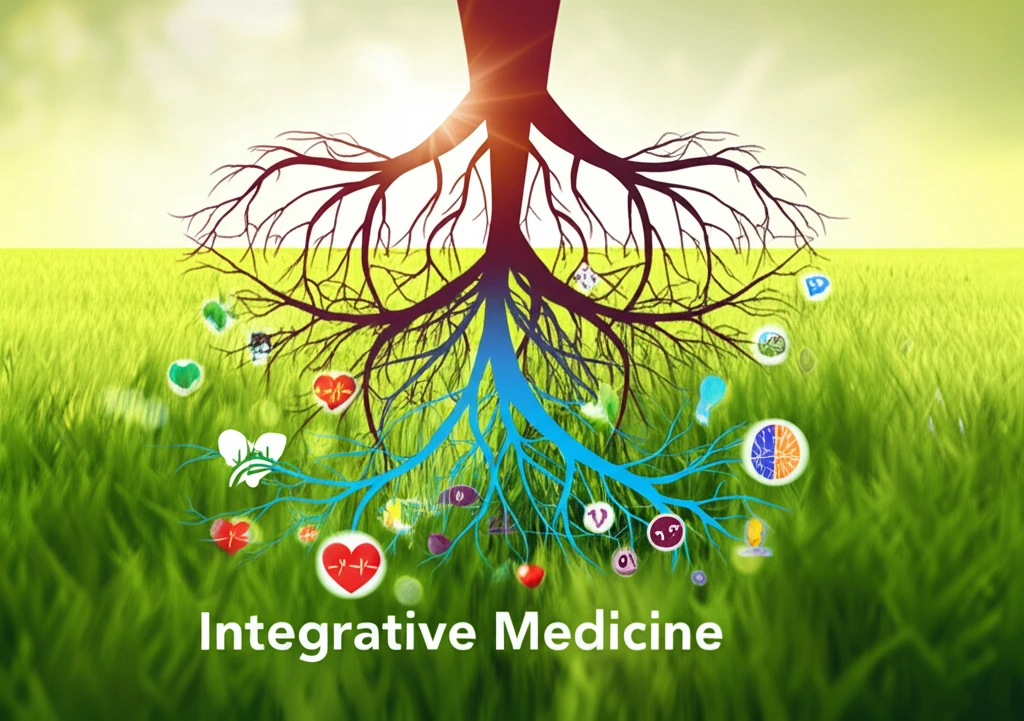
Interconnected roots symbolizing holistic health and integrative medicine.

Integrative Medicine: Your Path to Holistic Health and Wellness

"Discover how integrative medicine combines conventional and complementary therapies for a personalized approach to well-being."


In a world increasingly focused on holistic well-being, the concept of "integration" has emerged as a cornerstone of modern healthcare. Just as integration seeks to unify disparate elements in society, it also plays a vital role in medicine, bridging the gap between conventional and complementary approaches. This article delves into the principles and practices of integrative medicine, exploring how it can enhance your health and overall quality of life.

Integrative medicine is more than just combining different therapies; it's about creating a harmonious, personalized approach to healthcare that considers the whole person. This means addressing not only the physical symptoms of an illness but also the emotional, mental, and spiritual factors that contribute to overall well-being. By integrating conventional medical treatments with complementary therapies, integrative medicine aims to provide a comprehensive and effective path to healing.

The goal of integrative medicine is to create a healthcare experience that is both effective and empowering. By focusing on the individual's unique needs and preferences, integrative practitioners work collaboratively with their patients to develop treatment plans that support long-term health and wellness. As we explore the various facets of integrative medicine, you'll discover how it can help you achieve a balanced and vibrant life.

What is Integrative Medicine?

Interconnected roots symbolizing holistic health and integrative medicine.

Integrative medicine is a patient-centered approach that combines the best of conventional and complementary therapies to address the root causes of illness and promote overall wellness. Unlike traditional medicine, which often focuses solely on treating symptoms, integrative medicine takes a holistic view of health, considering the interconnectedness of mind, body, and spirit. This approach emphasizes the importance of lifestyle factors, such as nutrition, exercise, stress management, and sleep, in maintaining optimal health.

At its core, integrative medicine seeks to create a collaborative partnership between the practitioner and the patient. This means that healthcare decisions are made together, taking into account the patient's values, preferences, and unique circumstances. By empowering patients to take an active role in their health, integrative medicine fosters a sense of ownership and commitment to long-term well-being.

  • Holistic Approach: Considers the whole person, including physical, emotional, mental, and spiritual aspects.
  • Patient-Centered Care: Tailors treatment plans to the individual's unique needs and preferences.
  • Integration of Therapies: Combines conventional medical treatments with complementary therapies.
  • Focus on Prevention: Emphasizes lifestyle factors and preventive measures to maintain optimal health.
  • Collaborative Partnership: Fosters a strong relationship between the practitioner and the patient.
The integrative approach recognizes that health is not simply the absence of disease but a state of complete physical, mental, and social well-being. By addressing all aspects of health, integrative medicine aims to provide a comprehensive and sustainable path to wellness.

Embracing a New Vision of Health

Integrative medicine offers a transformative approach to healthcare that empowers individuals to take control of their well-being. By combining the best of conventional and complementary therapies, it addresses the root causes of illness and promotes a holistic vision of health. As you embark on your journey to integrative wellness, remember that your health is a lifelong process of growth, discovery, and self-care.

About this Article -

This article was crafted using a human-AI hybrid and collaborative approach. AI assisted our team with initial drafting, research insights, identifying key questions, and image generation. Our human editors guided topic selection, defined the angle, structured the content, ensured factual accuracy and relevance, refined the tone, and conducted thorough editing to deliver helpful, high-quality information.See our About page for more information.

This article is based on research published under:

DOI-LINK: 10.1055/s-0044-101917, Alternate LINK

Title: Zum Jahresbeginn

Subject: General Engineering

Journal: Erfahrungsheilkunde

Publisher: Georg Thieme Verlag KG

Authors: Ute Boeddrich

Published: 2018-02-01

Everything You Need To Know

1

What is Integrative Medicine in simple terms?

Integrative Medicine is a patient-centered approach that combines standard medical treatments with complementary therapies. It focuses on the whole person, considering physical, emotional, mental, and spiritual well-being. It aims to address the root causes of illness, promoting overall wellness, and fostering a collaborative partnership between the practitioner and the patient.

2

How does Integrative Medicine differ from traditional medicine?

Unlike traditional medicine, which often treats symptoms, Integrative Medicine takes a holistic view. It considers the interconnectedness of mind, body, and spirit. This approach emphasizes lifestyle factors like nutrition, exercise, stress management, and sleep. It seeks to create a collaborative partnership between the practitioner and the patient, tailoring treatment plans to individual needs and preferences rather than a one-size-fits-all approach.

3

What are the key principles of Integrative Medicine?

The key principles include a Holistic Approach, considering the whole person, including physical, emotional, mental, and spiritual aspects; Patient-Centered Care, tailoring treatment plans to the individual's unique needs; Integration of Therapies, combining conventional medical treatments with complementary therapies; a Focus on Prevention, emphasizing lifestyle factors and preventive measures; and a Collaborative Partnership, fostering a strong relationship between the practitioner and the patient. These principles work together to create a comprehensive and personalized approach to healthcare.

4

What types of therapies are integrated in Integrative Medicine, and what is the goal?

Integrative Medicine combines conventional medical treatments with complementary therapies. The specific complementary therapies used vary depending on individual needs and practitioner expertise, but they often include approaches that address mind-body connection, nutrition, and lifestyle factors. The goal is to create a healthcare experience that is both effective and empowering, supporting long-term health and wellness by addressing all aspects of health for a sustainable path to wellness.

5

How does Integrative Medicine empower patients to take control of their health?

Integrative Medicine empowers patients by fostering a collaborative partnership. Healthcare decisions are made together, considering the patient's values, preferences, and unique circumstances. Practitioners work with patients to develop treatment plans that support long-term health and wellness. This approach encourages patients to take an active role in their health, fostering a sense of ownership and commitment, and promoting a journey of growth, discovery, and self-care.

Newsletter Subscribe

Subscribe to get the latest articles and insights directly in your inbox.