
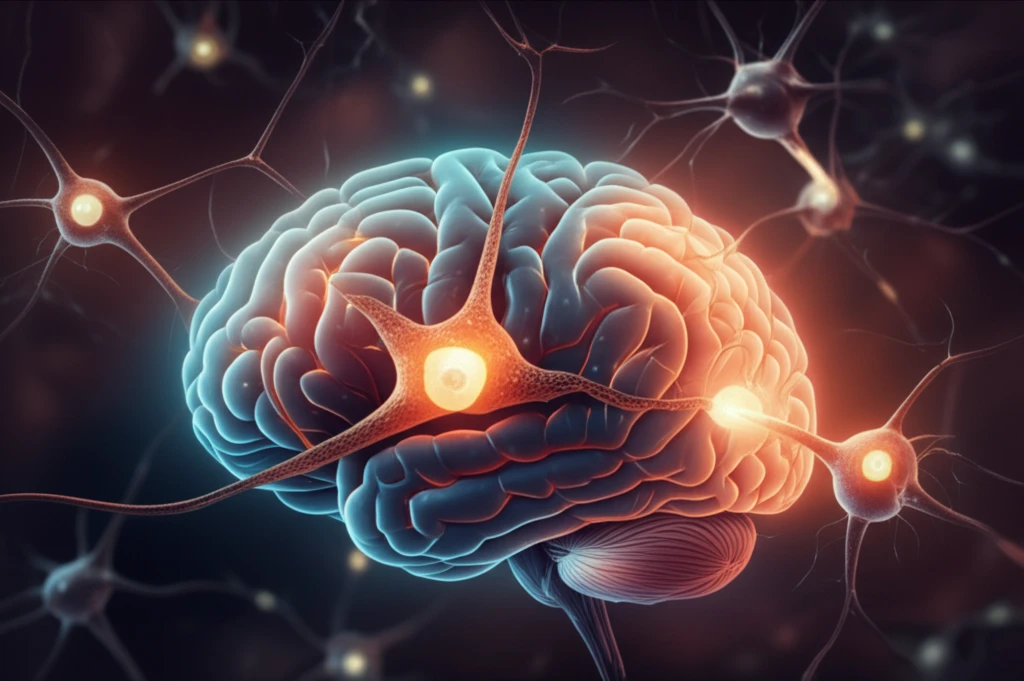
Neural stem cells regenerating damaged brain cells in Huntington's disease treatment concept.

Hope on the Horizon: Can Cell-Based Therapies Cure Huntington's Disease?

"Exploring the potential of stem cell treatments to revolutionize care for Huntington's Disease, offering a beacon of hope for patients and families affected by this devastating genetic disorder."


Huntington's disease (HD) is a devastating inherited disorder characterized by the progressive breakdown of neurons in the brain. This relentless deterioration of physical and mental abilities has no cure, leaving patients and their families with limited options. However, the landscape of HD treatment is evolving, with cell-based therapies emerging as a promising avenue of exploration.

Cell-based therapies offer a unique approach by targeting the underlying mechanisms of the disease. Unlike traditional treatments that only manage symptoms, these therapies aim to repair or replace damaged cells, potentially slowing or even halting disease progression. In HD, this means exploring ways to replace lost neurons or protect existing ones from further damage.

This article delves into the cutting-edge research on cell-based technologies for HD, examining various approaches, including human fetal tissue (hFT), neural stem cells (NSCs), embryonic stem cells (ESCs), and induced pluripotent stem cells (iPSCs). We will also discuss the use of mesenchymal stem cells (MSCs), derived from non-neural tissues, and the progress made in preclinical and clinical studies.

Cell-Based Therapies: A New Frontier in HD Treatment

Neural stem cells regenerating damaged brain cells in Huntington's disease treatment concept.

The primary goal of cell-based technologies is to restore the mechanisms underlying disease initiation and progression. This is achieved both through the replacement of dead or defective cells and through the "trophic effect," where certain cell types stimulate recovery after being transplanted into the damaged site. Several cell types are being explored for these therapies:

Human Fetal Tissue (hFT): Clinical studies involving hFT aim to rebuild brain structures and neural circuitries by transplantation of hFT into the damaged central nervous system (CNS) in HD patients. The hFT is derived from elective surgical terminations of pregnancy in fetuses at between 6 and 12 weeks of gestation. hFT transplantation is considered to be safe. MRI analyses have shown hFT graft survival and even growth without damage to the surrounding tissue.

  • Neural Stem Cells (NSCs): NSCs are self-renewing cells able to generate neurons, glial cells, and astrocytes. NSCs can be derived from embryonic, fetal, or adult tissues. Studies have shown that transplantation of NSCs improves motor function, extends life span and even lessens mHTT intracellular aggregate formation.
  • Embryonic Stem Cells (ESCs): ESCs are pluripotent cells isolated from the inner cell mass of early embryos. To analyze the therapeutic potential of human ESCs in HD animal models, they have been reversed to NPCs that have been transplanted directly into the striatum of the animal models.
  • Induced Pluripotent Stem Cells (iPSCs): Laboratory-grown iPSCs are a type of pluripotent cell that can be generated directly from adult cells. The iPSCs share all principal characteristics of ESCs, having the ability of long-term self-renewal, maintaining an unspecialized state; and giving rise to (under specific treatments) specialized cell types and teratomas when injected in vivo. After transplantation, a modest reduction in striatal neuronal atrophy, a hallmark of HD disease that appears before the onset of motor symptoms, can be observed.
  • Mesenchymal Stem Cells (MSCs): MSCs can be found in virtually all postnatal tissues, including the embryonic annexes (umbilical cord and placenta), bone marrow and adipose tissue. These studies demonstrate that MSC transplantation leads to behavioral and memory improvements, reduced brain damage, improvement of striatal degeneration, and enhanced expression of several striatal growth factors, which are attributed to the neuroprotective effect of MSCs.
Neurotrophic factors such as brain-derived neurotrophic factor (BDNF) are essential contributors of CNS neuron function. NPCs and MSCs, besides their differentiation ability to produce neurons, have been extensively investigated with respect to neurotrophic factor secretion.

The Future of Cell-Based Therapies in HD

Cell-based therapies represent a significant leap forward in the quest to treat and potentially cure Huntington's disease. While challenges remain, the progress made in recent years offers a renewed sense of hope for those affected by this devastating condition. As research continues and technology evolves, these therapies hold the promise of transforming HD from an incurable illness into a manageable or even curable condition.

About this Article -

This article was crafted using a human-AI hybrid and collaborative approach. AI assisted our team with initial drafting, research insights, identifying key questions, and image generation. Our human editors guided topic selection, defined the angle, structured the content, ensured factual accuracy and relevance, refined the tone, and conducted thorough editing to deliver helpful, high-quality information.See our About page for more information.

This article is based on research published under:

DOI-LINK: 10.1590/s1980-5764-2016dn1004006, Alternate LINK

Title: Cell-Based Technologies For Huntington'S Disease

Subject: Cognitive Neuroscience

Journal: Dementia & Neuropsychologia

Publisher: FapUNIFESP (SciELO)

Authors: Mônica Santoro Haddad, Cristiane Valverde Wenceslau, Celine Pompeia, Irina Kerkis

Published: 2016-12-01

Everything You Need To Know

1

What is Huntington's disease, and how do cell-based therapies offer a new approach to treatment?

Huntington's disease (HD) is a genetic disorder where neurons in the brain progressively break down. This breakdown leads to a decline in both physical and mental capabilities, and currently, there's no cure. However, cell-based therapies offer a new approach. These therapies aim to repair or replace damaged cells, potentially slowing or stopping the disease's progression, unlike traditional treatments which only manage symptoms. The significance lies in its potential to directly address the underlying cause of the disease, offering a chance for a cure instead of symptom management.

2

What different types of stem cells are being investigated for cell-based therapies, and what are their potential benefits?

Several types of stem cells are being studied for treating HD. Human Fetal Tissue (hFT) is used in clinical studies to reconstruct brain structures by transplanting it into the central nervous system of HD patients. Neural Stem Cells (NSCs) are self-renewing cells that can generate various brain cells and have been shown to improve motor function and lifespan in studies. Embryonic Stem Cells (ESCs), which are pluripotent, have also been used in animal models after being turned into neural progenitor cells. Finally, Induced Pluripotent Stem Cells (iPSCs), created from adult cells, show promise, as after transplantation, they can reduce the hallmark of HD: striatal neuronal atrophy. The implications of using these various cell types revolve around their potential to restore the mechanisms causing the disease.

3

What is the primary goal of cell-based therapies in treating Huntington's disease, and what are the implications?

The goal of cell-based therapies in Huntington's disease is to restore the brain's function by replacing dead or defective cells. There's also a process known as the "trophic effect" where certain transplanted cells stimulate recovery in the damaged area. By targeting the root causes, cell-based therapies offer a significant shift from simply managing the symptoms to potentially halting or even reversing the disease's progression. The implications are immense, offering a chance to improve or cure the condition and improving the quality of life for individuals affected by HD.

4

How do Mesenchymal Stem Cells (MSCs) contribute to cell-based therapies for Huntington's disease?

Mesenchymal Stem Cells (MSCs) are found in various postnatal tissues, including the umbilical cord, bone marrow, and adipose tissue. Studies show that MSC transplantation improves behavior, memory, and reduces brain damage, along with enhancing the production of growth factors in the striatum. The neuroprotective effect of MSCs means they can help protect existing neurons. Their use offers an alternative avenue for therapy that enhances the brain's capacity for self-repair and protection, providing a different mechanism than directly replacing damaged neurons.

5

What is the future potential of cell-based therapies for Huntington's disease?

Cell-based therapies represent a significant advance in the pursuit of treating and potentially curing Huntington's disease. While challenges exist, the progress made offers hope. As research advances, these therapies could transform HD from an incurable illness into a manageable or curable condition. This would change the prognosis and the quality of life for patients and their families. It emphasizes a shift from symptom management to disease modification, providing a possibility of restoring the neural function impaired by Huntington's Disease.

Newsletter Subscribe

Subscribe to get the latest articles and insights directly in your inbox.