
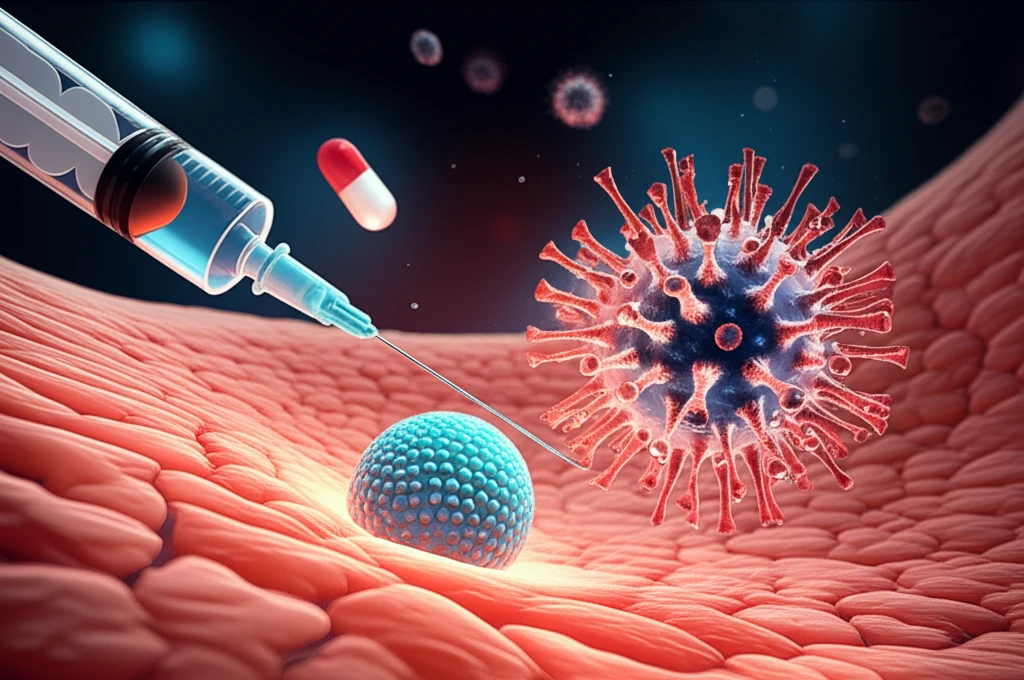
Illustration of microparticles delivering medicine to combat HIV

HIV Breakthrough: New Microparticle Technology Could Revolutionize AIDS Treatment

"Scientists Develop Innovative Drug Delivery System, Potentially Enhancing Lopinavir's Effectiveness and Reducing Side Effects"


The battle against HIV/AIDS has seen incredible advances, yet the fight continues. Antiretroviral therapies have transformed the lives of millions, but challenges persist. One major hurdle is ensuring that the medications reach the sites of infection effectively, without being broken down before they can work. Now, a team of researchers has developed a cutting-edge approach using microparticles, offering a potential new weapon in the fight against HIV.

This innovative system focuses on Lopinavir, a key drug in many HIV treatment regimens. The challenge? Lopinavir can be difficult for the body to absorb. It's also vulnerable to being broken down by the body's natural defenses before it can do its job. The new technology aims to solve these problems by encapsulating Lopinavir within tiny microparticles designed for enhanced delivery.

The research, published in the Journal of Drug Targeting, highlights the potential for this technology to not only improve the absorption of Lopinavir but also reduce some of the common side effects associated with current treatments. This has the potential to significantly improve the lives of people living with HIV, offering a more effective and tolerable treatment option.

How Microparticles are Changing the Game in HIV Treatment

Illustration of microparticles delivering medicine to combat HIV

The core of this new approach lies in microparticles, incredibly small structures that act as protective carriers for the drug Lopinavir. These microparticles are designed to navigate the complex environment of the body, delivering the drug directly to where it's needed. Think of them as tiny, targeted delivery trucks, ensuring the medication reaches its destination without being degraded.

The study's authors engineered these microparticles to overcome several obstacles. The microparticles ensure that Lopinavir bypasses the body's defenses that can break down the drug before it can work. This improved delivery system means that Lopinavir can be more readily absorbed into the bloodstream, leading to higher concentrations of the drug at the site of infection.

  • Enhanced Absorption: Microparticles improve Lopinavir absorption, potentially reducing the need for high doses.
  • Reduced Side Effects: By improving drug delivery, the technology may reduce side effects.
  • Targeted Delivery: The microparticles are designed to deliver the drug directly to the sites of infection.
The study's results are compelling. The researchers found that this new microparticle-based delivery system significantly increased the bioavailability of Lopinavir, which means more of the drug reaches the bloodstream and can fight the virus. Furthermore, the system reduced the multiplication of HIV in laboratory tests, suggesting a more potent antiviral effect. Researchers are hopeful about the potential to improve the lives of people living with HIV.

Looking Ahead: The Promise of Microparticle Technology

While this research is still in its early stages, the results are incredibly promising. The microparticle-based drug delivery system could lead to more effective HIV treatments with fewer side effects. This is a major step forward in the fight against HIV/AIDS. With continued research and clinical trials, this technology has the potential to revolutionize the way we treat and manage HIV, giving hope for a healthier future for those affected.

About this Article -

This article was crafted using a human-AI hybrid and collaborative approach. AI assisted our team with initial drafting, research insights, identifying key questions, and image generation. Our human editors guided topic selection, defined the angle, structured the content, ensured factual accuracy and relevance, refined the tone, and conducted thorough editing to deliver helpful, high-quality information.See our About page for more information.

This article is based on research published under:

DOI-LINK: 10.1080/1061186x.2018.1552275, Alternate LINK

Title: Nanocapsules Embedded In Microparticles For Enhanced Oral Bioavailability And Efficacy Of Lopinavir As An Anti-Aids Drug

Subject: Pharmaceutical Science

Journal: Journal of Drug Targeting

Publisher: Informa UK Limited

Authors: Taher Nassar, Ayala Rohald, Natalya Naraykin, Dinorah Barasch, Orit Amsalem, Ponnandy Prabhu, Moshe Kotler, Simon Benita

Published: 2018-12-18

Everything You Need To Know

1

What is the main challenge this new microparticle technology aims to address in HIV treatment?

The primary challenge this microparticle technology addresses is the difficulty in effectively delivering Lopinavir, a key anti-HIV drug. Lopinavir can be hard for the body to absorb and is vulnerable to being broken down by the body's natural defenses before it can reach the sites of infection. The microparticles are designed to protect and enhance the delivery of Lopinavir, ensuring it reaches its target effectively. Other antiretroviral medications face similar challenges, which this technology could potentially address in the future.

2

How do these microparticles enhance the effectiveness of Lopinavir?

Microparticles enhance the effectiveness of Lopinavir by acting as protective carriers. They are engineered to bypass the body's defenses that would normally break down Lopinavir. This ensures that more of the drug is absorbed into the bloodstream, leading to higher concentrations at the site of infection. This targeted delivery not only improves the drug's bioavailability but also maximizes its antiviral effect. Without the microparticle technology, higher doses of Lopinavir might be needed, potentially increasing side effects.

3

Could the microparticle delivery system reduce the side effects associated with current HIV treatments, and if so, how?

Yes, the microparticle delivery system has the potential to reduce side effects associated with current HIV treatments. By improving the absorption and targeted delivery of Lopinavir, it may reduce the need for high doses of the drug. High doses of Lopinavir are often associated with increased side effects. The enhanced efficiency of the microparticle system could mean that lower doses are effective, thus minimizing adverse reactions. This is a significant advantage, as it could improve the tolerability and long-term adherence to HIV treatment regimens.

4

What are the potential implications of using microparticle technology beyond Lopinavir in HIV treatment?

Beyond Lopinavir, microparticle technology holds significant potential for delivering other antiretroviral drugs, potentially revolutionizing HIV treatment. If successful, this approach could be adapted to improve the delivery and effectiveness of various medications used in HIV treatment, addressing issues of drug resistance and improving patient outcomes. Furthermore, microparticle technology could be explored for delivering drugs to treat opportunistic infections associated with AIDS, offering a more comprehensive approach to managing the disease. The ability to target specific cells or tissues could also open new avenues for therapeutic intervention and prevention.

5

What does it mean that the microparticle delivery system increased the 'bioavailability' of Lopinavir?

When it's stated that the microparticle delivery system increased the bioavailability of Lopinavir, it means that a greater proportion of the administered dose of Lopinavir reaches the bloodstream unchanged and is available to have an active effect on the body. In simpler terms, more of the drug is getting where it needs to go to fight the virus. This is crucial because it ensures that a higher concentration of Lopinavir is available to inhibit HIV replication, leading to a more potent antiviral effect and potentially better clinical outcomes for individuals undergoing treatment. Without enhanced bioavailability, a significant portion of the drug might be broken down or eliminated before it can exert its therapeutic effect, necessitating higher doses and increasing the risk of side effects.

Newsletter Subscribe

Subscribe to get the latest articles and insights directly in your inbox.