
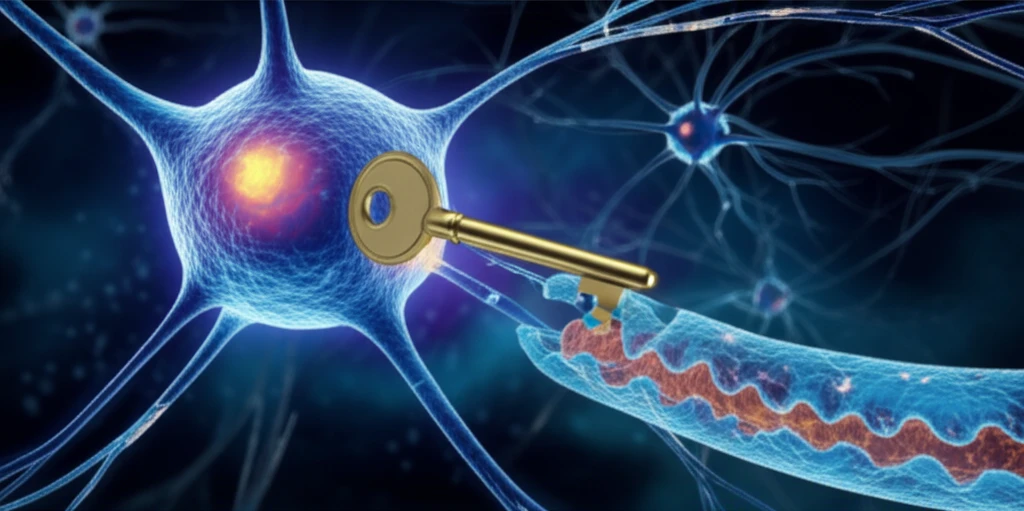
Botox 2.0: How Scientists are Engineering Next-Gen Neurotoxins

"Beyond wrinkles: Explore the cutting-edge research transforming botulinum neurotoxins for targeted therapies and drug delivery."
Botulinum neurotoxins (BoNTs), famed for their muscle-relaxing effects in treatments like Botox, are now at the forefront of biomedical engineering. Researchers are discovering how to harness the exceptional potency and specificity of these toxins to create new classes of therapeutics. These next-generation BoNTs promise more targeted treatments for a wide array of conditions, from chronic pain to neurological disorders.
The key lies in the unique structure of BoNTs. These toxins possess distinct functional domains that enable them to precisely target nerve cells, enter those cells, and deliver specific enzymes. By manipulating these domains, scientists are crafting novel molecules with enhanced or altered properties.
This article explores the innovative engineering strategies being applied to BoNTs, examining how these modified toxins are being developed for targeted drug delivery, novel therapeutic applications, and a deeper understanding of neuronal function. Get ready to explore the future of neurotoxins – a future far more diverse than just wrinkle reduction.
Re-Engineering Botox: A New Era of Targeted Therapies?
The potential for BoNTs extends far beyond cosmetic applications. Their ability to precisely target and enter specific nerve cells makes them ideal candidates for delivering therapeutic payloads directly to affected areas. Imagine a drug delivery system that only affects the neurons causing chronic pain or the overactive cells contributing to a neurological disorder. This level of precision could minimize side effects and maximize therapeutic efficacy.
- Atoxic BoNT Derivatives: Creating safe, non-toxic versions of BoNTs by modifying their enzymatic activity.
- Chimeric BoNTs: Combining domains from different BoNT serotypes to create molecules with hybrid functions.
- Alternative Receptor Binding Domains: Engineering BoNTs to target different cell types by modifying their receptor binding domains.
Engineering Neurotoxins for Research and Therapy
A 2026 review describes bacterial neurotoxins and their derivatives as potential engineered biologics for neurodegenerative proteinopathies and motor neuron diseases, with translational work focused on selectivity and delivery. Recombinant functional BoNTs are also useful for characterizing newly identified BoNT-like sequences from non-clostridial species whose ability to produce functional toxins is not established. Vaccine research highlights a safety challenge: in mice, residual toxicity of recombinant full-length BoNTs varied by serotype and production method, with reported LD50 values ranging from 50 ng per mouse for endogenously produced proteins to 5–50 μg for ciBoNTs produced in Pichia pastoris. Clinically, BoNT is an acetylcholine-release inhibitor that temporarily denervates muscle and has been used for conditions involving increased muscle tension.
Limits of Engineering and Treatment
An atoxic recombinant BoNT/C1 showed no physiological effect in the MPN assay at 10−10 M, while native BoNT/C induced paralysis at 10−12 M after 152 minutes. The same source reports that non-adjuvanted atoxic BoNT/C1 was administered to mice at 2 μg subcutaneously or 4 μg intragastrically on days 0, 14, 28, and 42. A 2022 review examines causes of botulinum toxin treatment failure and ways to minimize its risks, while a 2024 review emphasizes that effective use involves nuanced application. A 2026 FAERS analysis is described as comparing adverse-event safety profiles for Botox, Dysport, Xeomin, Jeuveau, and Daxxify.
The Future of Neurotoxins: Precision Medicine and Beyond
The re-engineering of botulinum neurotoxins represents a significant step towards precision medicine. By tailoring these potent molecules to specific targets and delivering customized payloads, scientists are paving the way for more effective and less toxic therapies.
Evidence Beyond Cosmetic Use
A 2026 review reports that botulinum toxin type A appears to provide short-term pain relief, with favorable tolerability, in selected patients with trigeminal neuralgia and postherpetic neuralgia (PHN). The review describes evidence for reductions in pain intensity and for responder rates. Separately, an April 2026 systematic review and meta-analysis reports aesthetic uses beyond wrinkle reduction, including facial and body contouring, with high patient satisfaction and minimal adverse effects. Its authors call for standardized protocols and refined evaluation methods to guide decisions and expand clinical guidance.
Expanding Indications and Treatment Approaches
Reviews describe botulinum toxin therapy as continuing to develop across numerous medical specialties, with new potential indications emerging in the clinical literature. Treatment algorithms have been refined through short-interval therapy, high-dose therapy, and improved dosing guidelines; ultrasound guidance may help in special situations. A 2026 market forecast projects 8.5% compound annual growth and a market value of USD 11.68 billion by 2030. The same source points to AbbVie's fifth aesthetic indication and ISAPS 2024 data as topics in its discussion of 2026 trends.
Access Does Not Guarantee Use
A 2026 German case study examines the discrepancy between geographic accessibility and real-world utilization of botulinum toxin therapy. Its title frames the issue as a gap between where treatment is geographically available and whether it is used in practice. The supplied source information identifies the study as a case study but does not provide findings or figures explaining the size or causes of that discrepancy.
While challenges remain in translating these engineered BoNTs into clinical applications, the potential benefits are immense. From treating chronic pain and neurological disorders to developing new cancer therapies and gene delivery systems, the possibilities seem endless.
As research continues, expect to see even more innovative applications of these remarkable molecules. The future of neurotoxins is not about paralysis; it's about precision, targeting, and therapeutic potential.