
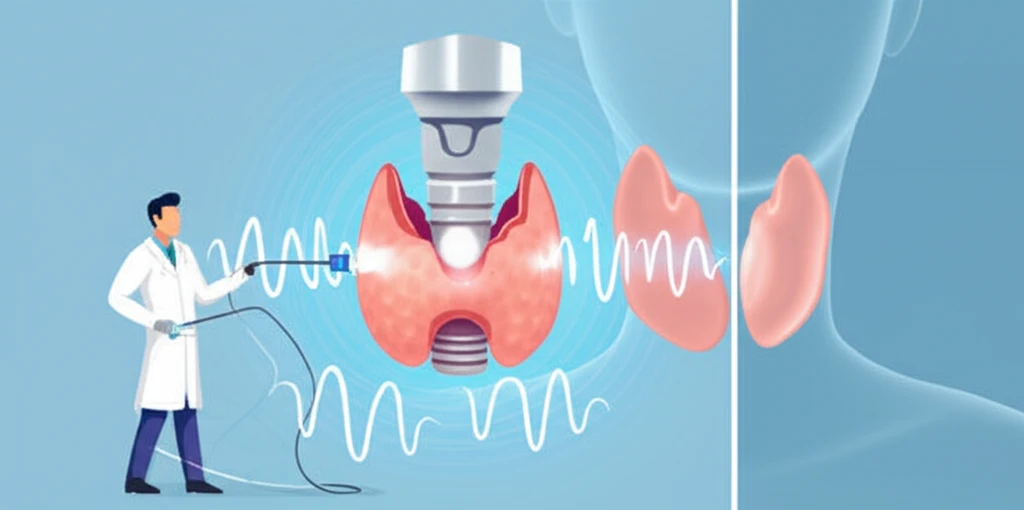
HIFU vs. Thyroid Surgery: Is a Scar-Free Future for Thyroid Nodules Possible?

"A groundbreaking study compares two leading treatments for thyroid nodules, offering hope for less invasive options and improved patient outcomes."
Thyroid nodules, often harmless, are a common concern for many, particularly women. While most are benign, some can grow and cause noticeable symptoms, leading to the need for medical intervention. Historically, the primary solution has been surgery, which, although effective, can come with potential complications and a visible neck scar. However, the medical field is evolving, with exciting advancements in non-invasive treatments like high-intensity focused ultrasound (HIFU).
This article dives into a pivotal study comparing HIFU with traditional open thyroid surgery (lobectomy) for benign thyroid nodules. The study, which involved a propensity-matched analysis, offers valuable insights into treatment outcomes, including the potential for a scar-free solution, shorter recovery times, and reduced costs. We'll explore the findings and what they mean for patients seeking the best possible care for their thyroid health.
Our focus is on translating complex medical research into clear, actionable information. We'll break down the study's key findings, discuss the advantages and disadvantages of each treatment, and highlight what these advancements mean for you and your thyroid health.
HIFU and Thyroid Surgery: Unpacking the Study's Key Findings
The study, published in the journal Surgery, offers a direct comparison between HIFU and open lobectomy. Researchers analyzed data from patients who underwent either HIFU ablation or surgical removal of their thyroid nodules. The study's design used propensity score matching to ensure a fair comparison by accounting for differences in patient demographics, such as age and sex.
- Treatment Time: HIFU sessions were significantly faster than open surgery.
- Hospitalization: Patients undergoing HIFU typically experienced shorter hospital stays, often being discharged the same day.
- Cost: The overall medical cost associated with HIFU was notably lower than that of surgery.
- Nodule Shrinkage: HIFU demonstrated effectiveness in reducing nodule size, with an average shrinkage of 64% after six months.
- Symptom Improvement: Both treatments showed similar levels of symptom relief, indicating that HIFU is as effective as surgery in addressing the discomfort caused by thyroid nodules.
The Future of Thyroid Nodule Treatment: A Less Invasive Path?
The study offers a glimpse into a future where less invasive treatments like HIFU play a larger role in managing thyroid nodules. While open surgery will always have its place, the potential benefits of HIFU, including the avoidance of a neck scar, reduced recovery time, and potential cost savings, make it an appealing option for many patients. Ultimately, the best treatment for you depends on your individual circumstances. Consulting with a healthcare professional to discuss the risks and benefits of each option is essential. As research continues and technology advances, the goal remains the same: to provide the most effective and patient-friendly care possible, and the option of scar-free thyroid treatment seems increasingly within reach.