
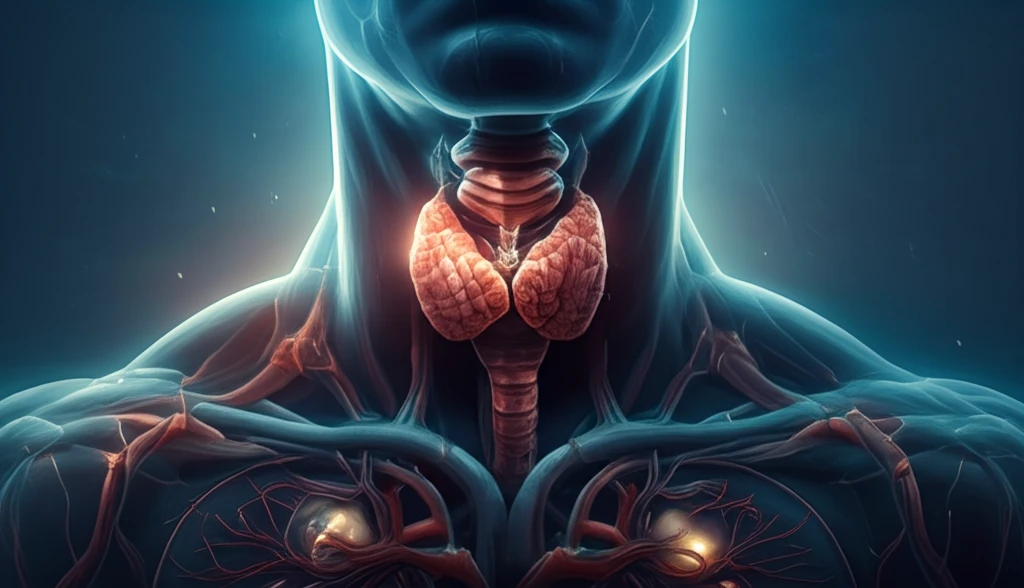
Hidden Thyroid Threat: How a Routine Checkup Missed a Silent Cancer Comeback

"Decades after successful treatment, a rare recurrence of Hürthle cell carcinoma surfaces in an unexpected location, challenging conventional monitoring and long-term surveillance strategies."
Thyroid carcinoma, the most common endocrine malignancy, primarily includes differentiated thyroid carcinoma (DTC), accounting for 90% of cases. While DTC generally carries an excellent prognosis, distant metastases can occur in up to 10% of patients. Metastasis to axillary lymph nodes (ALN) is extremely rare, with only a handful of cases reported in medical literature. Factors such as tumor size, specific histological variants (including tall cell, Hürthle cell, and insular types), and older age can increase the risk of poorer outcomes.
Distant metastasis is relatively uncommon, occurring in about 4% of cases, with papillary thyroid carcinoma having the lowest risk (2%) and follicular and Hürthle cell carcinomas having higher risks (11% and 12%, respectively). Regional lymph node metastases are more frequently observed. However, metastasis to axillary lymph nodes (ALN) is particularly unusual and typically occurs in the context of widespread disease. A review of medical literature reveals only 25 reported cases of ALN metastases from thyroid carcinoma.
This article presents a rare case of Hürthle cell carcinoma, a subtype of DTC, presenting as a solitary axillary lymph node metastasis 17 years after the initial thyroidectomy. This unusual recurrence highlights the importance of long-term surveillance and the potential for atypical presentations in thyroid cancer.
A Rare but Significant Thyroid Cancer
Hürthle cell carcinoma is an unusual and relatively rare type of differentiated thyroid cancer, accounting for only about 3-10% of all differentiated thyroid cancers. Because of this rarity, few medical institutions have extensive experience managing Hürthle cell neoplasms. To be classified as an oncocytic carcinoma, the tumor must contain ≥75% oncocytic (Hürthle) cells without nuclear features of papillary thyroid carcinoma. These cells are transformed thyroid follicular cells characterized by enlarged mitochondria and enlarged round nuclei with prominent nucleoli, resulting in eosinophilia in the cytoplasm.
Diagnostic Challenges and Treatment Basics
Fine needle aspiration is the initial method for diagnosis of enlarged thyroid nodules, yet Hürthle cell cytology specimens present significant diagnostic challenges. Cytologic criteria for distinguishing benign from malignant Hürthle cell lesions remain an area of active debate, with efforts underway to define more consistent and specific criteria. Standard treatment typically involves thyroidectomy, though the diagnostic difficulty in preoperatively distinguishing Hürthle cell carcinoma from other Hürthle cell lesions complicates surgical planning. These diagnostic pitfalls mean that cytology alone often cannot definitively classify Hürthle cell tumors.
The Origins of Hürthle Cell Recognition
Hürthle cells, also known as oncocytes, are characterized by eosinophilic cytoplasm and are abundant in mitochondria. These cells have been recognized for over a century and continue to present a diagnostic conundrum in pathology. Hürthle cells may be present in a variety of thyroid diseases, including Hashimoto's thyroiditis and thyroid carcinoma. Oncocytic tumors are not limited to the thyroid; they are also found in various other organs including salivary glands, lacrimal glands, pancreas, liver, kidney, parathyroid, and pituitary glands.
Case Presentation: A Silent Relapse
A 47-year-old male presented with a left-sided neck swelling that had persisted for two months. An ultrasound revealed a 3x3 cm nodule in the left lobe of the thyroid. A fine-needle aspiration cytology (FNAC) indicated papillary thyroid carcinoma (Bethesda VI). The patient underwent a near-total thyroidectomy, and histopathology confirmed a 2.5 x 2.0 cm Hürthle cell carcinoma with vascular invasion. Post-surgery, the patient's serum thyroglobulin (Tg) level was 25 ng/mL.
- Initial Presentation: Neck swelling led to discovery of thyroid nodule.
- Diagnosis: Hürthle cell carcinoma confirmed post-thyroidectomy.
- Treatment: Radioiodine therapy and thyroxine suppression.
- Long-Term Stability: Asymptomatic for 15 years with controlled TSH and Tg levels.
Closing Knowledge Gaps in Hürthle Cell Carcinoma
Hürthle cell carcinoma comprises about 5% of thyroid carcinoma cases according to recent systematic reviews. Partly because of its rarity, there is much that remains unknown about HCC compared to other histological cancer subtypes. In South Korea, for instance, there have been insufficient reports about HCC due to low incidences, making regional data particularly sparse. Hürthle cell lesions have been a diagnostic conundrum since they were first recognized, and ongoing research continues to refine our understanding of their genetics, diagnosis, and management.
Variable Behavior and Prognostic Uncertainty
Hürthle cell carcinoma is a variant of follicular cell carcinoma of the thyroid that may present as either a low-grade tumour or as a more aggressive type. This variability in clinical behavior makes it difficult to predict outcomes for individual patients. Prognosis depends upon the age of the patient, tumour size, extent of invasion, and initial nodal or distant metastasis. The unpredictable nature of HCC means that some cases initially considered indolent may prove more dangerous than expected.
Hürthle Cell Carcinoma vs. Follicular Thyroid Cancer
Hürthle cell carcinomas tend to have lower uptake of iodine compared to follicular carcinomas, making radioactive iodine (RAI) less effective for Hürthle cell variants. This resistance necessitates alternative treatments such as targeted systemic therapies or external beam radiation in some cases. A clinical study comparing 118 patients with Hürthle cell or follicular thyroid cancer examined differences in clinical characteristics at diagnosis and during follow-up, providing insights into how these two similar but distinct cancers behave differently. The reduced RAI sensitivity in HCC remains one of the most clinically significant distinctions from classical follicular thyroid cancer.
The Importance of Vigilance
This case underscores the critical importance of long-term follow-up in patients with thyroid cancer, even after many years of remission. While metastasis to axillary lymph nodes is rare, it can occur, and early detection through advanced imaging techniques like 18F-FDG PET/CT can significantly impact patient management and outcomes. A multidisciplinary approach, including surgery, radioiodine therapy, and continuous monitoring of thyroglobulin levels, is essential for managing such complex cases and ensuring the best possible prognosis.
Understanding HCC Through Institutional Experience
Hürthle cell carcinoma of the thyroid is rare, and there are contrasting data on its clinical behavior in the literature. A single-center analysis sought to describe clinicopathological features and outcomes of HCC patients in order to adapt surgical management accordingly. Such institutional studies are critical because the rarity of HCC means that multi-center collaborations and detailed case series are essential for building an evidence base. The varying outcomes reported across institutions underscore the need for standardized approaches to this uncommon malignancy.
Emerging Trends in HCC Treatment
The future of Hürthle cell carcinoma treatment is being shaped by key trends including personalized medicine, which involves tailoring treatments based on genetic profiles of individual tumors. Minimally invasive techniques are also gaining traction, aiming to reduce recovery time and complications for patients. The HCC treatment market is evolving with a focus on precision medicine and targeted therapy approaches that may improve outcomes for patients with this rare thyroid cancer. As understanding of the molecular underpinnings of HCC grows, novel therapeutic strategies are expected to move beyond traditional surgical and RAI approaches.
The Rare Cancer Burden
Hürthle cell carcinoma represents 3-4% of thyroid carcinoma cases, making it a uncommon but clinically significant malignancy. The tumor is characterized by its large, granular, and eosinophilic cytoplasm, which results from an excessive number of mitochondria within the cells. This mitochondrial overabundance is the defining histological feature of HCC and distinguishes it from other thyroid cancer subtypes. The rarity of HCC creates systemic challenges in terms of research funding, clinical trial enrollment, and the development of specialized treatment guidelines.
Patient Presentation and Clinical Reality
Hürthle cell carcinoma initially presents with a single, painless palpable mass in the thyroid, with pressure symptoms developing in advanced cases including dysphagia, dyspnea, and hoarseness. The tumor exhibits invasive potential, making it a dangerous variant despite its uncommon occurrence. HCC can appear in extraordinary anatomical locations outside the typical thyroid presentation, adding further complexity to diagnosis and management. Case reports of advanced refractory oncocytic carcinoma highlight the real-world challenges patients face when standard treatments fail to control disease progression.