
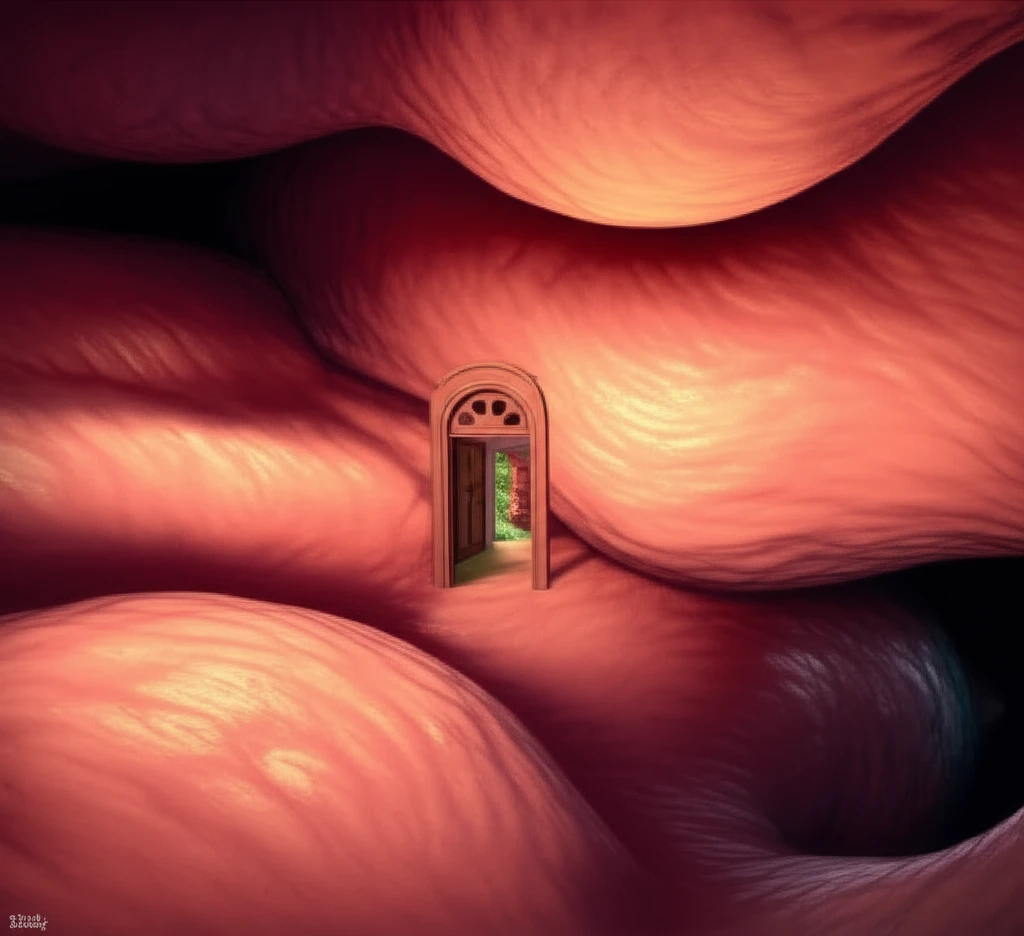
Digital illustration of a small doorway within the esophagus, symbolizing a hiatal hernia.

Hiatal Hernia: How Small Can It Be to Cause Big Problems?

"Unpacking the significance of short segment hiatal hernias and their impact on reflux disease and esophageal health."


For years, hiatal hernias (HH) have been a topic of debate in the medical community. Initially considered crucial for the development of gastro-esophageal reflux, they later fell out of favor as mere incidental findings. However, recent research has brought HH back into the spotlight, establishing them as significant risk factors for a range of conditions, including gastro-esophageal reflux disease (GERD), non-erosive reflux disease (NERD), Barrett's esophagus, and even esophageal adenocarcinoma.

A key point of contention has been the size of the hernia. Traditionally, a hiatus hernia, now often referred to as a long segment hiatus hernia (LSHH), was diagnosed when the diaphragmatic indentation (diaphragmatic crus) was 2 cm or more distal to the Z-line (the junction between the esophagus and stomach). However, a groundbreaking study has challenged this definition, suggesting that even smaller hernias, those between 0.5-2 cm, can have significant clinical implications.

This article explores the fascinating concept of short segment hiatal hernias (SSHH) and their potential to cause problems. We'll delve into the research that has brought SSHH to the forefront, discuss the challenges in diagnosing these smaller hernias, and explore the implications for managing reflux disease and preventing more serious complications.

The Unexpected Impact of Short Segment Hiatal Hernias

Digital illustration of a small doorway within the esophagus, symbolizing a hiatal hernia.

The conventional wisdom has been that larger hiatal hernias are the primary concern when it comes to reflux disease and related complications. These larger hernias can disrupt the normal function of the lower esophageal sphincter (LES), the valve that prevents stomach acid from flowing back into the esophagus. However, the study highlighted in the original research suggests that even SSHH can contribute to these problems.

The study found that hiatal hernias between 0.5 and 2 cm were significantly associated with columnar lined epithelium (CLE) and Los Angeles grade A reflux esophagitis. Surprisingly, the rates of CLE and grade A esophagitis were as high, or even higher, in patients with SSHH compared to those with LSHH. This suggests that even small hernias can create an environment conducive to inflammation and changes in the esophageal lining.

  • Higher Prevalence: The study revealed that SSHH were more common than LSHH, present in a significant percentage of patients.
  • Association with Esophageal Changes: SSHH were linked to the development of columnar lined epithelium (CLE), a precursor to Barrett's esophagus.
  • Reflux Esophagitis: Patients with SSHH experienced reflux esophagitis at rates comparable to those with larger hernias.
To fully understand the implications, it's helpful to know there are three types of hiatal hernias, with type 1 (sliding) HH being the most common, accounting for about 90% of all cases. Type 1 HH occurs when the phreno-oesophageal ligament, which helps anchor the esophagus and stomach, loses elasticity. This allows the stomach to slide up into the chest cavity. The inherent challenge in diagnosing smaller hernias lies in the fact that the gastro-oesophageal junction (GOJ) moves physiologically during swallowing, making precise measurements difficult.

Looking Ahead: The Importance of Accurate Diagnosis and Further Research

The study raises important questions about how we diagnose and manage hiatal hernias. While large HH are easily identified, the diagnosis of a small hiatus hernia is not well-standardized, due to inaccurate ways of measuring HH length. Future research should focus on developing more accurate and reproducible methods for diagnosing SSHH. This may involve advanced techniques like high-resolution manometry. By identifying even mild grades of HH, we may be able to better manage risk factor for diseases including reflux oesophagitis, Barrett's oesophagus and oesophageal adenocarcinoma or at the very least prognosticate for our patients. Ultimately, a better understanding of SSHH could lead to earlier interventions and improved outcomes for patients with reflux disease and related complications.

About this Article -

This article was crafted using a human-AI hybrid and collaborative approach. AI assisted our team with initial drafting, research insights, identifying key questions, and image generation. Our human editors guided topic selection, defined the angle, structured the content, ensured factual accuracy and relevance, refined the tone, and conducted thorough editing to deliver helpful, high-quality information.See our About page for more information.

This article is based on research published under:

DOI-LINK: 10.5056/jnm.2010.16.1.1, Alternate LINK

Title: Short Segment Hiatal Hernia - The Long And The Short Of It

Subject: Gastroenterology

Journal: Journal of Neurogastroenterology and Motility

Publisher: The Korean Society of Neurogastroenterology and Motility

Authors: Victoria Py Tan, Benjamin Cy Wong

Published: 2010-01-31

Everything You Need To Know

1

What is a short segment hiatal hernia (SSHH), and why is it important?

A short segment hiatal hernia (SSHH) refers to a hiatal hernia where the diaphragmatic indentation is between 0.5 to 2 cm distal to the Z-line. This is in contrast to the long segment hiatus hernia (LSHH), traditionally diagnosed when the diaphragmatic indentation is 2 cm or more. SSHH is important because recent research indicates that even these smaller hernias can significantly impact esophageal health and contribute to conditions such as gastro-esophageal reflux disease (GERD), Barrett's esophagus, and reflux esophagitis, which can potentially lead to esophageal adenocarcinoma. The study highlighted the unexpected impact of SSHH suggesting their relevance despite their small size.

2

How do short segment hiatal hernias contribute to reflux disease and esophageal health issues?

SSHH can contribute to reflux disease and esophageal health issues by disrupting the normal function of the lower esophageal sphincter (LES), the valve that prevents stomach acid from flowing back into the esophagus. SSHH can cause columnar lined epithelium (CLE), a precursor to Barrett's esophagus, and reflux esophagitis. The research found that patients with SSHH experienced reflux esophagitis at rates comparable to those with larger hernias (LSHH). This suggests that even small hernias create an environment conducive to inflammation and changes in the esophageal lining, increasing the risk of GERD and related complications.

3

What are the main types of hiatal hernias, and which one is most common?

There are three types of hiatal hernias, with Type 1 (sliding) HH being the most common, accounting for approximately 90% of all cases. Type 1 HH occurs when the phreno-oesophageal ligament, which helps anchor the esophagus and stomach, loses elasticity, allowing the stomach to slide up into the chest cavity. The text focuses on the implications of short segment hiatal hernias (SSHH) and their impact, without explicitly detailing the other types.

4

Why is accurate diagnosis of short segment hiatal hernias challenging, and what methods are being considered?

Accurate diagnosis of SSHH is challenging because the gastro-oesophageal junction (GOJ) moves physiologically during swallowing, making precise measurements difficult. The text indicates that current methods for measuring the length of the hiatal hernia are not well-standardized. Future research should focus on developing more accurate and reproducible methods for diagnosing SSHH, possibly involving advanced techniques like high-resolution manometry. This is crucial for the effective management of conditions related to reflux, like GERD and Barrett's esophagus.

5

How can understanding short segment hiatal hernias lead to better patient outcomes?

A better understanding of SSHH can lead to earlier interventions and improved outcomes for patients with reflux disease and related complications. Accurate diagnosis of even SSHH can allow healthcare professionals to identify and manage risk factors for diseases like reflux esophagitis, Barrett's esophagus, and even esophageal adenocarcinoma. This could involve earlier interventions to prevent the progression of these conditions. Further research into SSHH could lead to the development of better diagnostic tools and more effective management strategies, ultimately improving patient health and quality of life.

Newsletter Subscribe

Subscribe to get the latest articles and insights directly in your inbox.