
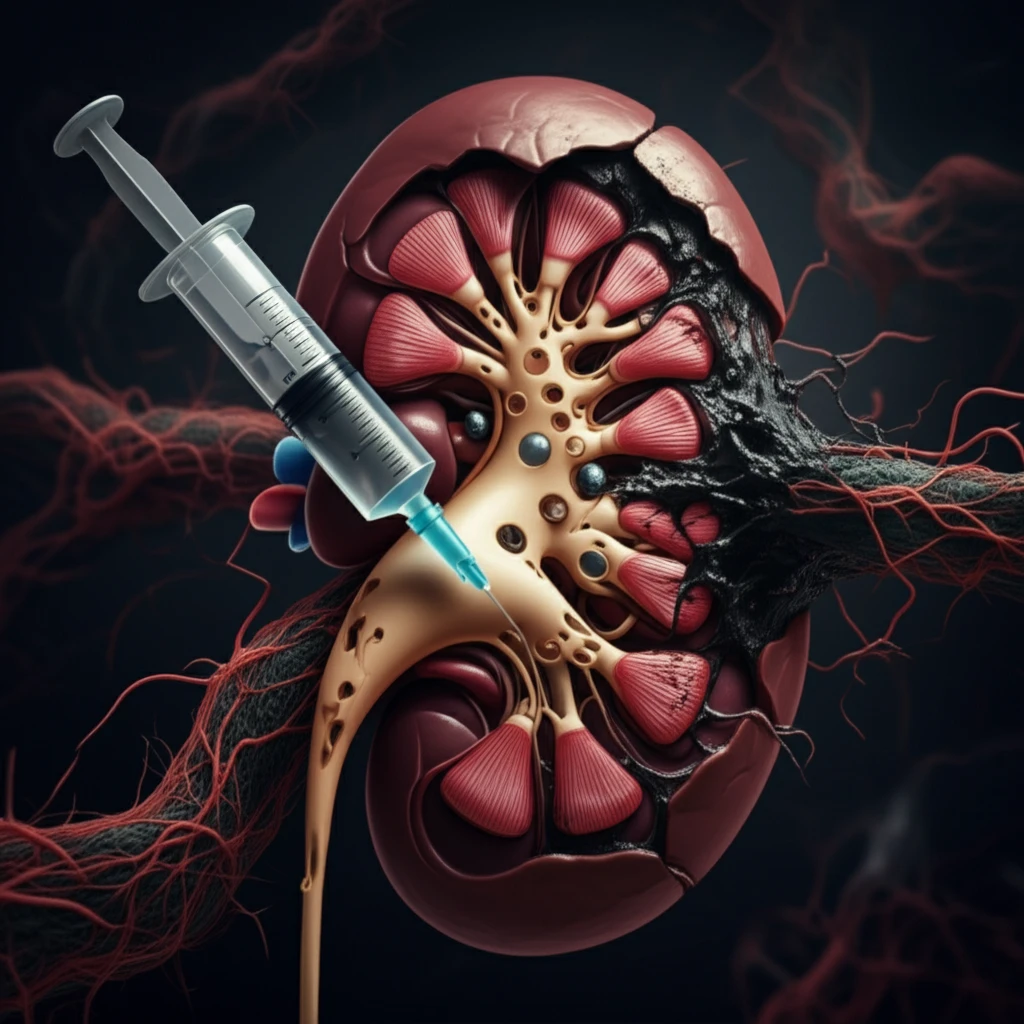
Heroin and Health: Unmasking AA Amyloidosis in the Opioid Crisis

"A look into the rise of secondary amyloidosis among heroin users and its implications for public health."
The opioid crisis in the United States has cast a long shadow, with overdoses, psychiatric disorders, and infectious diseases grabbing headlines. But beneath the surface lies another, less publicized threat: secondary amyloidosis (AA), a condition where the body's organs begin to fail due to a buildup of abnormal protein deposits. While traditionally associated with chronic inflammatory diseases, AA amyloidosis is increasingly linked to heroin use, creating a new challenge for public health officials and healthcare providers.
Heroin use has surged in recent years, affecting diverse populations across the country. According to the research, rates have increased significantly, especially among women and non-Hispanic whites. This surge is accompanied by a rise in injection-related complications, making it crucial to understand the less obvious health consequences associated with this dangerous drug.
This article highlights the insidious connection between heroin use and AA amyloidosis, spotlighting a case study that underscores the need for increased awareness and proactive intervention.
What is AA Amyloidosis and How Does Heroin Use Increase the Risk?
AA amyloidosis occurs when serum amyloid A (SAA) protein, produced in response to inflammation, accumulates in organs like the kidneys. While chronic conditions such as rheumatoid arthritis and inflammatory bowel disease are well-known causes, heroin use introduces a different pathway. Injection drug use, particularly of black tar heroin, often leads to recurrent skin and soft tissue infections. These infections trigger a sustained inflammatory response, driving up SAA production and increasing the risk of amyloid deposits.
- Recurrent Infections: Injection sites can become breeding grounds for bacteria, leading to chronic infections.
- Impurities in Heroin: Black tar heroin contains impurities that exacerbate inflammation and venous sclerosis.
- Injection Techniques: "Skin popping" and "muscling," where drugs are injected into the skin or muscle, heighten the risk of local infections.
- Lack of Sterile Practices: Sharing needles and using unsanitary injection techniques further amplify the risk of infection.
The Path Forward: Prevention and Treatment Strategies
The rise of AA amyloidosis among heroin users presents a complex challenge that requires a multi-faceted approach. Public health initiatives promoting safe prescribing practices, harm reduction strategies, and increased access to treatment are crucial. Medication-assisted treatment (MAT) can help individuals break free from the cycle of addiction, reducing the risk of injection-related infections. Law enforcement efforts to curb the illicit drug supply also play a role in minimizing the availability of dangerous substances. For individuals already affected by AA amyloidosis, early diagnosis and treatment of underlying infections are vital to slow the progression of the disease. Supportive care, including diuretics and ACE inhibitors, can help manage symptoms and protect kidney function. In refractory cases, innovative therapies targeting amyloid formation are being explored. By addressing both the addiction and its complications, we can mitigate the devastating impact of the opioid crisis and protect the health of our communities.