
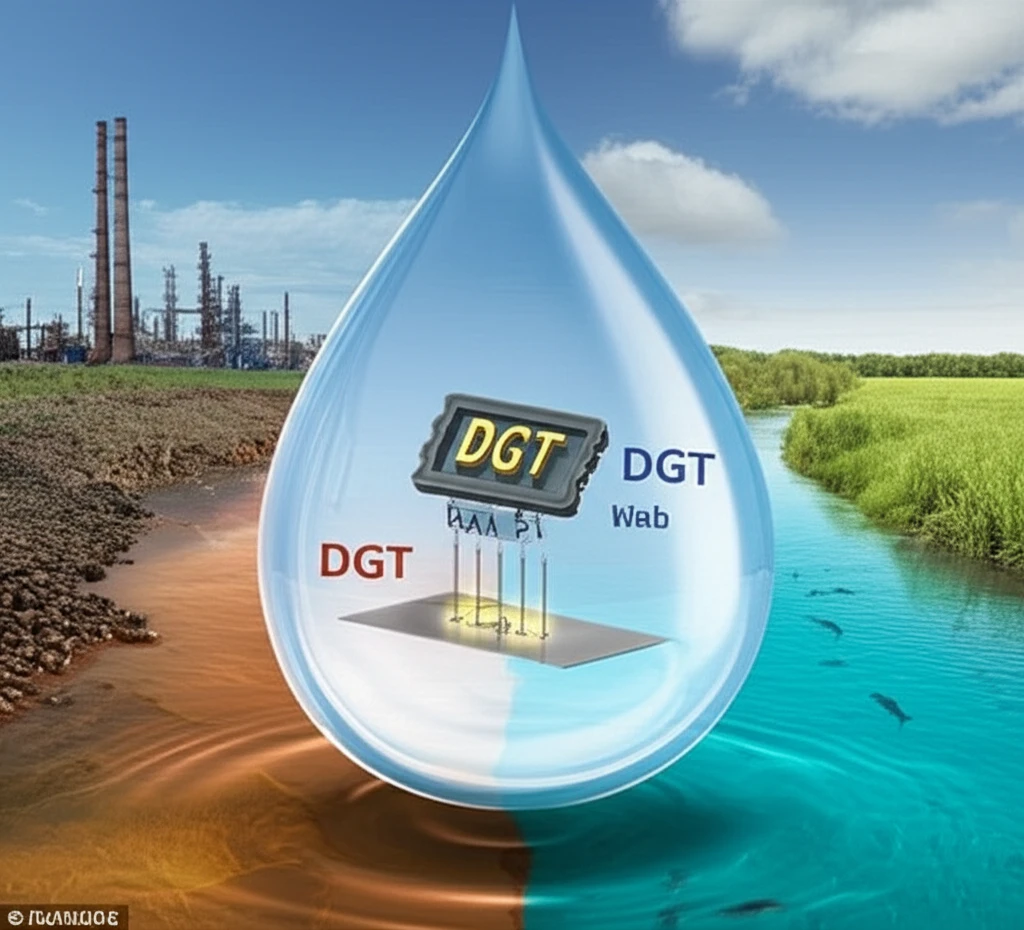
Microscopic DGT device testing water, symbolizing clean water technology.

Heavy Metals in Your Water? Here’s How a New Chitosan-Based Tech Can Help

"Discover how guanidinylated carboxymethyl chitosan (GCMCS) is revolutionizing water testing for labile trace metals, offering a simple, effective solution for cleaner, safer water."


Ensuring access to clean, safe water is one of the most pressing environmental challenges. Trace metals, which can come from industrial discharge, agricultural runoff, and natural sources, often contaminate water supplies. While some metals are essential in small amounts, others can pose significant health risks, leading to a demand for efficient and accurate monitoring techniques.

Traditional methods for measuring these contaminants are often complex, costly, and require specialized equipment. In response, scientists are constantly developing innovative solutions. A recent study published in the 'International Journal of Environmental Analytical Chemistry' introduces a promising technique utilizing guanidinylated carboxymethyl chitosan (GCMCS) to measure labile trace metals in water. This approach aims to simplify the detection process, making it more accessible and effective.

This article breaks down the science behind this new method, exploring how GCMCS works and its potential impact on water quality monitoring. Whether you're a concerned citizen, an environmental scientist, or simply curious about the latest advancements in water treatment, understanding this technology is crucial for safeguarding our water resources.

What is GCMCS and How Does it Help Measure Water Quality?

Microscopic DGT device testing water, symbolizing clean water technology.

Guanidinylated carboxymethyl chitosan (GCMCS) is a modified version of chitosan, a natural polymer derived from the shells of crustaceans. Chitosan itself isn't water-soluble, which limits its applications. By modifying it through carboxymethylation and guanidinylation, scientists create a water-soluble compound with enhanced capabilities for capturing trace metals.

The GCMCS is used in a technique called Diffusive Gradients in Thin Films (DGT). Here’s how it works:

  • Preparation: GCMCS is prepared from chitosan through a series of chemical modifications to ensure it is water-soluble and has a high affinity for binding metal ions.
  • DGT Device Construction: A DGT device is assembled using a GCMCS aqueous solution as the binding agent and a cellulose acetate dialysis membrane (CADM) as the diffusion phase.
  • Deployment: The DGT device is placed in the water sample to be tested. The CADM allows water and dissolved metals to pass through, while the GCMCS binds to the metal ions.
  • Measurement: After a set period, the DGT device is removed, and the amount of metals accumulated in the GCMCS is measured. This provides an accurate reading of the labile (easily available) trace metal concentrations in the water.
The DGT technique offers several advantages, including simplicity, cost-effectiveness, and the ability to measure the bioavailable fraction of metals, which is crucial for assessing environmental and health impacts.

The Future of Water Quality Monitoring

The development of GCMCS-DGT represents a significant step forward in water quality monitoring. Its simplicity and effectiveness make it an attractive option for routine testing, especially in areas with limited resources. Further research will focus on optimizing the technique for a wider range of metals and environmental conditions, ensuring its reliability and applicability on a global scale. As we face increasing challenges in maintaining clean water supplies, innovative solutions like GCMCS-DGT offer hope for a more sustainable and healthy future.

About this Article -

This article was crafted using a human-AI hybrid and collaborative approach. AI assisted our team with initial drafting, research insights, identifying key questions, and image generation. Our human editors guided topic selection, defined the angle, structured the content, ensured factual accuracy and relevance, refined the tone, and conducted thorough editing to deliver helpful, high-quality information.See our About page for more information.

Everything You Need To Know

1

What is guanidinylated carboxymethyl chitosan (GCMCS), and how does it help in measuring water quality?

Guanidinylated carboxymethyl chitosan (GCMCS) is a modified form of chitosan, derived from crustacean shells. Regular chitosan isn't water-soluble, limiting its use. Through carboxymethylation and guanidinylation, GCMCS becomes water-soluble and better at capturing trace metals. It's used in Diffusive Gradients in Thin Films (DGT) to measure the bioavailable fraction of metals, crucial for assessing environmental and health impacts, offering a cost-effective and simple solution for water quality monitoring.

2

Can you explain how the Diffusive Gradients in Thin Films (DGT) technique works with GCMCS to test water?

Diffusive Gradients in Thin Films (DGT) is a technique that uses GCMCS to measure labile trace metals in water. A DGT device, containing GCMCS as the binding agent and a cellulose acetate dialysis membrane (CADM) as the diffusion phase, is placed in a water sample. The CADM allows water and dissolved metals to pass through, where the GCMCS binds to the metal ions. After a set period, the device is removed, and the accumulated metals are measured, providing an accurate reading of labile trace metal concentrations.

3

What are labile trace metals, and why is it important to measure them in water?

Labile trace metals are the easily available metal ions in water. Measuring them is vital because they represent the fraction of metals that can be readily taken up by living organisms, thus posing immediate environmental and health risks. The DGT technique focuses on measuring these bioavailable metals, providing a more accurate assessment of potential toxicity and impact on ecosystems and human health.

4

What are the main advantages of using the GCMCS-DGT technique compared to other methods for water quality monitoring?

The GCMCS-DGT technique offers several advantages for water quality monitoring. It is simple, cost-effective, and can measure the bioavailable fraction of metals. This technique is particularly valuable in areas with limited resources. Traditional methods often require specialized equipment and are more complex. The GCMCS-DGT simplifies the detection process, making it more accessible and effective.

5

Why is the development of GCMCS-DGT considered a significant step forward in water quality monitoring?

The development of GCMCS-DGT is a significant advancement because it provides a simple and effective way to monitor water quality, especially for labile trace metals. This is crucial for safeguarding water resources and public health. Further research aims to optimize the technique for a broader range of metals and environmental conditions, enhancing its reliability and applicability worldwide. As challenges in maintaining clean water supplies grow, innovative solutions like GCMCS-DGT offer promise for a more sustainable and healthy future.

Newsletter Subscribe

Subscribe to get the latest articles and insights directly in your inbox.