
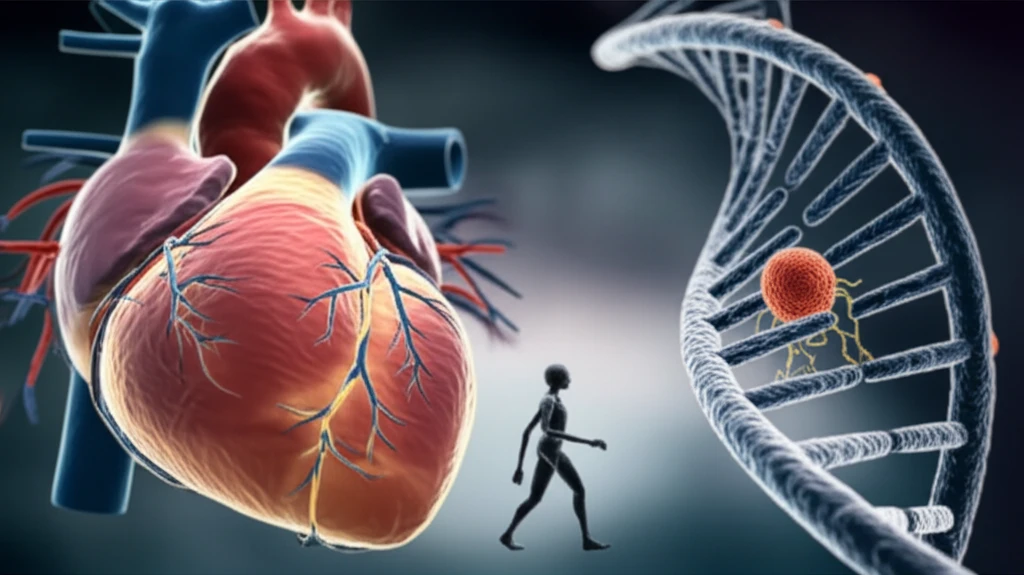
Heartbreak at the Cellular Level: How Stress Redefines Calmodulin's Role in Cardiac Health

"Uncover the hidden connection between stress, a key protein's displacement, and the surprising cascade that leads to heart failure."
Our hearts, resilient as they are, face constant pressure from hypertension, constricted arteries, and the aftermath of heart attacks. In response to these challenges, the heart initially adapts through hypertrophic growth—an enlargement of the heart muscle. While this may seem beneficial at first, this adaptation often leads to decompensation and, ultimately, heart failure. Understanding the mechanisms behind this transition is crucial for developing effective treatments and preventative strategies.
At the core of this intricate process is calmodulin (CaM), a versatile protein known for its role in modulating various cellular functions, including those within the heart. CaM interacts with the ryanodine receptor type 2 (RyR2), a critical channel that regulates calcium release within heart cells. Under normal conditions, this interaction helps to stabilize RyR2, ensuring proper calcium signaling. However, when the heart is under stress, this relationship can break down, leading to a cascade of detrimental effects.
Emerging research is now uncovering how the disruption of CaM's interaction with RyR2 sets off a chain reaction, leading to the protein's translocation within the cell. This relocation and its consequences are now under investigation, providing potential pathways for therapeutic interventions to prevent heart failure.
What Happens When Calmodulin Moves? Unpacking the Chain of Events
Recent studies shed light on what happens when the normal relationship between calmodulin (CaM) and ryanodine receptor type 2 (RyR2) is disrupted. It turns out that stress signals, mimicked by substances like angiotensin II (Ang II) and phenylephrine (PE), can cause CaM to detach from RyR2 and relocate to the cell's nucleus. Understanding this movement is critical, as it appears to be a pivotal step in the development of cardiac hypertrophy.
- Dantrolene: A compound that strengthens the CaM-RyR2 bond, preventing CaM's departure.
- Suramin: A substance known to break the CaM-RyR2 bond, encouraging CaM to move away from RyR2.
Looking Ahead: Targeting Calmodulin for Future Therapies
The research underscores the significant role of calmodulin translocation in the heart's response to stress and the subsequent development of cardiac hypertrophy. By identifying this specific mechanism, scientists are paving the way for novel therapeutic strategies that target calmodulin's movement, potentially preventing or reversing the progression of heart failure. Future studies will likely focus on refining these interventions and exploring their efficacy in clinical settings, offering new hope for those at risk of heart disease.