
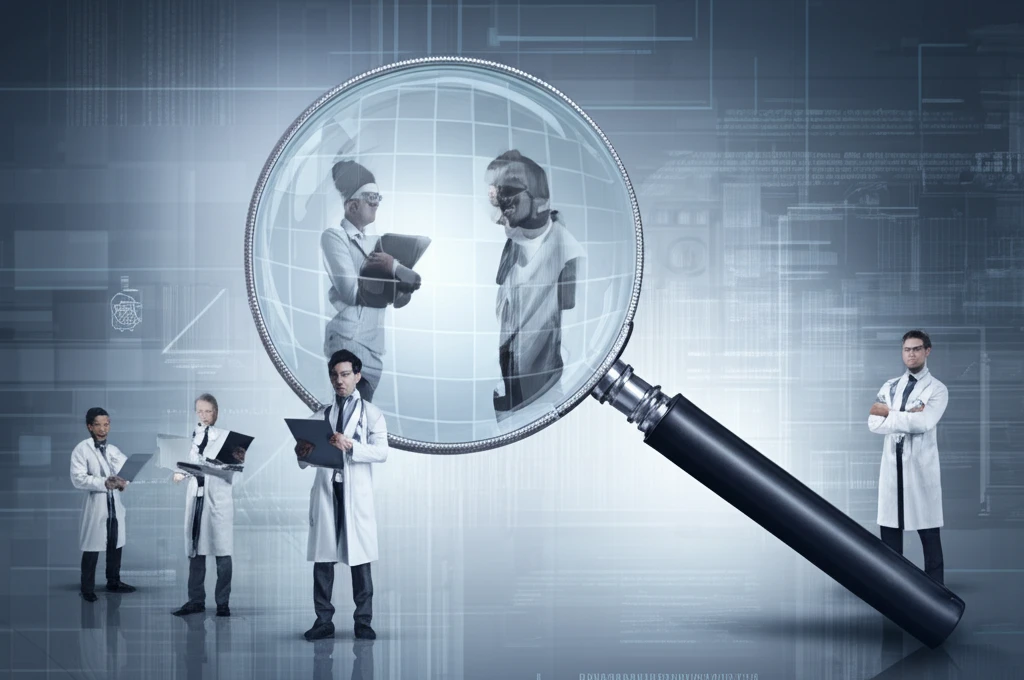
The Unsung Heroes of Medical Research: Why Peer Review Matters

"Dive into the world of peer review and understand how these dedicated experts ensure the quality and reliability of medical science."
In the ever-evolving landscape of medical science, where breakthroughs and discoveries constantly reshape our understanding of health and disease, one critical process often remains behind the scenes: peer review. This rigorous evaluation by experts in the field serves as a cornerstone of scientific integrity, ensuring that published research meets the highest standards of quality and validity.
The Journal of Korean Medical Science (JKMS), like many other reputable scientific publications, relies heavily on the dedication and expertise of peer reviewers. These unsung heroes meticulously examine submitted manuscripts, scrutinizing methodologies, analyzing data, and assessing the overall significance of the findings. Their efforts play a pivotal role in determining which studies are deemed worthy of publication, thus shaping the direction of medical knowledge.
As we delve into the world of peer review, let's explore the crucial role these individuals play, the challenges they face, and the impact of their contributions on the advancement of medical science. Understanding the peer review process not only sheds light on the inner workings of scientific publishing but also underscores the importance of critical evaluation in an age of information overload.
Peer Review as a Quality Benchmark
Peer review serves as a baseline quality control mechanism in medical research, confirming that papers meet the standards of their subfield. Reviewers can catch missing references in literature reviews and identify gaps that authors may have overlooked. While this process does not guarantee groundbreaking findings, it ensures a minimum threshold of methodological rigor and scholarly completeness. Statistical peer review services have emerged to help researchers navigate this process and improve their chances of journal acceptance.
The Standard Peer Review Framework
Peer review is a form of self-regulation by qualified members of a profession within the relevant field, employed to maintain standards of quality, improve performance, and provide credibility to published research. However, the system has known limitations. When compared against bibliometric approaches such as citation analysis, peer review and citations generally reflect the judgments of fellow academics, but metrics do not always align with peer assessments. The peer review process itself can be opaque, with reviewers noting unclear methodologies and limitations in submitted manuscripts.
Tracing Peer Review Through Scientific Archives
The history of peer review can be traced through archived review records of published scientific studies. Review histories from fields such as entomology and soil science reveal how reviewers have evaluated manuscripts over time, with average initial-stage review scores often ranging around 7.5 out of 10. These archives demonstrate that the peer review process has long served as a gatekeeping mechanism, with editors assigning reviewers and documenting the iterative dialogue between authors and critics. Open peer review policies have since emerged as a modern evolution of this historical tradition.
The Vital Role of Peer Review in Medical Research
Peer review is more than just a gatekeeping mechanism; it is an integral part of the scientific process. It provides a crucial layer of scrutiny that helps to identify potential flaws, biases, or oversights in research studies. By subjecting manuscripts to the critical eyes of experts, peer review ensures that published findings are robust, reliable, and contribute meaningfully to the existing body of knowledge. In the context of JKMS, this process involves a meticulous assessment of each submission, with reviewers evaluating various aspects of the study, including:
- Methodology: Assessing the appropriateness and validity of the research methods used.
- Data Analysis: Examining the accuracy and interpretation of the data.
- Significance: Evaluating the potential impact and contribution of the findings to the field.
- Ethical Considerations: Ensuring adherence to ethical guidelines and principles.
Current Challenges in Peer Review
Recent research published in Nature highlights that peer review perpetuates barriers for historically excluded groups in academia. Studies also reveal a widespread lack of article accessibility policies among ecology and evolution journals, limiting the reach and inclusivity of published research. These findings suggest that while peer review remains central to scientific publishing, it requires ongoing reform to address systemic inequities. The volume of research being produced continues to strain the peer review infrastructure.
Systemic Flaws and the Trust Problem
Despite its flaws, peer review does work to improve the quality of research, though the process must be managed to minimize problems while maintaining its advantages. One prominent limitation is the limited number of experts in a given field available to review, often resulting in a small pool of reviewers who know each other's work and writing styles, which can compromise objectivity. Systemic bias in peer review has been documented, with reviewers sometimes criticizing manuscripts for inconsistent reasons. The potential for bias and abuse remains a persistent concern that the scientific community continues to grapple with.
Peer Review Versus Alternative Validation Methods
When evaluating research claims, peer-reviewed evidence is often contrasted with non-peer-reviewed alternatives. Calibrated, peer-reviewed research has decades of evidence and clear regulatory tiers, whereas many alternative claims lack both rigorous review and regulatory oversight. Comparison platforms like Versus attempt to provide side-by-side evaluations, but the depth and rigor of peer review remains unmatched by consumer-facing comparison tools. In medical research specifically, the distinction between peer-reviewed findings and unreviewed claims carries significant implications for patient safety and treatment decisions.
Acknowledging the Unsung Heroes
In conclusion, the peer review process is an indispensable component of medical research, ensuring the quality, validity, and reliability of published findings. The dedicated individuals who serve as peer reviewers play a vital role in this process, contributing their expertise and time to meticulously evaluate submitted manuscripts. Their efforts often go unrecognized, yet they are essential to the advancement of medical knowledge and the improvement of healthcare outcomes. As we celebrate the breakthroughs and discoveries that shape the future of medicine, let us not forget to acknowledge the unsung heroes of peer review, whose contributions are invaluable to the scientific community and the well-being of society.
What Expert Reviewers Actually Do
Opinions remain divided on the precise value that expert reviewers bring to the process, but their role is widely considered essential. In a Q&A with expert reviewers who have collectively reviewed over 150 published papers, reviewers shared insights into how they make decisions and what they look for when evaluating manuscripts. Peer review helps catch errors and prevent fraud, but the volume of papers to review has increased dramatically while turnaround times have decreased. There is growing recognition that peer review is essential to good science, and the academic community must find ways to properly credit the experts who perform this critical service.
AI-Assisted Peer Review in 2026
The peer review landscape is evolving rapidly with the integration of AI-assisted review tools. Researchers and journals in 2026 are examining the efficiency gains that agentic AI systems can bring to the review process, including faster manuscript screening and more consistent evaluation criteria. AI tools are being explored to address the integrity gap in peer review by reducing human bias and catchings errors that overwhelmed reviewers might miss. However, the future role of AGI and beyond in peer review remains an open question, with ongoing debate about whether AI can truly replicate the nuanced judgment of human experts.
Collusion and Systemic Vulnerabilities
Researchers are developing new methods to detect collusion in peer review, drawing inspiration from mechanisms like the Vickrey-Clarke-Groves (VCG) auction framework. These computational approaches aim to identify patterns of reviewer manipulation that threaten the integrity of the process. Systemic challenges in peer review extend beyond individual bias to include structural vulnerabilities that can be exploited. The development of detection sensitivity metrics and true positive rate measurements represents a promising frontier in strengthening peer review against fraud.
Peer Review Beyond Academic Publishing
The principles of peer review extend beyond traditional academic publishing into educational settings. Case studies have shown that tech-enabled peer learning platforms can improve student engagement when peer feedback is structured and consistent. In real-world research settings, studies acknowledge that complete control over variables is impossible, yet peer review processes help identify and account for potential biases such as medication-related confounding factors. The human element of peer review—the dialogue, critique, and iterative improvement—remains irreplaceable even as technology continues to transform how research is conducted and evaluated.