
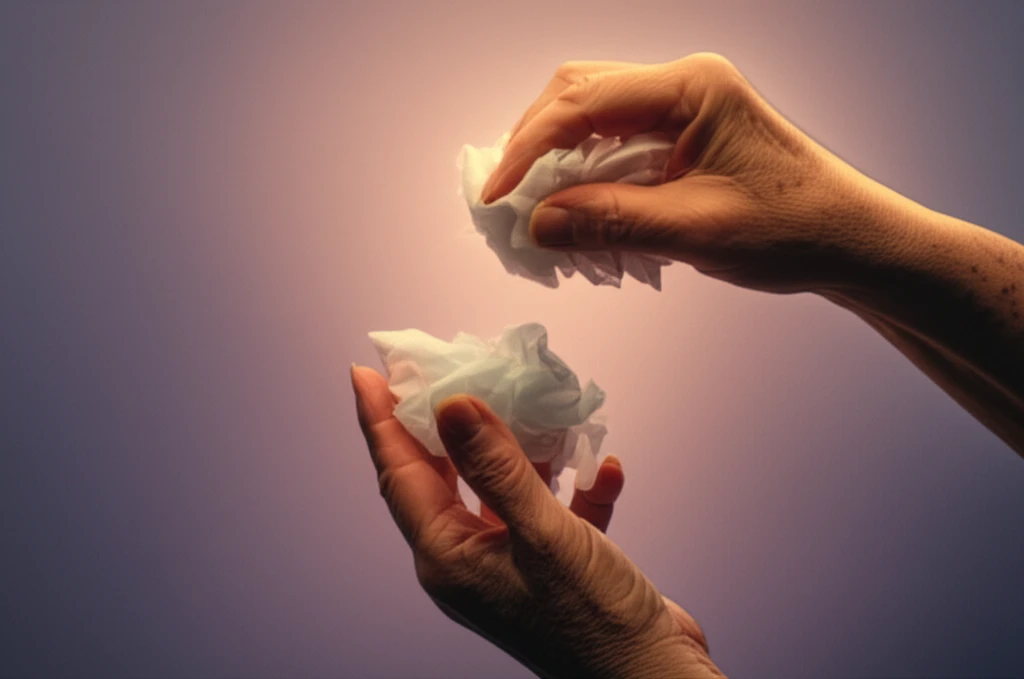
Hand Osteoarthritis Relief: Can This Simple Activity Boost Your Dexterity?

"New research suggests a fine motor skill program using tissue paper can improve hand function for those with osteoarthritis. Is this a practical solution for you?"
Hand osteoarthritis (OA) can significantly impact daily life, making simple tasks challenging and affecting overall independence. Finding effective strategies to manage the symptoms of hand OA is crucial for maintaining quality of life.
A recent study published in the 'Journal of Hand Therapy' investigated whether adding a fine motor rehabilitation program to conventional exercise and adaptive equipment programs could improve outcomes for individuals with hand OA. The research focused on a specific activity: forming and gluing tissue paper balls.
This article breaks down the study's findings, exploring the potential benefits of this fine motor activity, its practical applications, and limitations, to help you determine if it's a worthwhile addition to your hand OA management plan.
Tissue Paper Therapy: Does it Really Work?
The study, a randomized clinical trial, examined the effects of having participants create and glue tissue paper balls for 45 minutes, three times a week, over an eight-week period. The researchers then measured a variety of outcomes, including dexterity, range of motion (ROM), and overall hand function.
- Dexterity improvements were noted with the fine motor activity.
- Active and passive range of motion in the dominant index finger and thumb improved.
- The control group, without the fine motor program, experienced a loss of ROM over time.
Is This Study Ready for Your Hands? Considerations for Practical Application
While the study offers promising insights, it's essential to consider its limitations before incorporating the tissue paper activity into your hand OA management routine. The study did not specifically address pain levels, a crucial factor for individuals with OA. Also, the intervention focused solely on the dominant index and thumb, and the participants were primarily older adults. If the target audience are adults below 40 years of age then this is a moderate study.
Remember that the effectiveness of any intervention depends on individual circumstances and preferences. If clients prefer rote exercise methods, convincing them about the activity's benefits can be a challenge. Ensuring the activity remains pain-free is also crucial to avoid excessive joint cartilage loading.
Overall, the study provides another potential tool to add to an OA management arsenal. Talk to your healthcare provider to help customize activity to include daily needs, and the fine motor intervention may become an occupation, based on individual goals. Future research should explore a lot of activites and occupations, if a fine motor program is added. It's a process of creativity and collaboration with your therapist.