
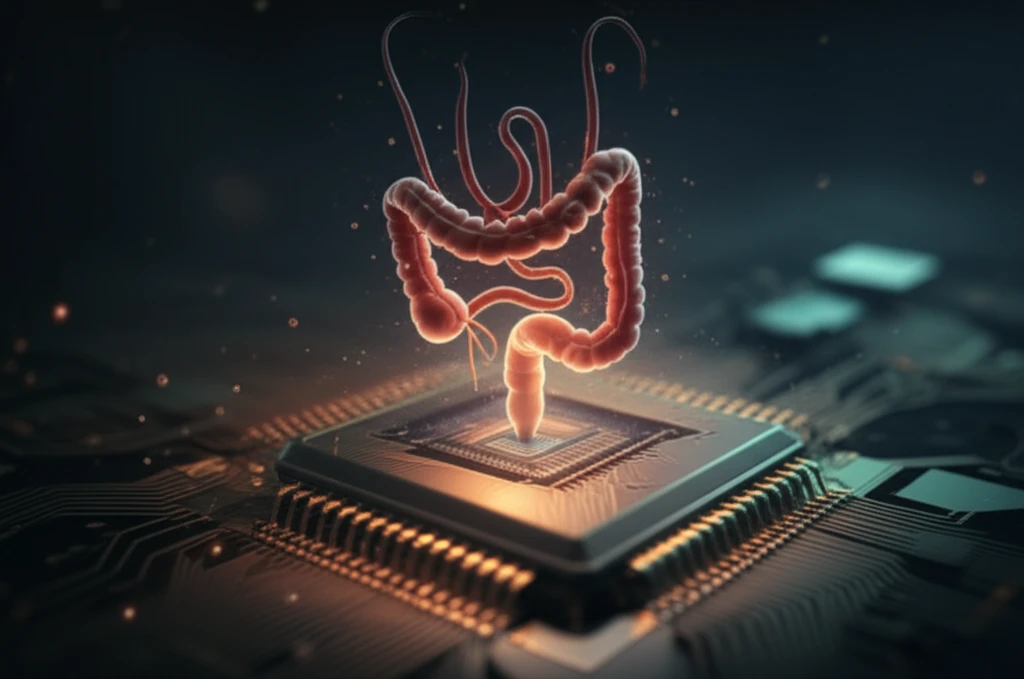
Intestine-on-a-chip: A miniature human intestine growing on a microchip.

Gut Check: Are New Intestine-on-a-Chip Systems the Future of Drug Testing?

"Researchers are racing to create realistic human intestine models for better drug development. Learn about the innovative technologies that could revolutionize how we understand drug absorption and metabolism."


Developing new drugs is a complex and costly process, and predicting how a drug will behave in the human body is a major challenge. While the liver has long been considered the primary organ for drug clearance, the intestine plays a significant role in drug metabolism and interactions. This has led researchers to develop more sophisticated models that mimic the intestinal environment.

Traditional methods of studying drug absorption and metabolism have limitations. Measuring how much of a drug is absorbed (Fa) is relatively straightforward, but determining how much of the absorbed drug is broken down in the gut (Fg) before reaching the bloodstream is much harder. Existing in vitro systems often don't accurately reflect the complexity of the human intestine.

To overcome these challenges, scientists are creating advanced in vitro models that better represent the human intestine. These models, often referred to as 'intestine-on-a-chip' systems, are bio-engineered from various sources, including intestinal cells, stem cells, and tissue extracts. This article will explore the latest advancements in these models, their strengths and limitations, and how they are being used to improve drug development.

Beyond the Petri Dish: How New Intestinal Models Are Improving Drug Development

Intestine-on-a-chip: A miniature human intestine growing on a microchip.

Researchers are exploring various ways to create more realistic models of the human intestine. These approaches include:

Each of these models has its own strengths and limitations:

  • Enteroids: These 'mini-intestines' are grown from intestinal stem cells and can differentiate into various intestinal cell types. While they mimic intestinal cell structure, they lack accessibility to the inner compartment and are difficult to scale up for high-throughput drug screening.
  • Enterocytes: These isolated intestinal cells can be cryopreserved for long-term storage and used to study drug metabolism. However, they may not fully represent the function of transporters and DMEs.
  • iPSCs: Stem-cell derived enterocytes can be tailored with growth factors and small-molecule enhancements and may enable high throughput. However, their lack of certain key DME expression limits drug disposition predictions.
  • Microfluidics-based platforms: These systems use fluid flow and mechanical forces to mimic the intestinal environment. However, most are derived from Caco-2 cell lines that have low CYP3A expressions.
  • Human primary cell derived intestinal models: Micro-tissue systems leverage healthy ileal epithelial cells and fibroblasts, differentiated in high throughput wells. These closely simulate the metabolic features of the human ileum.
The ideal intestinal model should accurately mimic the expression of drug-metabolizing enzymes (DMEs) and transporters found in the human intestine. This includes key enzymes like CYP3A4, CYP2C9, and CYP2D6, as well as transporters like P-glycoprotein (P-gp) and BCRP. By accurately replicating these factors, researchers can better predict how drugs will be absorbed, metabolized, and transported in the body.

The Future of Drug Development: Building Better Intestinal Models

The development of more sophisticated intestinal models holds great promise for improving drug development. These models can help researchers:

<ul> <li>Better predict drug absorption and metabolism in humans</li> <li>Identify potential drug-drug interactions</li> <li>Optimize drug formulations to improve bioavailability</li> <li>Reduce the risk of drug failure in clinical trials</li> </ul>

To fully realize the potential of these models, researchers need to focus on several key areas. This includes improving the accuracy of DME and transporter expression, optimizing culture conditions, and developing methods for scaling up production. By addressing these challenges, we can create more reliable and predictive models that will ultimately lead to safer and more effective drugs.

About this Article -

This article was crafted using a human-AI hybrid and collaborative approach. AI assisted our team with initial drafting, research insights, identifying key questions, and image generation. Our human editors guided topic selection, defined the angle, structured the content, ensured factual accuracy and relevance, refined the tone, and conducted thorough editing to deliver helpful, high-quality information.See our About page for more information.

This article is based on research published under:

DOI-LINK: 10.1124/dmd.118.082784, Alternate LINK

Title: Physiologically Relevant, Humanized Intestinal Systems To Study Metabolism And Transport Of Small Molecule Therapeutics

Subject: Pharmaceutical Science

Journal: Drug Metabolism and Disposition

Publisher: American Society for Pharmacology & Experimental Therapeutics (ASPET)

Authors: Aarti Sawant-Basak, A. David Rodrigues, Matthew Lech, Regis Doyonnas, Marion Kasaian, Bhagwat Prasad, Nikolaos Tsamandouras

Published: 2018-08-20

Everything You Need To Know

1

What are 'intestine-on-a-chip' systems?

The 'intestine-on-a-chip' systems are advanced in vitro models designed to replicate the human intestine's complexity. They are bio-engineered using intestinal cells, stem cells, and tissue extracts. These systems are crucial because they offer a more accurate method to study how drugs are absorbed, metabolized, and how they might interact within the body, thus enhancing drug development.

2

Why are drug-metabolizing enzymes (DMEs) important in the context of 'intestine-on-a-chip' systems?

Drug-metabolizing enzymes (DMEs) are critical in determining how the body processes drugs. The 'intestine-on-a-chip' systems aim to accurately mimic the expression of these enzymes, such as CYP3A4, CYP2C9, and CYP2D6, along with transporters like P-glycoprotein (P-gp) and BCRP. By replicating these factors, researchers gain a better understanding of how drugs behave, improving the accuracy of drug development.

3

What are the different approaches used to create realistic intestinal models?

Various approaches are employed to build more realistic intestinal models. These include Enteroids, Enterocytes, iPSCs, Microfluidics-based platforms, and Human primary cell derived intestinal models. Enteroids are 'mini-intestines' grown from intestinal stem cells. Enterocytes are isolated intestinal cells used to study drug metabolism. iPSCs are stem-cell derived enterocytes that can be tailored. Microfluidics-based platforms use fluid flow to mimic the intestinal environment, and Human primary cell derived intestinal models leverage healthy ileal epithelial cells and fibroblasts. Each model has its own strengths and limitations, and researchers carefully select models based on the specific needs of their drug development studies.

4

What is the significance of 'intestine-on-a-chip' systems?

The significance of 'intestine-on-a-chip' systems lies in their potential to revolutionize drug development. Traditional methods often fail to accurately predict drug behavior in the human body. These new systems help researchers understand drug absorption (Fa) and the amount of drug broken down in the gut (Fg) before reaching the bloodstream. Consequently, this leads to the development of more effective and safer drugs.

5

What are the main limitations of traditional methods that 'intestine-on-a-chip' systems aim to overcome?

Existing in vitro systems often fall short in accurately reflecting the complexity of the human intestine. Measuring how much of a drug is absorbed (Fa) is relatively straightforward, but determining how much of the absorbed drug is broken down in the gut (Fg) before reaching the bloodstream is much harder to determine using traditional methods. The new systems are designed to overcome these limitations by offering a more representative model of the human gut. This enables a better understanding of drug behavior and improves drug development.

Newsletter Subscribe

Subscribe to get the latest articles and insights directly in your inbox.