
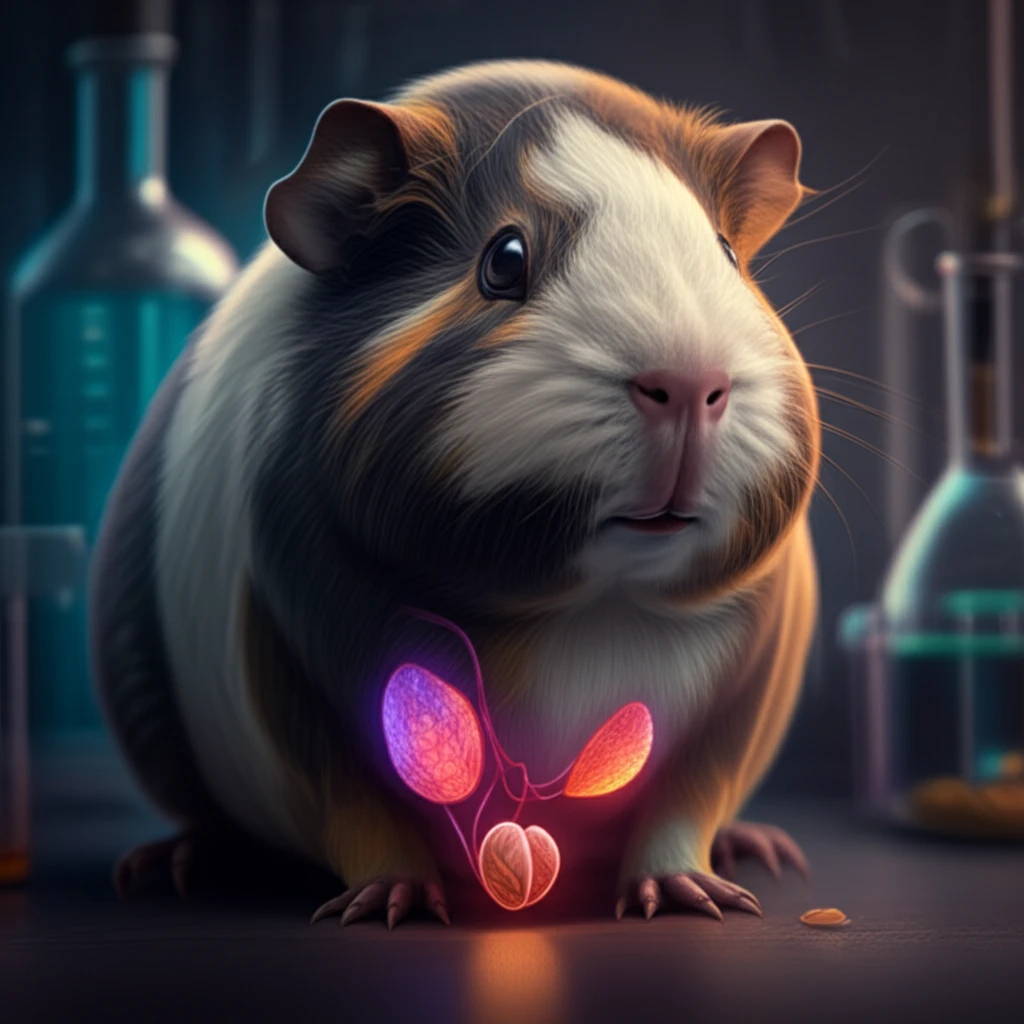
Surreal illustration of a guinea pig reproductive system, highlighting the prostate and vesicular glands.

Guinea Pig Anatomy: What You Need to Know About Their Reproductive System

"A detailed look at the prostate and vesicular glands in guinea pigs, uncovering the key differences that may affect their reproductive health."


Guinea pigs are popular lab animals, and understanding their anatomy is crucial for biomedical, genetic, and reproductive research. While there's extensive information about the reproductive systems of rodents, variations exist between species and even within the same species. These differences can be confusing, so it’s important to clarify the specifics of guinea pig anatomy.

Past studies have described the guinea pig reproductive system differently, leading to inconsistencies in the understanding of their prostate, coagulating glands, bulbourethral glands, and seminal vesicles. This article focuses on clarifying the structure of the prostate and vesicular glands, using detailed mesoscopic, histological, and histochemical observations.

By exploring the morphological and functional aspects of these glands, we can better understand the factors influencing their activity. These factors include androgenic stimuli, existing pathologies, and environmental changes, which all play a role in the reproductive success of guinea pigs. This knowledge is fundamental for researchers and guinea pig enthusiasts alike.

Unveiling the Anatomy: Prostate and Vesicular Glands Up Close

Surreal illustration of a guinea pig reproductive system, highlighting the prostate and vesicular glands.

Researchers examined five adult male guinea pigs, documenting their weight and cervical-caudal length after standard procedures. The anatomical components of the urogenital tract were carefully dissected, focusing on the structures ending in the urethra: the vas deferens, vesicular glands, coagulating glands, prostate, and bulbourethral glands. These glands were then prepared for detailed microscopic examination to understand their structure and composition.

The prostate in guinea pigs is positioned dorsally to the urethra and consists of glandular tissue covered by a thin capsule of fibrous tissue and smooth muscle cells. It's divided into two lobes—right and left—connected by a dorsal isthmus. Each lobe features 8 to 10 small excretory ducts emerging from its ventral side. Microscopically, the prostate is composed of tubulo-alveolar units lined with simple cuboidal epithelium.

  • Location: Dorsal to the urethra.
  • Composition: Glandular tissue with a fibrous capsule.
  • Lobes: Two lobes (right and left) connected by a dorsal isthmus.
  • Ducts: 8-10 excretory ducts per lobe.
  • Microscopic Structure: Tubulo-alveolar units with cuboidal epithelium.
The vesicular glands are tubulo-lobular structures located dorsally to the urethra, connecting ventrally with the vas deferens and dorsally with the bladder. Histologically, they feature a mucous layer with secretory-type cylindrical epithelium, a middle layer of smooth muscle tissue, and an external serous layer. Notably, histochemical analysis showed both glands were negative for glycogen and various mucins, suggesting unique functional roles within the reproductive process.

Key Takeaways and Future Directions

This study confirms that the prostate and vesicular glands in guinea pigs share morphological similarities with other mammals, but exhibit unique histochemical characteristics. These differences may reflect specialized roles in the reproductive process, highlighting the complexity of guinea pig reproductive physiology.

It’s important to note that androgenic and antiandrogenic stimuli can significantly modify the morphological characteristics of these glands. Further research could explore how these factors influence glandular function and overall reproductive health.

Future studies incorporating stereological and experimental designs could provide a more comprehensive understanding of the functional dynamics within these glands. Such research could offer insights into comparative reproductive biology and potential targets for veterinary interventions.

About this Article -

This article was crafted using a human-AI hybrid and collaborative approach. AI assisted our team with initial drafting, research insights, identifying key questions, and image generation. Our human editors guided topic selection, defined the angle, structured the content, ensured factual accuracy and relevance, refined the tone, and conducted thorough editing to deliver helpful, high-quality information.See our About page for more information.

This article is based on research published under:

DOI-LINK: 10.4067/s0717-95022010000400050, Alternate LINK

Title: Estudio Morfológico De La Próstata Y Glándulas Vesiculares De Cobayo (Cavia Porcellus)

Subject: Anatomy

Journal: International Journal of Morphology

Publisher: SciELO Agencia Nacional de Investigacion y Desarrollo (ANID)

Authors: Bélgica Váquez, Mariano Del Sol

Published: 2010-12-01

Everything You Need To Know

1

Where is the prostate located in guinea pigs, and what is its basic structure?

The prostate in guinea pigs is located dorsally to the urethra and comprises glandular tissue enclosed by a thin capsule of fibrous tissue and smooth muscle cells. It consists of two lobes, right and left, connected by a dorsal isthmus. Each lobe has 8 to 10 small excretory ducts emerging from its ventral side. Microscopically, the prostate consists of tubulo-alveolar units lined with simple cuboidal epithelium. The prostate's structure and location play a vital role in male reproductive functions.

2

What are the structural and compositional characteristics of the vesicular glands in guinea pigs, and how do they connect to other parts of the reproductive system?

Vesicular glands in guinea pigs are tubulo-lobular structures positioned dorsally to the urethra, linking ventrally with the vas deferens and dorsally with the bladder. Histologically, they are composed of a mucous layer with secretory-type cylindrical epithelium, a middle layer of smooth muscle tissue, and an external serous layer. Histochemical analysis indicates that both vesicular and prostate glands tested negative for glycogen and various mucins, suggesting unique functional roles within the reproductive process. While seminal vesicles have traditionally been thought to store and secrete substances, these findings suggest their roles might be different from those in other mammals.

3

What factors can influence the activity and health of the prostate and vesicular glands in guinea pigs?

Factors such as androgenic stimuli, existing pathologies, and environmental changes significantly influence the activity and health of the prostate and vesicular glands in guinea pigs. Androgenic stimuli, like testosterone levels, directly impact the glands' functional capabilities, while pathologies, such as infections or tumors, can disrupt their normal operation. Environmental changes, including diet and exposure to toxins, can also affect the glands' health and reproductive success. A deeper understanding of these factors is essential for promoting optimal reproductive health and success.

4

How was the urogenital tract examined in the guinea pigs to understand the prostate and vesicular glands?

The detailed examination of the urogenital tract in guinea pigs involved careful dissection of anatomical components ending in the urethra. Specifically, researchers focused on the vas deferens, vesicular glands, coagulating glands, prostate, and bulbourethral glands. These glands were prepared for thorough microscopic examination to understand their structure and composition. Techniques such as mesoscopic, histological, and histochemical observations were used to provide a comprehensive view of the glands' morphology and functional aspects. This meticulous approach ensures accurate characterization of the reproductive anatomy.

5

How do the prostate and vesicular glands in guinea pigs compare to those in other mammals, and what are the potential implications of their unique characteristics?

This study confirms that while guinea pig prostate and vesicular glands share morphological similarities with other mammals, they exhibit unique histochemical characteristics. For example, the absence of glycogen and certain mucins suggests specialized functions in the reproductive process that differ from those of other animals. Further research is needed to fully understand how these unique characteristics influence reproductive physiology, including sperm maturation and fertilization.

Newsletter Subscribe

Subscribe to get the latest articles and insights directly in your inbox.