
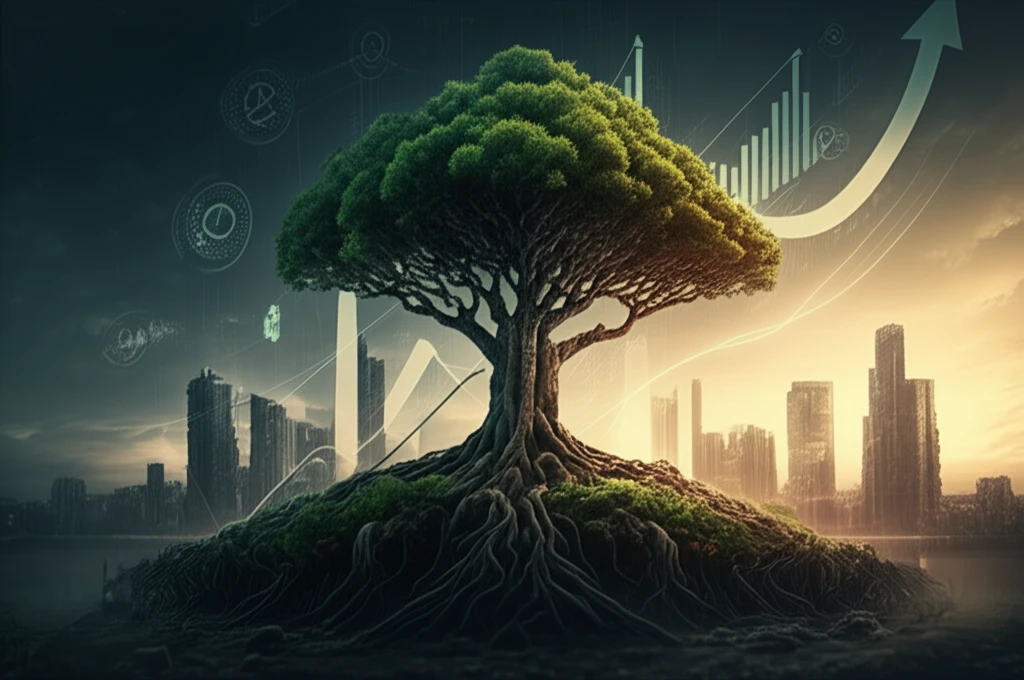
Sustainable Growth: Green finance concept

Green Credit: Can Finance Save the Planet?

"Exploring the Impact of Green Credit on Sustainability and Financial Performance: What the Data Says"


In recent years, the concept of 'green credit' has emerged as a key strategy for fostering economic sustainability. Green credit, at its core, involves directing financial resources towards environmentally beneficial projects and discouraging investment in activities that harm the environment. As the world grapples with climate change and ecological degradation, green credit aims to align financial incentives with environmental responsibility.

China, recognizing the urgency of these global challenges, has been actively exploring and implementing green credit policies. The nation has achieved significant economic growth, but this rapid development has also led to increased energy consumption and environmental damage. In response, China has begun to integrate green finance into its economic framework, seeking to balance progress with sustainability.

This article delves into the influence of green credit on the operational efficiency and financial performance of enterprises in the energy-saving and environmental sectors. By analyzing data from Chinese-listed companies, we examine the real-world impacts of green credit initiatives, identify the obstacles, and explore strategies to enhance the effectiveness of green finance in promoting a sustainable economy.

Does Green Credit Really Boost Financial Performance and Sustainability?

Sustainable Growth: Green finance concept

To understand how green credit works, consider these key factors:

A recent study dived deep into how green loans impact Chinese companies focused on energy saving and environmental protection. The research looked at data from 2007 to 2015, using complex analysis to understand the real effects of these green credit policies. Here’s what they found:

  • Expectation Channel: Green loans don't necessarily boost public expectations for companies in the green sector.
  • Supervision Channel: Green loans don't automatically improve a company's operations or financial results.
  • Capital Allocation: Green loans can increase costs related to financing, management, operations, and research and development.
While green credit aims to support environmentally friendly initiatives, the study suggests that its impact on financial performance and operational efficiency is not always straightforward. The findings underscore the complexities of implementing green finance and highlight areas needing improvement.

Making Green Credit Work: Key Steps for the Future

The research indicates that simply providing green credit isn't enough. To truly unlock its potential, here’s what needs to happen:

About this Article -

This article was crafted using a human-AI hybrid and collaborative approach. AI assisted our team with initial drafting, research insights, identifying key questions, and image generation. Our human editors guided topic selection, defined the angle, structured the content, ensured factual accuracy and relevance, refined the tone, and conducted thorough editing to deliver helpful, high-quality information.See our About page for more information.

Everything You Need To Know

1

What exactly is 'green credit' and how does it work to promote economic sustainability?

Green credit is a strategy that directs financial resources towards projects that benefit the environment while discouraging investments in activities that harm it. The idea is to align financial incentives with environmental responsibility, thus promoting economic sustainability by supporting eco-friendly initiatives and limiting environmentally damaging practices. This approach requires careful consideration of project selection, risk assessment, and monitoring to ensure that funds are indeed used for their intended green purposes. Without proper mechanisms, green credit may not effectively translate into tangible environmental benefits.

2

How has China integrated 'green finance' into its economic policies, and what challenges has it faced in doing so?

China has integrated green finance into its economic policies by actively exploring and implementing green credit policies to balance economic progress with environmental sustainability. Recognizing the environmental damage resulting from rapid economic growth and increased energy consumption, China aims to redirect financial resources towards environmentally beneficial projects. Challenges include ensuring the effectiveness of green credit initiatives, addressing issues related to capital allocation, and overcoming obstacles that prevent green loans from automatically improving a company's operations or financial results. Further advancements are needed to fine-tune the implementation of green finance in China.

3

What were the main findings of the study examining the impact of 'green loans' on Chinese companies in the energy-saving and environmental protection sectors?

The study revealed that green loans don't necessarily boost public expectations for companies in the green sector or automatically improve a company's operations or financial results through the expectation and supervision channels, respectively. It also indicated that green loans can increase costs related to financing, management, operations, and research and development through the capital allocation channel. These findings highlight the complexities of implementing green finance and suggest that simply providing green credit isn't enough to guarantee positive financial and operational outcomes.

4

Besides providing 'green credit', what other key steps are necessary to fully realize its potential and ensure its effectiveness in promoting environmental sustainability?

To fully realize the potential of green credit, multiple steps beyond providing the credit itself are crucial. These steps include robust project evaluation and selection processes to ensure that funds are allocated to initiatives with genuine environmental benefits. Additionally, there is a need for stringent monitoring and reporting mechanisms to track the impact of green credit initiatives and ensure accountability. Policy frameworks must be refined to provide clearer guidelines and incentives for companies to engage in sustainable practices. Furthermore, it's essential to foster collaboration between financial institutions, government agencies, and businesses to create a supportive ecosystem for green finance.

5

Do 'green loans' always translate into better financial performance for companies, and what factors might influence their effectiveness?

The effectiveness of green loans in boosting financial performance is not guaranteed. Factors influencing their effectiveness include how well the loans are integrated into a company's overall strategy, the efficiency of capital allocation, and the extent to which the loans drive innovation and operational improvements. The 'expectation channel' and 'supervision channel' did not automatically boost expectations or operations, the study found. If green loans primarily increase costs without generating commensurate benefits, they may not improve financial performance. A holistic approach that combines financial support with strategic guidance and performance monitoring is essential to ensure that green loans contribute to both environmental sustainability and financial success.

Newsletter Subscribe

Subscribe to get the latest articles and insights directly in your inbox.