
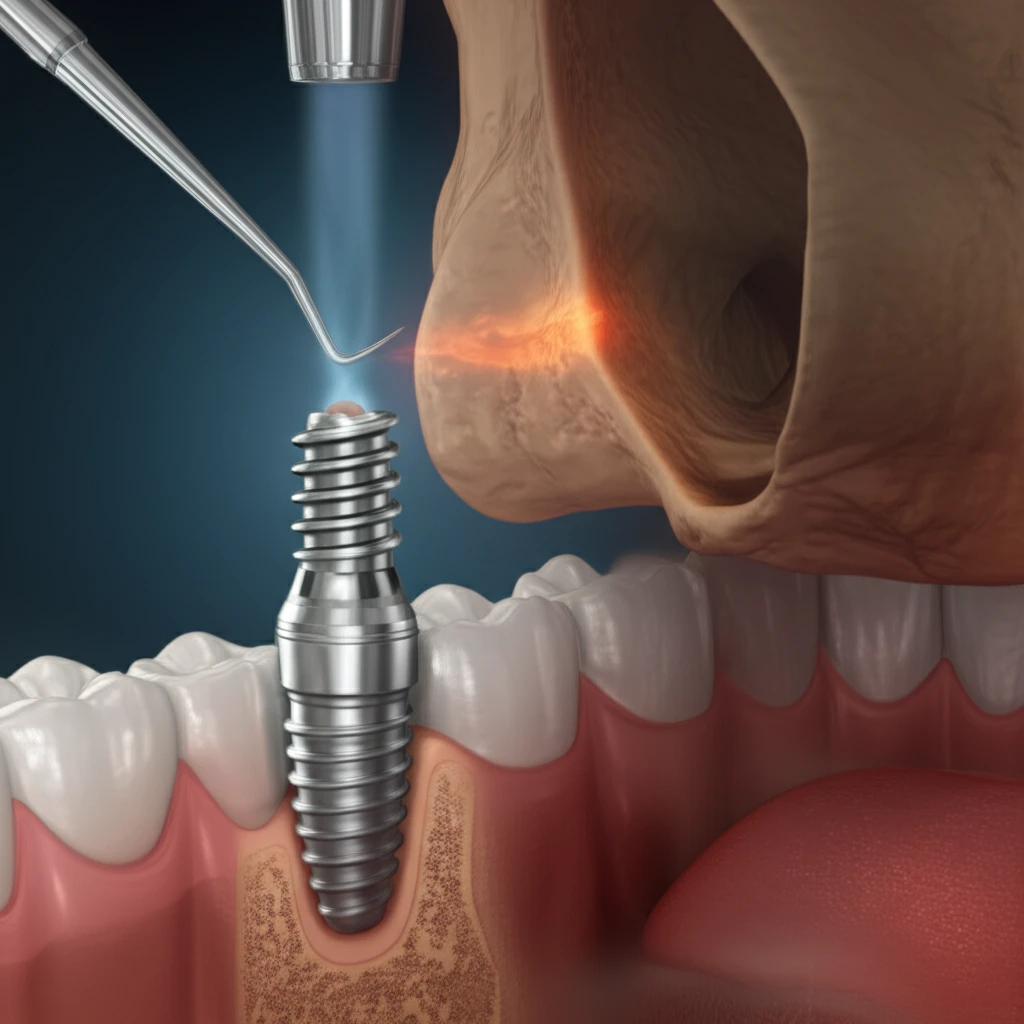
Innovative dental implant design for graft-less sinus floor augmentation.

Graft-Less Sinus Floor Augmentation: Is It the Future of Dental Implants?

"Explore the latest advancements in graft-less sinus floor augmentation and how they're changing dental implant procedures for better patient outcomes."


For individuals missing posterior maxillary teeth, the journey to restoring their smile can often be complicated by severe bone resorption. This bone loss can make traditional dental implant placement challenging, necessitating bone grafting procedures to increase bone volume. While effective, these grafting procedures can be invasive and costly, prompting a search for less burdensome alternatives.

Enter graft-less sinus floor augmentation, a technique that aims to elevate the sinus floor without the need for bone grafts. This approach not only reduces invasiveness but also lowers costs, making it an attractive option for many patients. Researchers have been exploring various implant designs and surgical techniques to optimize the outcomes of graft-less sinus floor augmentation, striving for predictable and long-lasting results.

One such innovation is a new implant design specifically engineered for graft-less sinus floor elevation. This design, evaluated in a recent study, utilizes a reverse spiral flute to enhance stability and promote bone formation. The study assessed the clinical performance of this implant design when used in both lateral and crestal approaches, providing valuable insights into its efficacy and potential benefits.

What Makes This New Implant Design Different?

Innovative dental implant design for graft-less sinus floor augmentation.

The innovative implant design features several key characteristics tailored to enhance its performance in graft-less sinus floor augmentation. First, the implant has an anodized surface, which promotes osseointegration, the process by which bone grows and integrates with the implant surface. This is crucial for establishing a strong and stable foundation for the dental restoration.

Second, the implant incorporates a rounded apex, designed to minimize trauma during insertion and reduce the risk of sinus membrane perforation. This is particularly important in graft-less procedures, where the proximity to the sinus membrane requires careful and precise implant placement. Finally, the implant features a sharp cutting flute oriented in the opposite direction of the implant threads. This unique design element facilitates the collection of bone chips during implant insertion, directing them into the sinus cavity to promote new bone formation.

  • Anodized Surface: Enhances osseointegration for improved stability.
  • Rounded Apex: Minimizes trauma and reduces perforation risk.
  • Reverse Spiral Flute: Collects bone chips to promote new bone formation.
The study involved patients who required implant-supported restoration of the posterior maxilla and had a residual bone height of less than 8 mm at the implant site. Implants were placed using either a lateral or crestal graft-less sinus floor elevation protocol, depending on the individual patient's anatomy and bone height. The researchers then meticulously collected data on implant survival rates, implant stability quotient (ISQ), and any complications that arose during the follow-up period.

The Future of Graft-Less Sinus Floor Augmentation

In conclusion, the reverse spiral flute implant shows promise as a viable option for graft-less sinus floor augmentation in patients with severe bone resorption. Its unique design features contribute to excellent stability and good survival rates after one year of function. As research continues and longer-term data becomes available, this innovative implant design may play a significant role in simplifying and improving the outcomes of dental implant procedures for patients seeking to restore their smiles.

About this Article -

This article was crafted using a human-AI hybrid and collaborative approach. AI assisted our team with initial drafting, research insights, identifying key questions, and image generation. Our human editors guided topic selection, defined the angle, structured the content, ensured factual accuracy and relevance, refined the tone, and conducted thorough editing to deliver helpful, high-quality information.See our About page for more information.

Everything You Need To Know

1

What is graft-less sinus floor augmentation, and why is it gaining popularity in dental implant procedures?

Graft-less sinus floor augmentation is a technique used to elevate the sinus floor without the need for bone grafts. It's becoming popular because it is less invasive and costly compared to traditional bone grafting procedures. This approach is particularly beneficial for individuals missing posterior maxillary teeth who have experienced severe bone resorption, making traditional dental implant placement challenging.

2

How does the new implant design, featuring a reverse spiral flute, enhance stability and promote bone formation in graft-less sinus floor augmentation?

The innovative implant design is engineered with several features to enhance its performance. First, the anodized surface promotes osseointegration, improving stability. Second, the rounded apex minimizes trauma during insertion and reduces the risk of sinus membrane perforation. Third, the reverse spiral flute collects bone chips during implant insertion, directing them into the sinus cavity to promote new bone formation. These features contribute to the implant's stability and success in graft-less sinus floor augmentation.

3

What are the key features of the novel implant designed for graft-less sinus floor elevation, and how do they contribute to improved outcomes?

The key features include an anodized surface to enhance osseointegration, a rounded apex to minimize trauma and perforation risk, and a reverse spiral flute to collect bone chips and promote new bone formation. The anodized surface supports bone integration, the rounded apex ensures safer placement, and the reverse spiral flute stimulates bone growth in the sinus cavity. Missing from this description is detail around the flute size and shape and the exact material used in the anodized coating.

4

In what specific cases is graft-less sinus floor augmentation considered a viable option, and what patient criteria make them suitable candidates for this procedure?

Graft-less sinus floor augmentation is a viable option for patients missing posterior maxillary teeth who have experienced severe bone resorption, specifically those with a residual bone height of less than 8 mm at the implant site. Suitable candidates are those who require implant-supported restoration of the posterior maxilla but wish to avoid the invasiveness and costs associated with traditional bone grafting procedures. Patient anatomy is key in determining the approach, either lateral or crestal. Graft-less approach may not be suitable for patients with certain sinus pathologies or insufficient soft tissue.

5

What are the potential long-term implications of using the reverse spiral flute implant in graft-less sinus floor augmentation, and how might it influence the future of dental implant procedures?

The reverse spiral flute implant shows promise as a viable option for graft-less sinus floor augmentation, potentially simplifying and improving outcomes for dental implant procedures. Excellent stability and good survival rates have been observed after one year of function. If longer-term data continues to support these findings, this implant design may reduce the need for bone grafting, making dental implants more accessible and less burdensome for patients. Further research is needed to assess long-term survival rates, bone remodeling around the implant, and any potential complications that may arise over time. Future implant designs may adopt these features to improve outcomes in a wider range of clinical scenarios.

Newsletter Subscribe

Subscribe to get the latest articles and insights directly in your inbox.