
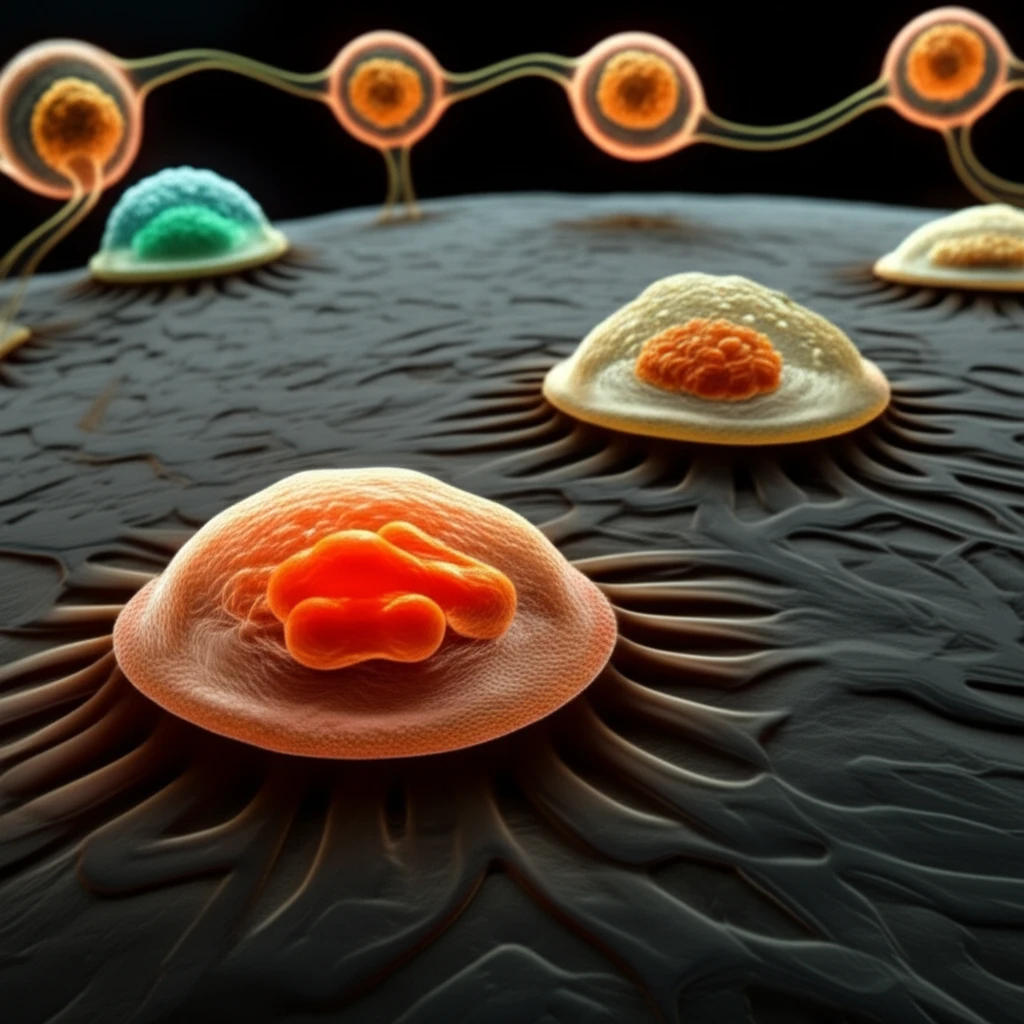
Stem cells differentiating into bone cells under the influence of geometric patterns.

Geometric Cues: The Secret Language of Stem Cells for Bone Regeneration?

"Unlocking the power of cell shape and arrangement in directing stem cell fate for bone tissue engineering."


Stem cells, specifically mesenchymal stem cells (MSCs), hold immense promise in tissue engineering and regenerative medicine. Their ability to multiply, transform into various cell types, and their compatibility with the immune system makes them ideal candidates for repairing damaged tissues. Understanding how to control the behavior of these cells is crucial for developing effective therapies.

The environment surrounding stem cells, known as the stem cell niche, plays a vital role in dictating their fate. This niche includes the extracellular matrix (ECM), a complex network of proteins and molecules that provides essential signals. Traditionally, mimicking this environment involves coating materials with proteins or growth factors. However, researchers are increasingly recognizing the importance of geometric cues – the shape and arrangement of the ECM – in influencing stem cell behavior.

New research explores how combining geometric cues with biochemical signals can precisely guide MSC differentiation, particularly towards bone formation. By creating defined patterns of RGD (a cell adhesion peptide) and BMP-2 (a bone growth factor) on surfaces, scientists are uncovering the intricate interplay between cell shape, signaling pathways, and stem cell fate.

Decoding the Geometric Language of Bone Formation

Stem cells differentiating into bone cells under the influence of geometric patterns.

The study focuses on how the spatial arrangement of two key components, RGD and BMP-2, influences MSC differentiation into osteoblasts (bone-forming cells). Researchers used photolithography to create micropatterns of these peptides on glass surfaces, testing triangles, squares, and rectangles. They then observed how MSCs responded to these different geometric cues.

The results revealed that MSCs are highly sensitive to the shape of their surroundings. Specifically, triangular and square patterns of RGD and BMP-2 significantly enhanced osteoblast differentiation compared to rectangular patterns or uniform coatings. This suggests that cell shape and arrangement play a critical role in triggering bone formation.

  • Shape Matters: Triangular and square micropatterns of RGD and BMP-2 promote osteogenic differentiation more effectively than rectangular shapes.
  • Biochemical Synergy: Combining RGD for cell adhesion with BMP-2, a known osteogenic factor, amplifies the differentiation process.
  • Cellular Organization: Geometric cues influence the cytoskeleton (the cell's internal scaffolding), leading to changes in cell shape and signaling pathways that drive differentiation.
Further investigation revealed that these geometric cues influence the organization of the cell's cytoskeleton, specifically the F-actin fibers. The triangular and square patterns led to more significant changes in the cytoskeleton, which in turn affected the expression of key osteogenic markers like Runx2 and osteopontin (OPN). This highlights the close relationship between cell shape, internal structure, and gene expression in determining stem cell fate.

Engineering the Future of Bone Regeneration

This research demonstrates that geometric cues can significantly enhance the osteoinductive potential of RGD and BMP-2, even without additional stimulating factors. By carefully selecting and arranging these cues, scientists can direct stem cell fate towards bone formation with greater precision.

The findings have significant implications for designing biomaterials and scaffolds for bone tissue engineering. Incorporating geometric cues that mimic the natural environment of bone cells could lead to more effective and targeted therapies for bone repair and regeneration.

Ultimately, understanding how stem cells perceive and respond to their microenvironment opens new avenues for regenerative medicine. By harnessing the power of geometric cues and biochemical signals, we can unlock the full potential of stem cells to heal and restore damaged tissues.

About this Article -

This article was crafted using a human-AI hybrid and collaborative approach. AI assisted our team with initial drafting, research insights, identifying key questions, and image generation. Our human editors guided topic selection, defined the angle, structured the content, ensured factual accuracy and relevance, refined the tone, and conducted thorough editing to deliver helpful, high-quality information.See our About page for more information.

This article is based on research published under:

DOI-LINK: 10.1021/acsbiomaterials.7b00279, Alternate LINK

Title: Interplay Of Geometric Cues And Rgd/Bmp-2 Crosstalk In Directing Stem Cell Fate

Subject: Biomedical Engineering

Journal: ACS Biomaterials Science & Engineering

Publisher: American Chemical Society (ACS)

Authors: Ibrahim Bilem, Pascale Chevallier, Laurent Plawinski, Eli D. Sone, Marie-Christine Durrieu, Gaétan Laroche

Published: 2017-09-05

Everything You Need To Know

1

What makes mesenchymal stem cells (MSCs) ideal for tissue repair?

Mesenchymal stem cells (MSCs) have the ability to multiply and transform into different cell types. They also have compatibility with the immune system. All of these characteristics make MSCs suitable for repairing damaged tissues. Controlling MSC behavior is important for creating effective therapies.

2

What is the stem cell niche, and what role does it play in stem cell fate?

The stem cell niche is the environment that surrounds stem cells, which dictates their fate. The niche includes the extracellular matrix (ECM). The ECM provides signals and is a network of molecules and proteins. Researchers use geometric cues to influence stem cell behavior.

3

How do RGD and BMP-2 influence MSC differentiation, and what methods are used to study their effects?

RGD is a cell adhesion peptide and BMP-2 is a bone growth factor. When arranged in specific patterns, RGD and BMP-2 guide MSC differentiation towards bone formation. By using micropatterns of these peptides on surfaces, scientists can examine the relationship between cell shape, signaling pathways, and stem cell fate.

4

Why are triangular and square patterns more effective for bone formation?

Triangular and square patterns of RGD and BMP-2 promote osteoblast differentiation more effectively than rectangular shapes or uniform coatings. These shapes have a stronger effect on the cell's cytoskeleton, which influences the expression of osteogenic markers like Runx2 and osteopontin (OPN). This emphasizes the connection between cell shape, internal structure, and gene expression in determining stem cell fate.

5

What are the implications of using geometric cues to enhance bone regeneration?

Geometric cues enhance the osteoinductive potential of RGD and BMP-2. Researchers can direct stem cell fate towards bone formation with precision by choosing and arranging these cues. This can improve the effectiveness of bone regeneration techniques.

Newsletter Subscribe

Subscribe to get the latest articles and insights directly in your inbox.