
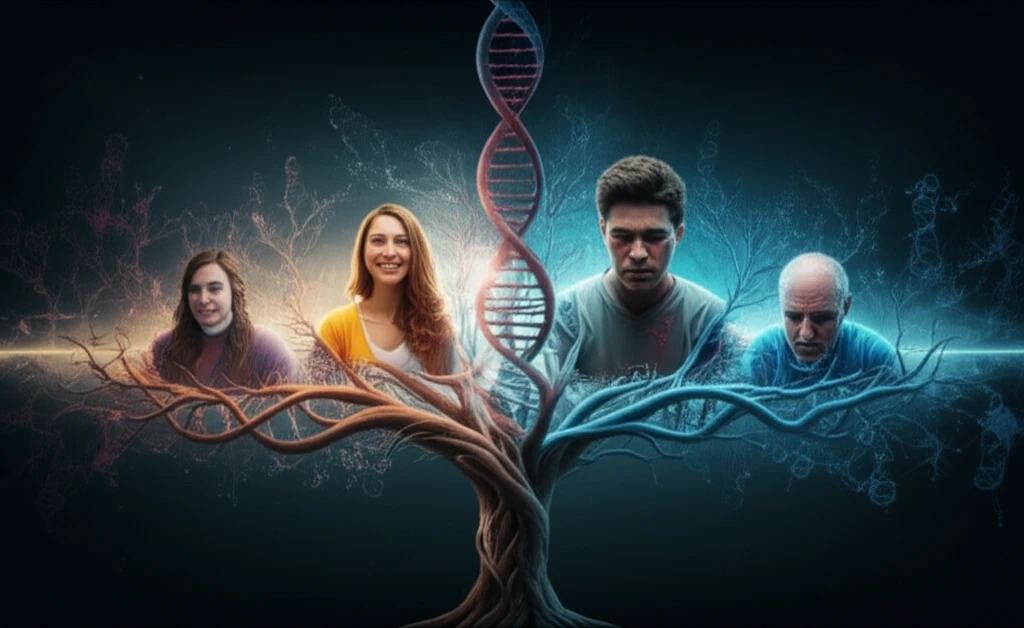
Illustration of a family tree with intertwined DNA strands representing genetic links in Parkinson's disease research.

Genetic Puzzle Solved: How a Rare Parkinson's Mystery Unfolds in an Italian Family

"Deciphering the Genetic Enigma of Parkinson's: A Deep Dive into a Unique Case Study Revealing Unexpected Insights."


Parkinson's disease, a neurological disorder marked by tremors, rigidity, and movement difficulties, affects millions worldwide. While the causes are varied, genetic factors play a significant role, particularly in early-onset cases. In this article, we delve into a captivating study of an Italian family, presenting a rare genetic puzzle that sheds new light on the complexities of Parkinson's disease.

The study focuses on a family with a unique genetic anomaly: a duplication in the PARK2 gene, which is often linked to early-onset Parkinson's. However, the family's experience defies conventional expectations, presenting an intriguing paradox. This article will explore how the same genetic variation can manifest so differently in different individuals, offering profound insights into the disease.

This case study is not just a scientific report, but a story of medical detective work, revealing how researchers used advanced genetic techniques to unravel the complexities of Parkinson's. By understanding this family's story, we can move closer to answering critical questions about the genetic influences on the disease and its future treatments.

Unraveling the Genetic Enigma: A Deep Dive into the PARK2 Gene and Its Role

Illustration of a family tree with intertwined DNA strands representing genetic links in Parkinson's disease research.

The PARK2 gene, responsible for producing the Parkin protein, is a frequent culprit in early-onset Parkinson's. Parkin plays a crucial role in eliminating damaged or malfunctioning mitochondria, the energy powerhouses of cells. Mutations in PARK2 impair this process, causing the buildup of damaged mitochondria that leads to the death of dopamine-producing neurons in the brain, causing Parkinson’s symptoms.

In the Italian family under investigation, the situation took an unexpected turn. Instead of a typical mutation, the individuals carried a duplication of certain exons (segments) within the PARK2 gene. This duplication, while present in some family members, didn’t uniformly result in the disease. The proband (the main subject of the study) developed Parkinson’s in his late thirties, while his aunt, with the same duplication, showed only mild symptoms.

  • Parkin Protein's Function: Parkin is critical for removing damaged mitochondria.
  • Genetic Anomaly: Duplication in PARK2 gene exons observed.
  • Variable Outcomes: Disease impact differed among family members.
This variability presents a critical problem in understanding the disease. Researchers used a combination of genetic tests, including multiplex ligation-dependent probe analysis (MLPA) and quantitative real-time polymerase chain reaction (qRT-PCR), to pinpoint the exact genetic changes. Moreover, the study highlights the importance of family history and genetic testing in understanding and managing Parkinson's disease.

Implications and Future Directions

The story of the Italian family illustrates the complicated nature of genetics in Parkinson's disease and the need for individualized treatments. This case underscores the importance of further research into the interplay between genes, environment, and individual responses. For those at risk or those with a diagnosis, consulting with a genetic counselor and neurologist is essential for personalized care and informed decision-making.

About this Article -

This article was crafted using a human-AI hybrid and collaborative approach. AI assisted our team with initial drafting, research insights, identifying key questions, and image generation. Our human editors guided topic selection, defined the angle, structured the content, ensured factual accuracy and relevance, refined the tone, and conducted thorough editing to deliver helpful, high-quality information.See our About page for more information.

Everything You Need To Know

1

What role does the PARK2 gene and the Parkin protein play in the development of Parkinson's disease, as seen in the Italian family study?

The PARK2 gene is responsible for producing the Parkin protein, which is crucial for removing damaged mitochondria from cells. In the Italian family, a duplication of exons within the PARK2 gene was found. The Parkin protein's regular function involves eliminating malfunctioning mitochondria; when the PARK2 gene is mutated or duplicated, as in this case, it can lead to a buildup of these damaged mitochondria. This buildup can cause the death of dopamine-producing neurons in the brain, leading to Parkinson's symptoms. However, the duplication's effect varied among family members, highlighting the complexity of genetic factors in Parkinson's.

2

How did researchers investigate the genetic anomaly in the Italian family with Parkinson's, specifically concerning the duplication in the PARK2 gene?

Researchers employed a combination of genetic testing techniques to investigate the duplication in the PARK2 gene within the Italian family. They used methods such as multiplex ligation-dependent probe analysis (MLPA) and quantitative real-time polymerase chain reaction (qRT-PCR) to pinpoint the exact genetic changes. These techniques allowed them to identify and characterize the duplication of specific exons within the PARK2 gene, helping to understand the genetic underpinnings of Parkinson's in this particular family. This detailed genetic analysis was crucial in uncovering the unusual nature of the genetic anomaly.

3

Why did some members of the Italian family with the PARK2 gene duplication develop Parkinson's disease, while others experienced only mild symptoms or no symptoms at all?

The variability in Parkinson's disease development among family members with the PARK2 gene duplication underscores the complex interplay of genetics, environment, and individual responses. While the duplication in the PARK2 gene can disrupt the normal function of the Parkin protein, leading to the accumulation of damaged mitochondria and neuronal death, other genetic and environmental factors can influence the severity and onset of symptoms. Some individuals might have protective genetic factors or lifestyle choices that mitigate the effects of the PARK2 duplication, while others may have additional genetic vulnerabilities or environmental exposures that exacerbate the condition. Further research is needed to fully understand these interactions.

4

What are the implications of the Italian family's case study for understanding the genetic basis of Parkinson's disease and potential future treatments?

The case study highlights the complex nature of the genetics in Parkinson's disease. It demonstrates that the same genetic variation, such as the PARK2 gene duplication, can have different effects on different individuals. This variability suggests that the development of Parkinson's disease is influenced by multiple factors, including other genes, environmental factors, and individual responses. Future treatments for Parkinson's disease may need to be individualized, taking into account the specific genetic and environmental factors that contribute to the disease in each patient. Consulting with a genetic counselor and neurologist is essential for personalized care and informed decision-making.

5

Beyond genetic testing like MLPA and qRT-PCR, what other considerations are important for individuals at risk of or diagnosed with Parkinson's disease, based on the insights from this study?

Given the complex interplay of factors influencing Parkinson's disease, family history becomes paramount. Consulting with both a genetic counselor and a neurologist is crucial for personalized care. A genetic counselor can help interpret genetic test results, assess risk based on family history, and guide decisions about further testing or family planning. A neurologist can provide a comprehensive neurological evaluation, diagnose Parkinson's disease, and develop a tailored treatment plan. This case underscores the importance of further research into the interplay between genes, environment, and individual responses.

Newsletter Subscribe

Subscribe to get the latest articles and insights directly in your inbox.