
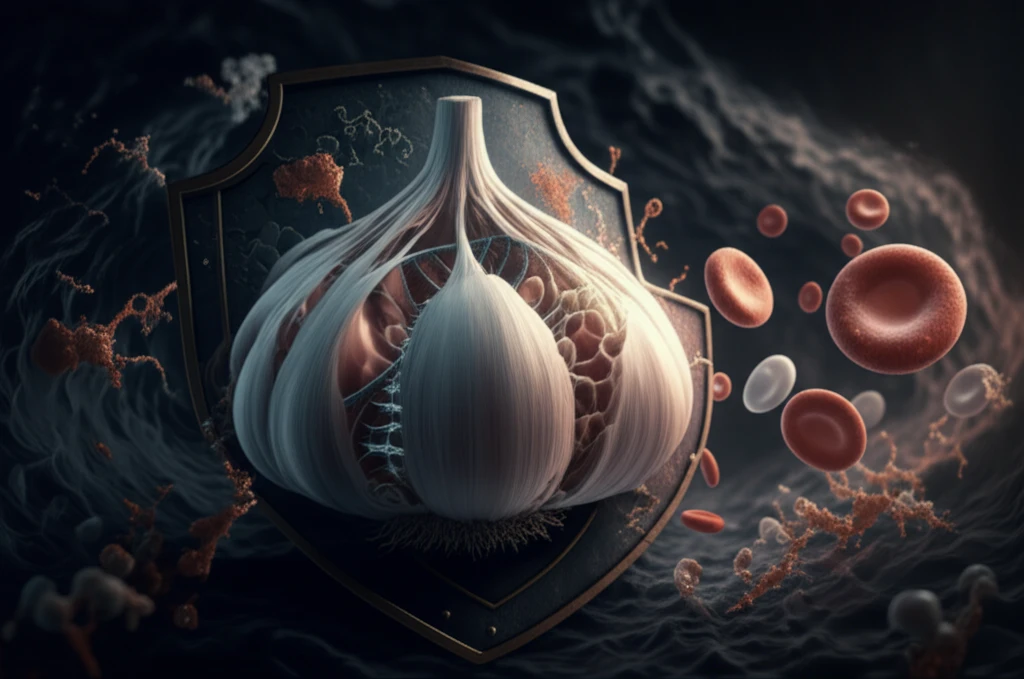
Garlic shield protecting blood cells from leukemia.

Garlic's Hidden Power: Can Diallyl Disulfide Fight Leukemia?

"New research uncovers how a compound in garlic, diallyl disulfide (DADS), could offer a novel approach to treating leukemia by targeting key proteins."


Acute myeloid leukemia (AML) is a complex and aggressive cancer affecting the blood and bone marrow. Current treatments, including chemotherapy and radiation, often fall short, leaving patients with limited options. This has spurred researchers to seek new, more targeted therapies that can effectively eliminate leukemia cells while minimizing harm to healthy tissues.

One promising area of investigation involves natural compounds with anti-cancer properties. Among these, diallyl disulfide (DADS), a key component of garlic, has gained attention for its potential to fight various cancers. Previous studies have hinted at DADS's ability to induce differentiation—a process where cancer cells mature into less harmful cells—in leukemia cells, with the protein calreticulin (CRT) playing a significant role.

Now, new research dives deeper into how DADS works, specifically looking at the interplay between CRT and another protein called CCAAT enhancer binding protein-alpha (C/EBPα). By understanding this interaction, scientists hope to unlock new strategies for treating leukemia and improving patient outcomes.

Unlocking Garlic's Secrets: How DADS Targets Leukemia Cells

Garlic shield protecting blood cells from leukemia.

The study begins by highlighting a previously known fact: diallyl disulfide (DADS), abundant in garlic, has shown promise as a therapeutic agent in various cancers. Earlier research indicated that DADS could trigger HL-60 leukemia cell differentiation by reducing levels of calreticulin (CRT). The new study aims to clarify the mechanism behind DADS-induced differentiation and the potential roles of both CRT and C/EBPα.

To investigate, the researchers examined CRT and C/EBPα expression in clinical samples from 20 healthy individuals and 19 AML patients. The results revealed an inverse correlation between CRT and C/EBPα levels, suggesting a linked relationship. Further experiments with HL-60 cells showed that DADS:

  • Reduced CRT expression.
  • Increased C/EBPα expression.
  • Inhibited tumor growth in mice injected with HL-60 cells.
  • Enhanced reactive oxidative species (ROS).
  • Interfered with CRT binding to C/EBPα mRNA, affecting its regulation.
These findings suggest that DADS promotes leukemia cell differentiation by targeting CRT and C/EBPα. By reducing CRT levels and increasing C/EBPα, DADS appears to encourage leukemia cells to mature into less harmful forms.

The Future of Leukemia Treatment: Harnessing Natural Compounds

This research provides valuable insights into the molecular mechanisms behind DADS-induced leukemia cell differentiation. By demonstrating the correlation between C/EBPα and CRT expression, both in vitro and in vivo, the study paves the way for new therapeutic strategies. Further investigation could lead to the development of DADS-based treatments or other approaches that target CRT and C/EBPα to combat leukemia. These findings offer hope for more effective and less toxic therapies for individuals battling this challenging disease.

About this Article -

This article was crafted using a human-AI hybrid and collaborative approach. AI assisted our team with initial drafting, research insights, identifying key questions, and image generation. Our human editors guided topic selection, defined the angle, structured the content, ensured factual accuracy and relevance, refined the tone, and conducted thorough editing to deliver helpful, high-quality information.See our About page for more information.

Everything You Need To Know

1

What is diallyl disulfide (DADS) and how is it related to leukemia?

Diallyl disulfide (DADS) is a compound found in garlic that has shown potential in treating leukemia. Research indicates that DADS can target key proteins involved in leukemia, specifically calreticulin (CRT) and C/EBPα. By modulating these proteins, DADS may help in combating leukemia cells and potentially improve patient outcomes. The research focuses on how DADS influences the expression and interaction of CRT and C/EBPα to trigger differentiation in leukemia cells, making them less harmful.

2

How does diallyl disulfide (DADS) work against leukemia at a molecular level?

DADS appears to work against leukemia by modulating the levels of two key proteins: calreticulin (CRT) and C/EBPα. Studies show that DADS reduces the expression of CRT, while increasing the expression of C/EBPα. These actions trigger HL-60 leukemia cell differentiation. It also interferes with CRT binding to C/EBPα mRNA, impacting its regulation. These actions promote leukemia cells to mature into less harmful forms, and also inhibit tumor growth in mice. By targeting these proteins, DADS offers a potential pathway for leukemia treatment that is distinct from traditional therapies.

3

What is the role of calreticulin (CRT) and C/EBPα in the context of leukemia, and how does diallyl disulfide (DADS) interact with them?

Calreticulin (CRT) and C/EBPα play critical roles in leukemia. CRT is a protein, and its levels are inversely correlated with C/EBPα. Research indicates that DADS reduces CRT expression and increases C/EBPα expression. DADS also interferes with the binding of CRT to C/EBPα mRNA, affecting its regulation. By manipulating these proteins, DADS encourages leukemia cells to differentiate and mature into less harmful forms, potentially inhibiting tumor growth. This interaction highlights a new mechanism for targeting and treating leukemia.

4

Are there any limitations or further research needed regarding diallyl disulfide (DADS) as a leukemia treatment?

While the research provides promising insights into how DADS affects leukemia, there are limitations. The study shows a correlation between CRT and C/EBPα expression, but more investigation is required to develop DADS-based treatments or other strategies that target these proteins to combat leukemia. Further studies will need to explore the mechanisms behind DADS-induced differentiation and potential applications of this natural compound to improve therapeutic strategies for patients. More research is needed to assess the effectiveness and safety of DADS in human trials.

5

How does this research on diallyl disulfide (DADS) change our understanding of leukemia treatment?

This research provides new insights into how diallyl disulfide (DADS) can potentially be used to treat leukemia. By identifying that DADS interacts with CRT and C/EBPα and highlighting the link between CRT and C/EBPα expression, both in vitro and in vivo, the study paves the way for new therapeutic strategies. The findings suggest that DADS promotes leukemia cell differentiation. This research underscores the potential of harnessing natural compounds like DADS to develop new leukemia treatments and offers hope for more effective and less toxic therapies, moving beyond traditional methods like chemotherapy and radiation.

Newsletter Subscribe

Subscribe to get the latest articles and insights directly in your inbox.