
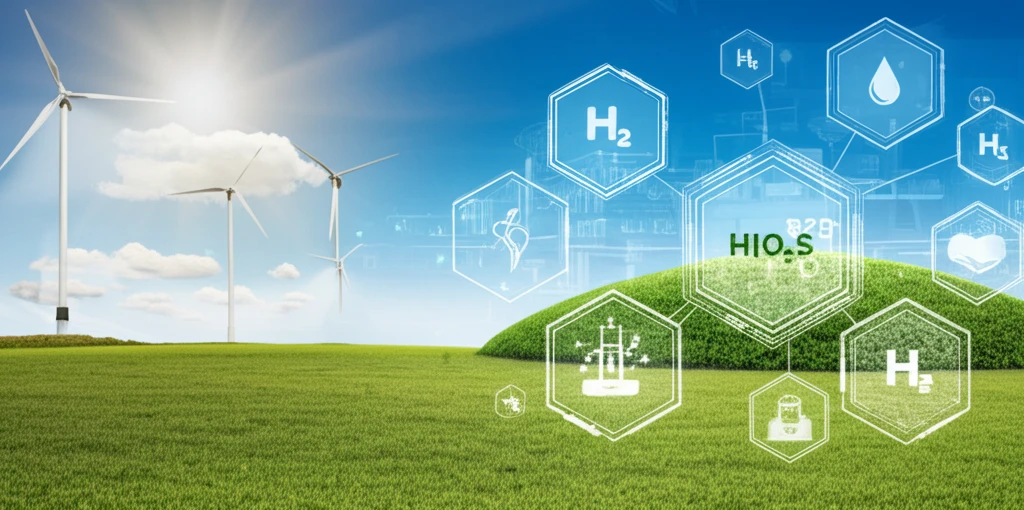
Biogas plant integrating with power-to-x technologies

Future-Proofing Green Energy: How Biogas Integration is Revolutionizing E-fuel Production

"Discover how integrating biogas plants with power-to-x technologies is set to transform renewable energy, making e-fuels a cost-effective reality and paving the way for a sustainable future."


The European Union's ambitious goals for achieving net-zero emissions hinge significantly on the development of robust hydrogen and e-fuel infrastructures. These fuels are not just energy sources; they are pivotal in balancing the intermittent nature of renewable energy sources, ensuring a stable and reliable energy supply. This makes them crucial for a sustainable energy future.

However, scaling up the production of carbon-based e-fuels presents a considerable hurdle: securing a steady supply of renewable carbon. Traditional sources face limitations, prompting researchers and innovators to explore novel approaches. One promising avenue is the integration of Power-to-X (PtX) technologies with modern biogas plants, leveraging the renewable CO2 they produce.

This article delves into the transformative potential of PtX hubs co-located with biogas plants, where renewable energy, hydrogen production, and methanol synthesis converge. We'll explore how this integration fosters an internal market for energy and materials, driving down costs and enhancing efficiency. Join us as we uncover how this innovative approach is poised to revolutionize e-fuel production and contribute to a more sustainable energy landscape.

The Power-to-X Revolution: Turning Biogas Plants into E-fuel Powerhouses

Biogas plant integrating with power-to-x technologies

Power-to-X (PtX) technologies are rapidly emerging as a cornerstone of the renewable energy transition. These technologies convert renewable electricity into other forms of energy, such as hydrogen or synthetic fuels. By integrating PtX with biogas plants, we can create a synergistic system that addresses several key challenges.

Traditionally, biogas plants break down organic matter to produce biogas, which can be used for electricity generation or upgraded to biomethane for injection into the natural gas grid. However, the CO2 produced during biogas upgrading is often vented into the atmosphere. By integrating PtX technologies, this CO2 can be captured and combined with renewably produced hydrogen to synthesize e-fuels like methanol.

  • Reduced Reliance on Fossil Fuels: E-fuels offer a sustainable alternative to fossil fuels in sectors like shipping and aviation, which are difficult to electrify directly.
  • Enhanced Energy Security: By producing fuels locally from renewable resources, countries can reduce their dependence on imported fossil fuels and enhance their energy security.
  • Carbon Emission Reduction: Capturing CO2 from biogas plants and utilizing it to create e-fuels effectively closes the carbon loop, significantly reducing greenhouse gas emissions.
This integrated approach not only reduces emissions but also creates new revenue streams for biogas plant operators and stimulates economic growth in rural areas. The key lies in optimizing the size and operation of each component within the PtX hub to maximize efficiency and minimize costs.

Embracing a Sustainable Future with Integrated Biogas and PtX

The integration of biogas plants with Power-to-X technologies represents a significant step towards a more sustainable and resilient energy system. By optimizing these integrated systems, we can unlock the full potential of renewable energy, reduce our reliance on fossil fuels, and create a circular economy for carbon. This approach not only benefits the environment but also fosters economic growth and enhances energy security, paving the way for a brighter future for all.

About this Article -

This article was crafted using a human-AI hybrid and collaborative approach. AI assisted our team with initial drafting, research insights, identifying key questions, and image generation. Our human editors guided topic selection, defined the angle, structured the content, ensured factual accuracy and relevance, refined the tone, and conducted thorough editing to deliver helpful, high-quality information.See our About page for more information.

This article is based on research published under:

DOI-LINK: https://doi.org/10.48550/arXiv.2406.00442,

Title: Optimizing Hydrogen And E-Methanol Production Through Power-To-X Integration In Biogas Plants

Subject: econ.em

Authors: Alberto Alamia, Behzad Partoon, Eoghan Rattigan, Gorm Brunn Andresen

Published: 01-06-2024

Everything You Need To Know

1

How does integrating biogas plants with Power-to-X (PtX) technologies contribute to reducing carbon emissions?

Integrating biogas plants with Power-to-X technologies significantly reduces carbon emissions by capturing the CO2 produced during biogas upgrading, which would otherwise be released into the atmosphere. This CO2 is then combined with renewably produced hydrogen to synthesize e-fuels like methanol. This closed-loop process effectively reuses carbon, diminishing the reliance on fossil fuels and mitigating greenhouse gas emissions, thereby supporting a more sustainable energy landscape.

2

What are the primary benefits of utilizing e-fuels produced from integrated biogas and Power-to-X (PtX) systems?

E-fuels, synthesized through the integration of biogas plants and Power-to-X technologies, offer several key benefits. They serve as a sustainable alternative to fossil fuels, particularly in sectors like shipping and aviation, where direct electrification is challenging. Moreover, they boost energy security by enabling local fuel production from renewable resources, reducing dependence on imported fossil fuels. Finally, they contribute to carbon emission reduction by closing the carbon loop through the utilization of captured CO2.

3

How does the European Union's net-zero emissions goal relate to the development of e-fuels and hydrogen infrastructures?

The European Union's ambitious net-zero emissions targets are heavily reliant on the advancement of robust hydrogen and e-fuel infrastructures. These fuels are crucial for balancing the variability of renewable energy sources, thereby ensuring a stable and reliable energy supply. E-fuels and hydrogen play a pivotal role in the transition away from fossil fuels, contributing to a sustainable energy future and supporting the EU's climate objectives.

4

Can you explain the role of Power-to-X (PtX) technologies within the context of biogas plants and e-fuel production?

Power-to-X (PtX) technologies are fundamental to transforming biogas plants into e-fuel powerhouses. These technologies convert renewable electricity into other forms of energy, such as hydrogen or synthetic fuels. When integrated with biogas plants, PtX technologies capture the CO2 generated during biogas upgrading. This captured CO2 is then combined with renewably produced hydrogen to create e-fuels like methanol, thus maximizing the use of renewable resources and closing the carbon loop. This integration enhances efficiency and reduces carbon emissions while creating new revenue streams.

5

What are the economic and environmental implications of co-locating Power-to-X (PtX) hubs with biogas plants?

Co-locating Power-to-X (PtX) hubs with biogas plants offers substantial economic and environmental advantages. Environmentally, it reduces greenhouse gas emissions by capturing and utilizing CO2, contributing to a circular carbon economy. Economically, it creates new revenue streams for biogas plant operators and stimulates economic growth in rural areas by fostering an internal market for energy and materials. This approach reduces reliance on fossil fuels and enhances energy security while promoting a more sustainable and resilient energy system through optimized and integrated systems.

Newsletter Subscribe

Subscribe to get the latest articles and insights directly in your inbox.