
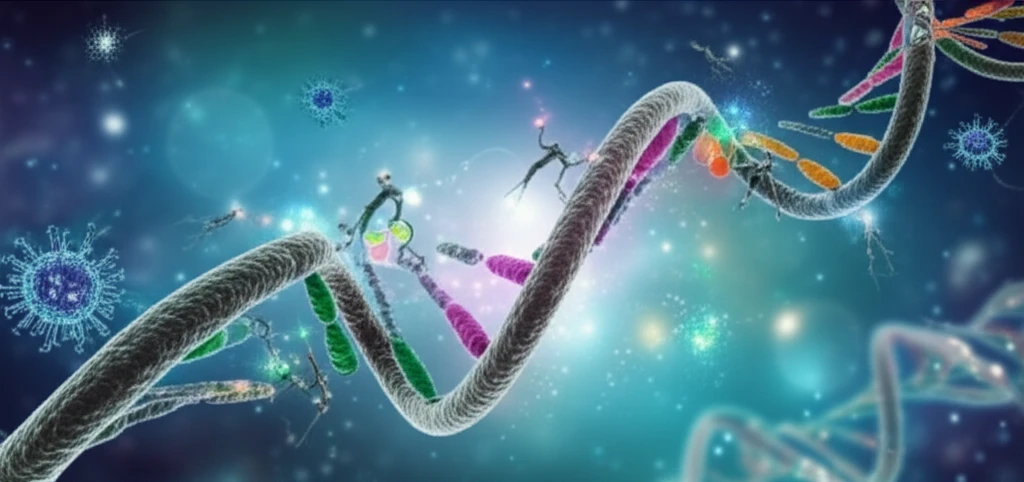
Illustration of a cell being targeted by therapeutic agents, representing the quest for an HIV cure.

Functional Cure for HIV: Unlocking a Treatment-Free Future?

"Scientists are making strides towards a functional cure for HIV, exploring innovative strategies to allow patients to live without daily antiretroviral therapy."


For decades, HIV has been a relentless foe, but the landscape is changing. Antiretroviral therapy (ART) has transformed the lives of millions, turning a once-fatal disease into a manageable condition. Now, researchers are pushing the boundaries, aiming for a 'functional cure' – a state where individuals can live without daily medication, free from the virus's grip.

The quest for a functional cure involves a multi-pronged approach, targeting different aspects of the virus and the body's response. Scientists are exploring ways to reduce the size of the latent reservoir (where the virus hides), boost the immune system, and prevent the virus from reactivating. This is not about total eradication, but about achieving long-term remission.

This article will explore the exciting avenues being pursued in HIV cure research. We'll examine the different strategies, their potential, and the significant challenges that lie ahead. By understanding the complexities of this research, we can appreciate the remarkable progress and the hope it brings for a treatment-free future for those living with HIV.

Understanding the Enemy: How HIV Persists and Why It's Difficult to Eliminate

Illustration of a cell being targeted by therapeutic agents, representing the quest for an HIV cure.

HIV's cunning lies in its ability to integrate its genetic material into the DNA of human cells, creating a latent reservoir. This means the virus can lie dormant for extended periods, evading detection by the immune system and ART. When ART is stopped, the virus can reactivate, leading to a resurgence of the disease.

Several key factors make a cure challenging. Firstly, the latent reservoir is difficult to access and eliminate. Secondly, the immune system, though vital in controlling the virus, is often unable to completely clear it. Thirdly, the virus's ability to mutate and develop resistance poses an ongoing threat.

  • Latent Reservoir: HIV hides in cells, undetectable by standard tests.
  • Immune System Limitations: The immune system often can't completely eradicate the virus.
  • Viral Mutation: HIV mutates rapidly, developing resistance to treatments.
Despite these hurdles, researchers are making remarkable progress by better understanding these challenges. These insights are paving the way for innovative approaches that aim to overcome these obstacles and achieve a functional cure.

A Future Free from Treatment: The Promise of a Functional Cure

The journey towards a functional cure for HIV is complex, requiring dedication, innovation, and collaboration. While challenges remain, the progress made in recent years offers genuine hope. As researchers continue to explore and refine these strategies, the prospect of a treatment-free future for those living with HIV is becoming increasingly realistic. The pursuit of a functional cure is not just a scientific endeavor; it's a commitment to improving the quality of life for millions worldwide.

About this Article -

This article was crafted using a human-AI hybrid and collaborative approach. AI assisted our team with initial drafting, research insights, identifying key questions, and image generation. Our human editors guided topic selection, defined the angle, structured the content, ensured factual accuracy and relevance, refined the tone, and conducted thorough editing to deliver helpful, high-quality information.See our About page for more information.

Everything You Need To Know

1

What is a 'functional cure' for HIV, and how does it differ from a complete eradication of the virus?

A 'functional cure' for HIV refers to a state where individuals can live without daily antiretroviral therapy (ART) and remain free from the virus's harmful effects. It does not involve completely eradicating HIV from the body. Instead, the goal is to achieve long-term remission, where the virus is controlled by the body's immune system without the need for medication. This differs from complete eradication, where all traces of the virus are eliminated from the body, which is a much more difficult objective. The 'functional cure' focuses on managing the virus to the point where it doesn't cause disease progression, even without ART.

2

What are the primary challenges that make achieving a functional cure for HIV so difficult?

Several key challenges impede the path to a functional HIV cure. One significant hurdle is the 'latent reservoir,' where HIV hides in cells, undetectable by standard tests and ART. Eliminating this reservoir is extremely difficult. Secondly, while the immune system plays a vital role in controlling HIV, it often cannot completely eradicate the virus on its own. Finally, HIV's high mutation rate allows it to rapidly evolve and develop resistance to treatments, posing an ongoing threat to any potential cure strategy.

3

How does HIV create a 'latent reservoir,' and why is this a major obstacle to curing the infection?

HIV establishes a 'latent reservoir' by integrating its genetic material into the DNA of human cells. This allows the virus to lie dormant for extended periods, evading detection by the immune system and antiretroviral therapy (ART). The 'latent reservoir' is a major obstacle because it acts as a source for viral reactivation. If ART is stopped, the virus can emerge from this reservoir and lead to a resurgence of the disease. The cells harboring the latent virus are long-lived and difficult to target, making it challenging to eliminate the reservoir completely.

4

Beyond antiretroviral therapy (ART), what other innovative strategies are being explored to achieve a functional cure for HIV?

Researchers are exploring several innovative strategies beyond ART to achieve a functional cure for HIV. These include methods to reduce the size of the 'latent reservoir,' boost the immune system's ability to control the virus, and prevent the virus from reactivating from its dormant state. These strategies aim to either eliminate the hidden virus or enhance the body's natural defenses to keep it suppressed without the need for daily medication. Gene therapy and therapeutic vaccines are also being investigated to provide long-term viral control.

5

What is the significance of achieving a functional cure for HIV in terms of improving the lives of people living with the virus?

Achieving a functional cure for HIV would significantly improve the lives of people living with the virus by allowing them to live without daily antiretroviral therapy (ART). This would eliminate the burden of adherence to a strict medication schedule, reduce the potential for long-term side effects associated with ART, and decrease the risk of drug resistance. A functional cure would also diminish the stigma associated with HIV, as individuals would no longer need to take daily medication to manage their condition, leading to an improved quality of life and overall well-being.

Newsletter Subscribe

Subscribe to get the latest articles and insights directly in your inbox.