
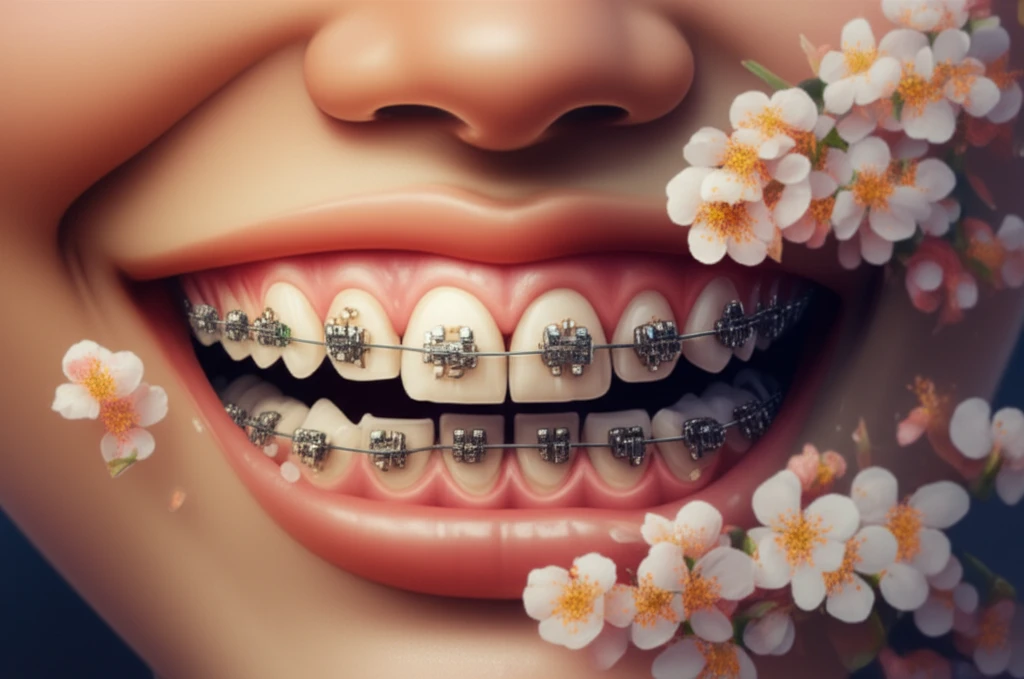
Orthodontic braces transforming into flowers, representing a restored smile.

From Crooked to Confident: A Teen's Jaw Journey Back to Perfect Alignment

"Discover how a young woman's jaw deformity, caused by a rare growth, was expertly corrected with innovative orthodontic treatment, restoring her smile and confidence."


Imagine waking up one day and noticing your face is changing. For a young woman, this became a reality as a rare growth began to distort her jaw, impacting her smile and self-esteem. This isn't just about looks; it's about how we face the world, and when our appearance shifts, it can shake our confidence.

This article delves into the real-life case of a teenager whose jaw was affected by an osteochondroma, a rare benign tumor. We'll explore the complex journey she undertook, involving advanced orthodontic methods and corrective surgery, to restore balance and harmony to her face.

Beyond the technical details, this is a story of resilience and the transformative power of modern medicine. Whether you're a parent, someone considering orthodontic treatment, or simply fascinated by medical marvels, this detailed account offers insights into the possibilities of corrective jaw treatment.

What is Osteochondroma and How Does It Affect the Jaw?

Orthodontic braces transforming into flowers, representing a restored smile.

Osteochondroma (OC) is a benign, bone-capped cartilage tumor. While these tumors are relatively common, they rarely occur in the jaw, making this case particularly unique. When an OC does develop in the jaw, it often affects the temporomandibular joint (TMJ), which connects the jaw to the skull.

The growth of an osteochondroma in the jaw can lead to a variety of noticeable changes and functional issues. These include:

  • Facial asymmetry, where one side of the face appears different from the other.
  • Malocclusion, or a misalignment of the teeth, often presenting as a Class III malocclusion (underbite).
  • An open bite on one side of the mouth, coupled with a crossbite (where upper teeth sit inside lower teeth) on the opposite side.
  • Deviation of the jaw upon opening, causing it to shift to one side.
  • A cant in the occlusal plane, meaning the teeth don't align horizontally.
In the featured case, the young woman experienced several of these effects. Comparing her dental records from a previous orthodontic treatment with new records, doctors noted a significant shift in her jaw alignment. This included a Class III malocclusion, a shifted midline, and an edge-to-edge bite on one side, all contributing to a noticeable facial asymmetry.

The Journey to a Balanced Smile

This case underscores the importance of thorough diagnosis, innovative treatment planning, and the potential for life-changing results. The successful correction of the osteochondroma and the associated jaw deformities not only restored the patient's smile but also enhanced her overall quality of life. It's a testament to the power of combining skilled medical intervention with a patient-centered approach.

About this Article -

This article was crafted using a human-AI hybrid and collaborative approach. AI assisted our team with initial drafting, research insights, identifying key questions, and image generation. Our human editors guided topic selection, defined the angle, structured the content, ensured factual accuracy and relevance, refined the tone, and conducted thorough editing to deliver helpful, high-quality information.See our About page for more information.

Everything You Need To Know

1

What exactly is an Osteochondroma and how can it affect the jaw?

An osteochondroma (OC) is a benign tumor made of bone and cartilage. Although osteochondromas are relatively common, they rarely develop in the jaw. When they do, they often affect the temporomandibular joint (TMJ), which connects the jaw to the skull. Their growth can lead to facial asymmetry and misalignment of the teeth, such as a Class III malocclusion (underbite). The location near the TMJ and the resulting functional issues makes it a unique and challenging condition to manage.

2

What does facial asymmetry mean, and how is it related to jaw problems?

Facial asymmetry is when one side of the face looks different from the other. In the context of jaw deformities, facial asymmetry can be caused by conditions like osteochondroma, where the growth of the tumor distorts the normal bone structure. This asymmetry can affect a person's self-esteem and overall facial harmony. Correcting facial asymmetry often involves a combination of orthodontic treatment and corrective surgery to restore balance to the face.

3

What is malocclusion and how does a Class III malocclusion impact someone?

Malocclusion refers to the misalignment of teeth. A Class III malocclusion, also known as an underbite, is a specific type of malocclusion where the lower teeth protrude beyond the upper teeth. This can be caused by jawbone disharmony, where the lower jaw grows excessively compared to the upper jaw, or by the position of the teeth within the jaws. Correcting a Class III malocclusion often requires orthodontic treatment, sometimes combined with orthognathic surgery (corrective jaw surgery) to reposition the jaws. Treatment aims to improve bite function, aesthetics, and overall oral health.

4

What is the role of orthodontic treatment in fixing jaw and teeth alignment issues?

Orthodontic treatment is the process of correcting irregularities of the teeth and jaws using braces or other appliances. It plays a crucial role in addressing malocclusion, aligning teeth, and improving overall bite function and aesthetics. The impact goes beyond just aesthetics; proper alignment facilitates better oral hygiene, reduces the risk of temporomandibular joint (TMJ) disorders, and improves speech. In complex cases involving jaw deformities like those caused by an osteochondroma, orthodontic treatment is often combined with corrective jaw surgery to achieve optimal results.

5

When is corrective jaw surgery needed, and what does it aim to achieve?

Corrective jaw surgery, also known as orthognathic surgery, is a procedure performed to correct irregularities of the jaw bones and realign the bite. It's often considered when orthodontic treatment alone cannot achieve the desired results, especially in cases of significant jaw deformities or malocclusion. The surgery involves repositioning the upper and/or lower jaw to improve facial balance, bite function, and overall oral health. The combined approach of orthodontics and corrective jaw surgery can yield significant improvements in both function and aesthetics, enhancing a person's quality of life and self-confidence.

Newsletter Subscribe

Subscribe to get the latest articles and insights directly in your inbox.