
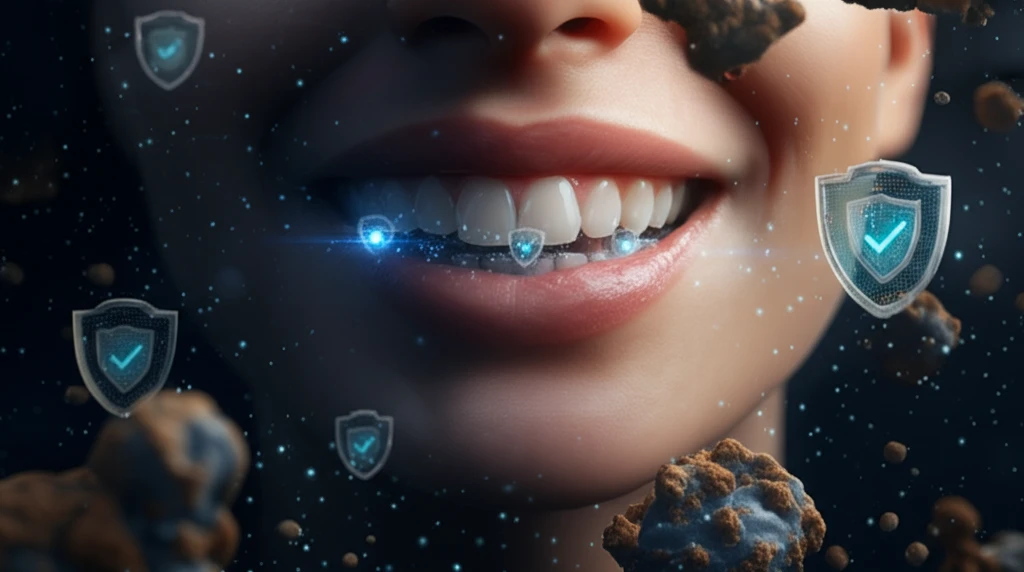
Keep Your Smile Sparkling: The Ultimate Guide to Orthodontic Adhesive and Antimicrobial Protection

"Discover how combining chlorhexidine-thymol varnish with orthodontic adhesives can revolutionize your oral hygiene during and after braces, ensuring a healthy, confident smile."
Orthodontic treatments are increasingly popular, yet they often come with the challenge of maintaining impeccable oral hygiene. Braces and other appliances create numerous hard-to-reach areas where bacteria can thrive, leading to issues like gingivitis, enamel demineralization, and those dreaded white spots. One of the biggest hurdles in orthodontics is helping patients keep their mouths clean and healthy throughout their treatment.
Traditional methods focus on diligent brushing and flossing, but sometimes that’s not enough. Food particles and plaque can stubbornly cling to brackets and wires, making it difficult to prevent bacterial buildup. This is where innovative solutions, like combining orthodontic adhesives with antimicrobial agents, come into play, offering an extra layer of defense against unwanted dental issues.
Imagine a future where your braces actively work to protect your teeth. Researchers have been exploring the benefits of incorporating antimicrobial substances directly into the materials used in orthodontic treatments. One promising approach involves using chlorhexidine-thymol varnish in conjunction with orthodontic adhesives to reduce bacterial activity right where it's needed most.
Modern Smile Correction at Scale
Orthodontists use advanced techniques to straighten teeth and correct bite issues, helping patients achieve a straighter, healthier smile. Practitioners guide each patient through treatment decisions, ensuring that the treatment plan aligns with individual goals and lifestyle.
The Role of Orthodontic Adhesives
Orthodontic bonding is a dental procedure used to attach braces, brackets, or other orthodontic appliances directly to the teeth using a strong adhesive. Orthodontists rely on light-cure adhesives and primers for reliable performance, but these systems are light sensitive and require careful handling, such as use at room temperature (20-25°C) and storage between 2-27°C.
Materials That Guide Treatment
Contemporary orthodontics draws on a well-established toolkit of clinical materials, and orthodontists employ adhesives, wax, and other materials throughout the treatment process to assist in guiding the teeth. This body of clinical applications underpins how modern fixed and removable appliances are used to correct alignment.
The Science Behind Antimicrobial Adhesives
Chlorhexidine is a well-known antimicrobial agent celebrated for its ability to disrupt bacterial cell membranes and prevent biofilm formation. When combined with thymol, another antiseptic compound, it creates a powerful duo that can significantly reduce the risk of bacterial infections and enamel damage during orthodontic treatment. By integrating this varnish with the adhesive used to bond brackets, orthodontists can provide continuous protection against harmful bacteria.
- Group 1: Control group with standard adhesive.
- Group 2: Adhesive combined with chlorhexidine-thymol varnish, cultured immediately.
- Group 3: Adhesive combined with varnish, stored in water for 7 days.
- Group 4: Adhesive combined with varnish, stored in water for 30 days.
Nanoparticles as Antimicrobial Agents
Recent research reviews the antimicrobial activity of nanoparticles, including myconanoparticles produced through myconanotechnology, which demonstrate antibacterial, antifungal, and antiviral potential. Newer studies focus on silver nanoparticles and how thermal treatment alters their morphology and distribution, with direct consequences for their antibacterial activity at elevated temperatures.
Limits of Materials and Antimicrobials
The antimicrobial performance of nanoparticles is not guaranteed under all conditions, since thermal treatment can change their morphological and distributional characteristics and thereby reduce antibacterial activity. Orthodontic adhesives present similar practical constraints, requiring strict temperature control and protection from light during storage and clinical use.
Physical Bonding vs. Digital Planning
Traditional orthodontic treatment depends on physically bonding brackets and appliances to teeth with adhesives, while newer approaches such as Angel Aligner's iOrtho platform use cloud-based digital technology for case planning, monitoring, and collaboration. Both paths aim to guide teeth into proper alignment, though they emphasize different stages of the treatment workflow.
The Future of Orthodontic Care
Combining chlorhexidine-thymol varnish with orthodontic adhesives represents a significant step forward in proactive dental care. While more research is needed to determine the long-term effects and optimal application methods, this approach offers a promising way to enhance oral hygiene during orthodontic treatment. By staying informed and consulting with your orthodontist, you can take advantage of these advancements to achieve a healthier, more radiant smile.
Combining Bonding Strength and Hygiene
Strong orthodontic bonding forms the foundation of successful treatment by keeping braces and appliances securely attached to the teeth. Combining dependable light-cure adhesives with attention to hygiene during treatment helps patients keep their smiles healthy and sparkling while correction proceeds.
Digital Planning and Antimicrobial Materials
Cloud-based orthodontic platforms point toward a future of more collaborative, data-driven case planning and monitoring. Ongoing antimicrobial research into nanoparticles and myconanoparticles may eventually yield materials that help guard against infection during treatment.
Standards, Safety, and the Treatment Journey
Professional standards and safety are central to modern orthodontic practice, with orthodontists ensuring that each treatment plan aligns with the patient's goals and lifestyle. Patients also carry responsibility for the journey, such as correctly removing and caring for their clear aligners as instructed.
Real Patients, Real Results
The ultimate goal of orthodontics is a straighter, healthier smile, and patients depend on orthodontist-provided instructions, tips, and tricks throughout their aligner or brace journey to reach it. Clear aligner wearers, in particular, benefit from hands-on guidance that makes everyday wear and removal easier and more comfortable.