
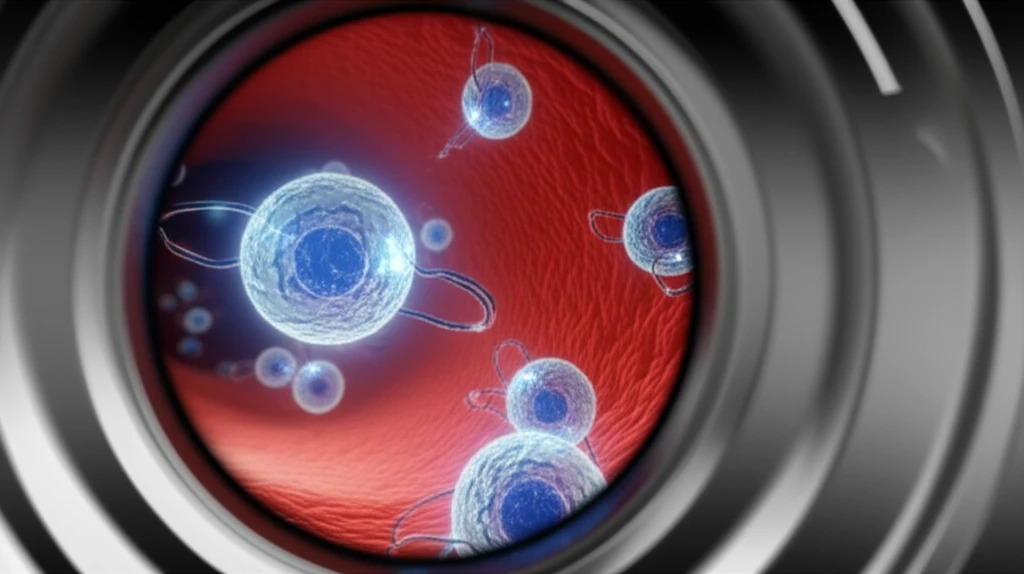
Glowing blue nanocarriers targeting cancer cells.

Fluorescent Nanocarriers: A New Frontier in Targeted Drug Delivery?

"Explore how graphene oxide hybrids are revolutionizing drug delivery with enhanced visibility and precision in treating diseases like cancer."


Imagine medications that not only combat diseases but also allow doctors to track their journey inside the body in real-time. This concept is rapidly becoming a reality with the advent of fluorescent drug delivery systems. These systems promise to revolutionize how we treat diseases, offering unprecedented levels of control and insight.

One of the most promising advancements in this field involves the use of graphene oxide (GO), a material known for its unique properties and versatility. By modifying GO with fluorescent molecules, scientists are creating hybrid materials that can carry drugs directly to targeted cells, all while being visible under fluorescent light. This allows for real-time monitoring of the drug's delivery and impact, ensuring it reaches the intended site with maximum effect.

This article delves into the innovative synthesis, characterization, and application of a blue fluorescent graphene oxide hybrid in drug delivery. We will explore how this hybrid material is designed, what makes it effective, and its potential impact on treating diseases like cancer, offering a glimpse into the future of personalized medicine.

Blue Fluorescent Graphene Oxide: Synthesis and Targeted Application

Glowing blue nanocarriers targeting cancer cells.

Researchers have successfully created a novel drug delivery system by combining graphene oxide with a fluorescent component. This system leverages the high surface area and unique properties of graphene oxide to transport drugs, while the fluorescent tag allows for easy tracking and monitoring within the body. The key steps involved the synthesis of aminated triphenylamine (A-TPA), which was then attached to benzene tricarbonyl trichloride (BT) to create an electron-rich molecule (A-TPA-BT). This molecule was then used to functionalize the graphene oxide surface.

The resulting graphene oxide hybrid exhibited remarkable blue fluorescence, a property that is particularly valuable for in-vivo tracking. This fluorescence arises from the covalent connection of the A-TPA-BT molecules onto the GO surface, which creates a new electronic energy state and simultaneously distorts the bandgap of the GO. The comprehensive characterization techniques, including spectroscopy and microscopy, confirmed the successful functionalization and the unique properties of the hybrid material.

  • Synthesis of A-TPA-BT: Created an electron-rich molecule for GO functionalization.
  • GO Functionalization: Covalently bonded A-TPA-BT to the GO surface.
  • Blue Fluorescence: Achieved a 164 nm blue shift in luminescence, enabling tracking.
  • Comprehensive Characterization: Verified the structure and properties of the hybrid.
Importantly, the cytotoxicity of the hybrid was tested against human breast cancer cells (T47D), demonstrating its potential for targeted cancer therapy. This is crucial as targeted drug delivery aims to minimize the impact on healthy cells while maximizing the effect on cancerous ones.

The Future of Fluorescent Nanocarriers in Medicine

The development of blue fluorescent graphene oxide hybrids represents a significant step forward in targeted drug delivery. By combining the drug-carrying capabilities of graphene oxide with the visibility of fluorescence, these nanocarriers offer a promising approach to treating diseases like cancer.

The ability to monitor drug delivery in real-time ensures that medications reach their intended targets, maximizing their effectiveness while minimizing side effects. This level of precision and control could revolutionize how we approach treatment strategies, leading to more personalized and effective medicine.

As research in this area continues, we can expect further advancements in the design and application of fluorescent nanocarriers. From improved targeting mechanisms to enhanced drug release control, the future of medicine is set to be transformed by these innovative technologies, offering new hope for patients and healthcare providers alike.

About this Article -

This article was crafted using a human-AI hybrid and collaborative approach. AI assisted our team with initial drafting, research insights, identifying key questions, and image generation. Our human editors guided topic selection, defined the angle, structured the content, ensured factual accuracy and relevance, refined the tone, and conducted thorough editing to deliver helpful, high-quality information.See our About page for more information.

This article is based on research published under:

DOI-LINK: 10.1016/j.jddst.2018.10.010, Alternate LINK

Title: Blue Fluorescent Graphene Oxide Hybrid: Synthesis, Characterization, And Application As A Drug Delivery System

Subject: Pharmaceutical Science

Journal: Journal of Drug Delivery Science and Technology

Publisher: Elsevier BV

Authors: Hamed Hashemi, Hassan Namazi

Published: 2018-12-01

Everything You Need To Know

1

Why is graphene oxide used in fluorescent drug delivery systems?

Graphene oxide is used because of its large surface area and unique chemical properties that allow it to carry drugs efficiently. When modified with fluorescent molecules like A-TPA-BT, it becomes traceable within the body. The functionalization creates a novel drug delivery system. This is synthesized by covalently bonding A-TPA-BT to the GO surface.

2

How is blue fluorescence achieved in graphene oxide hybrids for drug delivery, and why is it important?

The blue fluorescence is achieved through the covalent bonding of aminated triphenylamine (A-TPA) derivates to the graphene oxide (GO) surface, creating a new electronic energy state and distorting the bandgap of the GO. This allows researchers to track the delivery of drugs in real-time, enhancing the precision and effectiveness of the treatment. A 164 nm blue shift in luminescence occurs, enabling tracking.

3

What are the implications of targeted drug delivery using blue fluorescent graphene oxide hybrids for cancer treatment?

Targeted drug delivery using blue fluorescent graphene oxide hybrids aims to minimize the drug's impact on healthy cells while maximizing its effect on cancerous ones, such as T47D human breast cancer cells. By delivering drugs directly to cancer cells, side effects can be reduced, and treatment outcomes improved.

4

Can you explain the synthesis and characterization process of blue fluorescent graphene oxide hybrids?

The process involves several key steps: first, the synthesis of aminated triphenylamine (A-TPA) to create an electron-rich molecule. Then benzene tricarbonyl trichloride (BT) is attached. Next functionalization of graphene oxide surface. This is followed by comprehensive characterization using spectroscopy and microscopy to verify the successful functionalization and properties of the hybrid material.

5

What are the next steps or potential limitations in the development of fluorescent nanocarriers using graphene oxide?

While the system shows promise, further research is likely needed to assess long-term effects, scalability, and potential interactions with other biological systems. Exploration of different types of fluorescent tags and drug combinations could also expand the application of graphene oxide hybrids in personalized medicine.

Newsletter Subscribe

Subscribe to get the latest articles and insights directly in your inbox.