
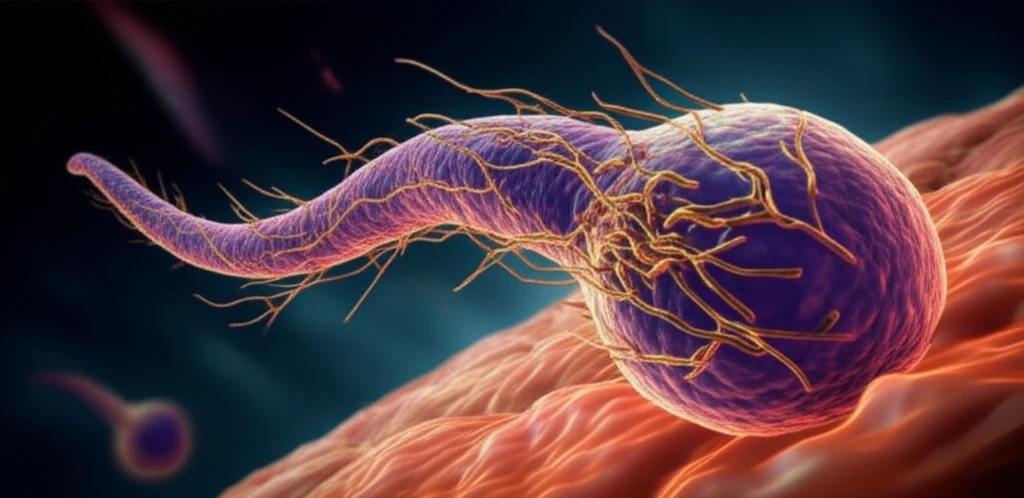
Fascin's Double-Edged Sword: How This Protein Drives Pancreatic Cancer Aggression

"Unlocking the role of Fascin in pancreatic cancer: From cell behavior to potential gene therapy targets."
Pancreatic cancer is a formidable adversary, known for its rapid progression and dismal survival rates. One of the key reasons it's so difficult to treat is its aggressive nature – the cancer cells quickly invade surrounding tissues and spread to distant sites in the body. Researchers are constantly seeking to understand the intricate mechanisms that drive this aggressive behavior, hoping to find new ways to combat the disease.
Among the many factors implicated in pancreatic cancer's aggressiveness, a protein called fascin has emerged as a significant player. Fascin is involved in cell movement, making it a prime suspect in the cancer's ability to invade and metastasize. While it's been linked to various cancers, its specific role in pancreatic cancer has been less clear.
Now, a groundbreaking study sheds light on how fascin fuels the spread of pancreatic cancer. By exploring fascin's influence on cell behavior and tumor development, this research opens doors to potential new therapies, including gene therapy approaches.
Fascin: The Engine of Pancreatic Cancer Cell Movement?
To investigate fascin's role, researchers conducted a series of experiments using pancreatic cancer cell lines. They focused on MIA PaCa-2 cells, which naturally have low levels of fascin. By introducing extra fascin into these cells, they could observe how increased fascin levels affected their behavior.
- Increased motility: The cells moved more readily and efficiently.
- Enhanced invasiveness: They were better at penetrating barriers, mimicking their ability to invade surrounding tissues.
- Altered cell shape: They developed more protrusions, suggesting a greater capacity to explore their environment.
- Reduced aggregation: The cells were less likely to clump together, potentially facilitating their spread.
Fascin as a Potential Target: Future Directions
The study's findings strongly suggest that fascin plays a crucial role in promoting pancreatic cancer's aggressive behavior. By enhancing cell motility, invasiveness, and scattering, fascin empowers cancer cells to spread more effectively.
While further research is needed, these results open exciting avenues for new therapies. Specifically, targeting fascin could potentially disrupt the mechanisms that drive cancer cell movement, slowing down or preventing metastasis. The authors suggest that fascin could even be a target for pancreatic cancer gene therapy.
Pancreatic cancer remains a significant challenge, but understanding the intricate roles of proteins like fascin offers hope for developing more effective treatments and improving patient outcomes.