
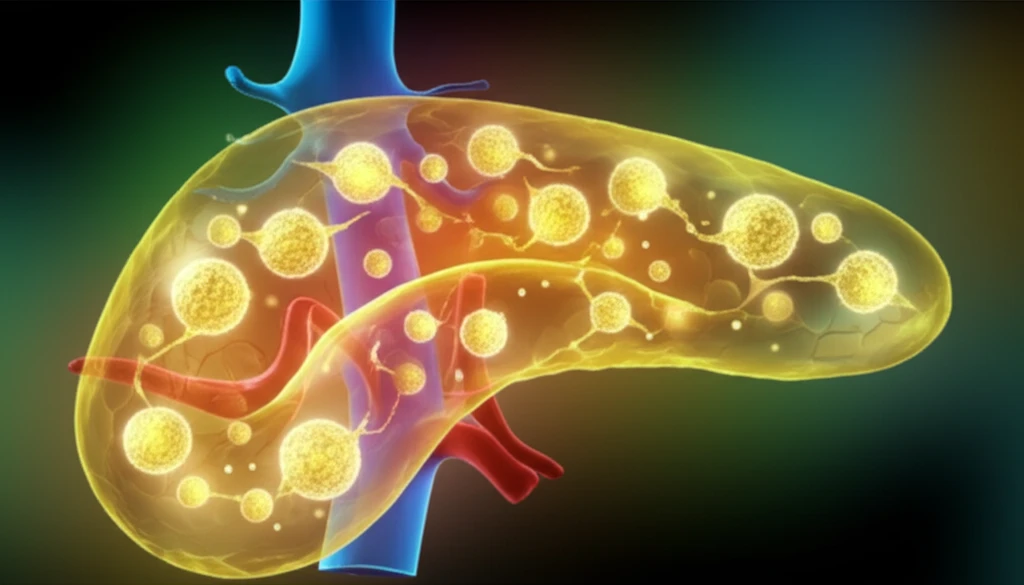
Extended Pancreatectomy & Islet Auto-Transplantation: A Sweet Solution for Pancreatic Lesions?

"Discover how this innovative approach offers diabetes-free survival for patients with benign or borderline/malignant pancreatic lesions."
Pancreatic surgeries, especially extended pancreatectomies (removal of a significant portion of the pancreas), often carry the risk of developing diabetes. This is because the pancreas is responsible for producing insulin, which regulates blood sugar levels. When a large part of the pancreas is removed, insulin production can be significantly reduced, leading to diabetes.
To combat this, a procedure called islet auto-transplantation (IAT) has emerged as a promising solution. IAT involves harvesting islet cells (the insulin-producing cells) from the removed portion of the pancreas and transplanting them back into the patient's liver. This helps to maintain insulin production and reduce the risk of diabetes after pancreatectomy.
A recent study investigated the long-term outcomes of IAT in patients undergoing extended distal pancreatectomy (EDP) for benign or borderline/malignant lesions of the pancreas. The results offer compelling evidence for the effectiveness of IAT in preventing diabetes and improving the quality of life for these patients.
A Shifting Transplant Landscape
Pancreas transplantation demand in the United States is substantial but evolving. Adult additions to the pancreas waiting list rose to 1,876 in 2023 from 1,736 in 2022, while the proportion of candidates who are older, obese, or have type 2 diabetes has been increasing. Overall transplant volume held steady in 2023 at 915 procedures (versus 918 in 2022), though pancreas-after-kidney transplants fell to a decade low of 36. In 2024, adult pancreas transplants dropped 8.0% to 821, predominantly driven by a decline in simultaneous pancreas-kidney (SPK) transplants, even as SPK waitlist additions climbed to 1,661 from 1,585. Capacity remains concentrated: 34.5% of centers reported performing 3–10 pancreas transplants in 2024, while 5.4% reported only 1–2.
Standard Resections: Established Yet High-Risk
For cancer of the pancreatic head, pancreatoduodenectomy is the standard surgical procedure and, thanks to advances in surgical treatment, is now indicated even for elderly patients over 80 years of age. Optimal outcomes in pancreatic adenocarcinoma, however, depend on more than the operation itself: studies emphasize a multidisciplinary approach combining curative-intent resection with guideline-recommended systemic therapy. Despite progress in technique and perioperative care, pancreaticoduodenectomy and distal pancreatectomy remain high-risk procedures. Postoperative complications continue to significantly affect morbidity, mortality, and patient quality of life.
A Young Specialty with Deep Roots
The history of pancreatic surgery is comparatively young, comprising largely two periods—the first arriving in the second half of the nineteenth century, when "major surgery" became a reality. An early milestone came in 1887, when August Socin, professor of surgery in Basel, drained a pancreatic cyst causing bowel obstruction in a 45-year-old woman, who died 24 hours after the operation. Over time, surgeons recognized that the type of operation must be adapted to the condition, whether cancer, acute or chronic pancreatitis, or cysts. Pancreatic surgery remains technically complicated to this day, requiring significant experience and sound clinical judgment.
Diabetes-Free Survival: The IAT Advantage
The study compared two groups of patients: those who underwent EDP with IAT and those who underwent EDP alone. The results showed a significant advantage for the IAT group in terms of diabetes-free survival. Patients who received IAT had a longer diabetes-free survival compared to those who did not.
- IAT helps maintain insulin production after significant pancreatic removal.
- The procedure reduces the chances of developing diabetes post-surgery.
- IAT improves long-term diabetes-free survival rates.
From Tooth Counts to Recovery Protocols
Current research ranges from unexpected prognostic markers to system-level care improvements. One recent study of 339 patients reported that pancreatic cancer patients with at least 21 natural teeth survived nearly two years longer after surgery than those with fewer teeth, prompting researchers to investigate whether tooth loss influences outcomes. On the delivery side, enhanced recovery after surgery (ERAS) protocols have been increasingly adopted in pancreatic surgery. However, a systematic review found substantial variation in their implementation and in reported outcomes, noting that a comprehensive evidence map of ERAS guideline components and their global application had been lacking.
The Volume Problem and the Reality Gap
Critics caution that celebrated pancreatic surgery outcomes may reflect a skewed sample rather than everyday practice. A worldwide multicentre snapshot in the BJS emphasized that pancreatic surgery remains associated with high morbidity rates and noted that improving mortality figures in the literature mirror the activity of highly specialized centres. Where surgery occurs matters greatly: one large meta-analysis found that patients treated at high-volume hospitals had 65% lower odds of dying after surgery compared with those at low-volume centers. Research into complications and failure-to-rescue after pancreatectomy likewise observes that procedure-targeted hospitals are overwhelmingly academic medical centers, many renowned for high surgical volumes—raising questions about how broadly such results generalize.
Weighing Extended Resection Against Alternatives
Compared with standard pancreatic resections, extended pancreatectomy paired with islet auto-transplantation occupies a distinctive middle ground, trading the aggressiveness of radical surgery against the metabolic burden of removal-induced diabetes. Relative to total pancreatectomy alone, adding an islet auto-transplant aims to preserve some endocrine function, though the calculus differs depending on whether the underlying lesion is benign, premalignant, or malignant. Head-to-head comparisons across these approaches remain limited, and published figures come largely from specialized centers. Patients and clinicians are therefore left to weigh institution-specific outcomes and individual risk factors rather than definitive trial evidence.
The Future of Pancreatic Surgery: A Brighter Outlook
Islet auto-transplantation represents a significant advancement in pancreatic surgery. By integrating this procedure with extended pancreatectomies, surgeons can not only remove diseased tissue but also minimize the risk of diabetes, leading to improved long-term outcomes and a better quality of life for patients.
Defining Quality—and Questioning It
Expert commentary in the field converges on two themes: defining quality and helping patients navigate it. A 2009 consensus statement by Bilimoria and colleagues established quality metrics for pancreas surgery based on expert opinion and an assessment of national cancer registry data, and Callery and colleagues subsequently queried experts in pancreatic surgery on the topic. At the patient level, the sheer complexity of pancreatic surgery leads many patients with pancreatic ductal adenocarcinoma to seek the opinion of more than one surgeon. Yet researchers openly acknowledge that little is known about how second surgical opinions impact the likelihood of particular treatment paths—an unresolved question at the heart of surgical decision-making.
Robots, Minimal Access, and Surgical Artistry
The field's future is widely framed around minimally invasive technology. Proponents note that laparoscopic and robotic approaches are increasingly replacing open surgery for pancreatic cancer treatment, and commentators anticipate that surgical robots will become less expensive and more widely available—though the present challenge lies in training young pancreatic surgeons in robotic techniques. Looking ahead, analyses of pancreatectomy's progress point to continued evolution of standards within multimodal treatment concepts, informed by registry data, meta-analyses, and randomized controlled trials. Some leaders ultimately envision new generations of "surgical artists" achieving a richer integration of art and science in pancreatic surgery.
Access, Expertise, and Structural Hurdles
Even promising surgical innovations face systemic headwinds. Complex procedures such as extended pancreatectomy tend to be concentrated in relatively few high-volume centers, which means geography, referral pathways, and coverage decisions can strongly influence who receives them. Training sufficient numbers of skilled surgeons, standardizing how outcomes are measured and reported, and managing costs are persistent challenges across the field. Until such structural barriers ease, access to advanced options like islet auto-transplantation will likely remain uneven across regions and populations.
Patients Behind the Statistics
Behind every dataset are patients weighing major surgery against life-altering consequences. For those facing conditions that might otherwise require removal of the entire gland, islet auto-transplantation offers the possibility of avoiding brittle, insulin-dependent diabetes—yet recovery can be long and individual outcomes vary. It is common for patients confronting such high-stakes operations to gather information from multiple specialists before deciding. Clear communication about uncertainties, individualized goals, and strong support throughout recovery remain central to translating surgical advances into meaningful real-world benefit.
While this study provides strong evidence for the benefits of IAT, further research is needed to optimize the procedure and identify the best candidates for transplantation. Factors such as islet cell quality, transplantation site, and patient characteristics may all play a role in the success of IAT.
With continued innovation and research, islet auto-transplantation has the potential to become a standard of care for patients undergoing extensive pancreatic resections, offering a sweet solution to the challenge of post-operative diabetes.