
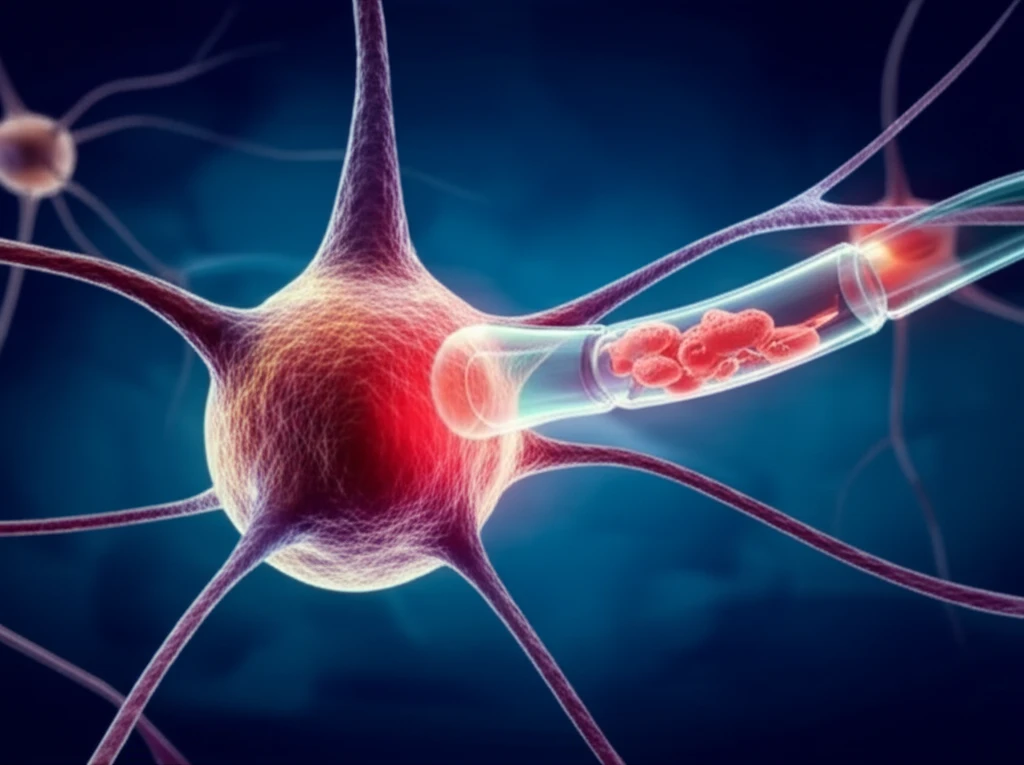
Nerve fibers intertwined with endometrial cells, symbolizing the connection between nerve damage and endometriosis pain.

Endometriosis Pain: Is Perineural Invasion the Missing Piece?

"Unraveling the link between nerve damage and endometriosis-related pain for better diagnosis and treatment."


Endometriosis, a condition affecting 10%–15% of women globally, remains a perplexing enigma. While characterized by symptoms like dysmenorrhea, dyspareunia, and chronic pelvic pain, the exact mechanisms behind endometriosis-associated pain (EAP) are still not fully understood. Recent studies suggest that abnormal nerve distribution in the pelvic region plays a significant role, but the specifics of how nerves contribute to pain severity remain unclear.

A groundbreaking study published in the Journal of Pain Research sheds light on a special phenomenon called perineural invasion (PNI) in deep infiltrating endometriosis (DIE). PNI occurs when endometrial cells invade the space around nerves, potentially causing nerve damage and contributing to chronic pain. Researchers explored the correlation between PNI and DIE-associated pain, opening new avenues for understanding and treating this debilitating condition.

This article delves into the innovative research, explaining PNI's role in endometriosis and how it could revolutionize pain management. We'll break down the study's methodology, findings, and implications, offering a clear perspective on this critical link between nerve invasion and endometriosis-related pain.

What is Perineural Invasion (PNI) and Why Does It Matter?

Nerve fibers intertwined with endometrial cells, symbolizing the connection between nerve damage and endometriosis pain.

Perineural invasion (PNI) is the infiltration of cancer cells around and within the space surrounding a nerve. While commonly associated with cancer, PNI can also occur in benign conditions like endometriosis. In the context of DIE, endometrial cells invade the area around nerves, potentially damaging them and triggering pain signals. This direct nerve involvement sets PNI apart from other endometriosis-related mechanisms.

The study in the Journal of Pain Research investigated the prevalence of PNI in DIE lesions and its relationship to pain. Researchers at the First Affiliated Hospital of Sun Yat-sen University enrolled 64 patients with DIE who underwent laparoscopic surgical resection of endometriotic lesions. The study aimed to determine if PNI was more common in patients experiencing higher levels of pain.

  • Patient Selection: Included premenopausal women with regular menstrual cycles and pain symptoms (dysmenorrhea, dyspareunia, and chronic pelvic pain) for over six months.
  • Exclusion Criteria: Excluded patients with malignant diseases, chronic inflammatory conditions, adenomyosis, bowel wall involvement, or recent hormonal treatment.
  • Pain Assessment: Pain severity was assessed using the Visual Analog Scale (VAS) for dysmenorrhea, dyspareunia, and chronic pelvic pain in the six months before surgery.
  • Tissue Analysis: Endometriotic lesion samples were analyzed using immunohistochemistry to identify nerve fibers and microvessels. PNI was defined as endometrial cells tracking along or around a nerve.
The researchers found that PNI was common in DIE lesions, with 65.5% of uterosacral ligament DIE (USL-DIE) and 70.0% of rectovaginal septum DIE (RVS-DIE) cases showing PNI. Importantly, patients with PNI-positive lesions reported significantly higher VAS scores for dysmenorrhea, dyspareunia, and chronic pelvic pain, highlighting a strong correlation between PNI and increased pain levels.

The Future of Endometriosis Treatment: Targeting Nerve Involvement

This study highlights the critical role of PNI in endometriosis-associated pain. By identifying nerve invasion as a key pain driver, researchers have opened new avenues for targeted therapies. Future treatments may focus on preventing or reversing PNI, reducing nerve damage, and alleviating chronic pain. This offers hope for more effective and personalized approaches to managing endometriosis, ultimately improving the quality of life for millions of women worldwide.

About this Article -

This article was crafted using a human-AI hybrid and collaborative approach. AI assisted our team with initial drafting, research insights, identifying key questions, and image generation. Our human editors guided topic selection, defined the angle, structured the content, ensured factual accuracy and relevance, refined the tone, and conducted thorough editing to deliver helpful, high-quality information.See our About page for more information.

This article is based on research published under:

DOI-LINK: 10.2147/jpr.s168715, Alternate LINK

Title: Perineural Invasion In Endometriotic Lesions Contributes To Endometriosis-Associated Pain

Subject: Anesthesiology and Pain Medicine

Journal: Journal of Pain Research

Publisher: Informa UK Limited

Authors: Yanchun Liang, Duo Liu, Fan Yang, Wenwei Pan, Feitianzhi Zeng, Jinjie Wu, Hongyu Xie, Jiaying Li, Shuzhong Yao

Published: 2018-09-01

Everything You Need To Know

1

What exactly is perineural invasion (PNI), and why is it important in understanding endometriosis?

Perineural invasion (PNI) is when endometrial cells invade the space around nerves, potentially damaging them and causing pain. It's significant because it directly links the growth of these cells to nerve damage, which appears to be a major source of pain in deep infiltrating endometriosis (DIE). Understanding PNI helps us to understand how endometriosis causes pain.

2

How was pain measured and perineural invasion (PNI) identified in the study?

The study used the Visual Analog Scale (VAS) to measure pain in patients with DIE. The VAS is used to measure how severe pain is for dysmenorrhea, dyspareunia, and chronic pelvic pain. Researchers collect lesion samples, and use special staining techniques to identify nerve fibers and microvessels. PNI is confirmed when endometrial cells are observed tracking along or around a nerve during tissue analysis.

3

What is Endometriosis-Associated Pain (EAP), and how does it relate to the research on nerve involvement?

Endometriosis-associated pain (EAP) refers to the pain experienced as a result of endometriosis. This pain can manifest as dysmenorrhea (painful menstruation), dyspareunia (painful sexual intercourse), and chronic pelvic pain. EAP is significant because it is a primary symptom that affects the quality of life for individuals with endometriosis. While abnormal nerve distribution has been suspected, perineural invasion (PNI) has emerged as a key factor.

4

What is deep infiltrating endometriosis (DIE), and why is it significant in the context of perineural invasion (PNI)?

Deep infiltrating endometriosis (DIE) is a severe form of endometriosis where endometrial tissue invades deeply into organs like the bowel or bladder. It's important because DIE is often associated with more severe pain and complications. Perineural invasion (PNI) is commonly found in DIE lesions, particularly in the uterosacral ligaments (USL-DIE) and rectovaginal septum (RVS-DIE).

5

What were the main findings of the study regarding the relationship between perineural invasion (PNI) and pain levels?

The study found that perineural invasion (PNI) was prevalent in deep infiltrating endometriosis (DIE) lesions, specifically in the uterosacral ligament (USL-DIE) and rectovaginal septum (RVS-DIE). More importantly, patients with PNI-positive lesions reported higher pain levels as measured by the Visual Analog Scale (VAS) for dysmenorrhea, dyspareunia, and chronic pelvic pain. This highlights the strong link between PNI and increased pain severity.

Newsletter Subscribe

Subscribe to get the latest articles and insights directly in your inbox.