
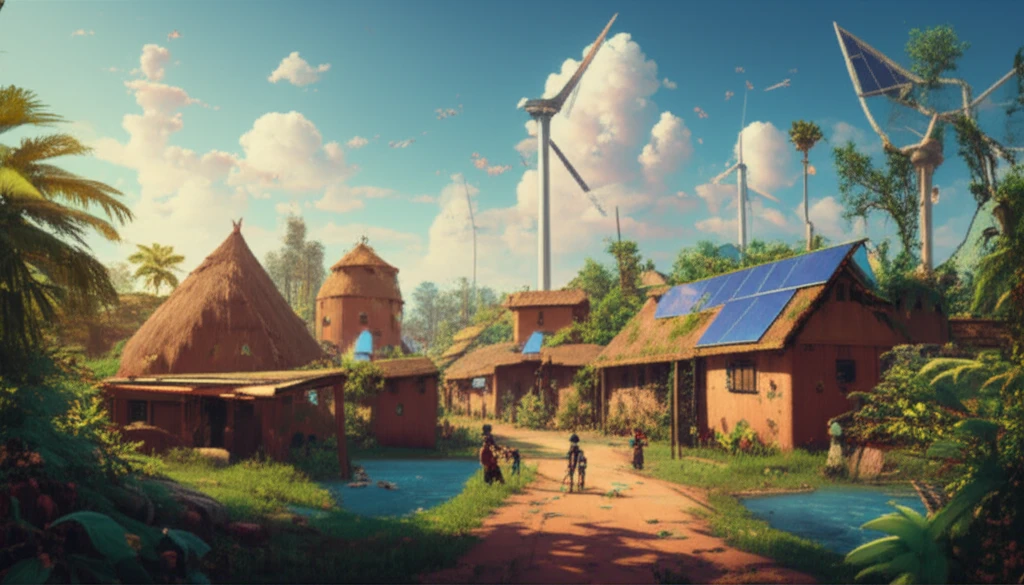
Sustainable energy in a rural Ghanaian village.

Empowering Ghana's Villages: How Sustainable Energy Can Transform Rural Life

"Unlocking the potential of rural communities through affordable, accessible, and reliable energy solutions."


Energy is the lifeblood of any community, and in rural areas, its role is even more critical. Access to reliable and affordable energy fuels economic opportunities, improves healthcare, and powers education. However, for many rural communities in Ghana, energy access remains a significant challenge.

Traditional reliance on fuel wood and charcoal, while seemingly natural, carries severe consequences. Deforestation, health problems from indoor air pollution, and contributions to climate change paint a grim picture. It's a cycle that demands a shift towards sustainable energy solutions that balance environmental protection with community needs.

This article explores the potential of sustainable energy to transform rural communities in Ghana. It dives into the challenges, examines innovative approaches, and highlights the path toward a future where energy empowers rather than hinders rural development.

The True Cost of Traditional Energy: Understanding the Impact

Sustainable energy in a rural Ghanaian village.

For generations, rural communities in Ghana have depended on fuel wood and charcoal for their energy needs. While these resources are readily available, their widespread use has a hidden price tag. The felling of trees for fuel contributes to deforestation, reducing the land's capacity to absorb carbon dioxide. This not only worsens climate change but also degrades the local environment, impacting water resources and agricultural productivity.

Moreover, the burning of fuel wood and charcoal releases harmful pollutants into the air, leading to respiratory problems and other health issues, particularly for women and children who spend a significant amount of time indoors. This reliance also traps communities in a cycle of energy poverty, hindering their ability to access more efficient and cleaner energy alternatives.

Here's a breakdown of the environmental and health costs:
  • Deforestation: Loss of forest cover reduces carbon sequestration and increases soil erosion.
  • Air Pollution: Indoor and outdoor air pollution contributes to respiratory illnesses and other health problems.
  • Climate Change: Burning biomass releases greenhouse gases, exacerbating climate change.
Recognizing these impacts is the first step toward embracing sustainable energy solutions that offer a brighter and healthier future for rural communities.

A Future Powered by Innovation: Charting the Path Forward

The transition to sustainable energy in rural Ghana requires a multi-faceted approach that addresses affordability, accessibility, reliability, and equity. It also demands a commitment to innovation, community engagement, and supportive policies.

Here are key strategies for creating a sustainable energy future: <ul> <li>Investing in renewable energy sources: Solar, wind, and mini-hydro power offer clean and sustainable alternatives to fuel wood and charcoal.</li> <li>Promoting energy efficiency: Improved cookstoves and energy-efficient appliances can reduce energy consumption and minimize waste.</li> <li>Strengthening local institutions: Empowering local communities to manage and maintain energy systems ensures long-term sustainability.</li> <li>Addressing affordability: Innovative financing mechanisms and subsidies can make sustainable energy accessible to low-income households.</li> </ul>

By embracing these strategies, Ghana can unlock the potential of its rural communities, creating a future where energy empowers economic growth, protects the environment, and improves the quality of life for all.

About this Article -

This article was crafted using a human-AI hybrid and collaborative approach. AI assisted our team with initial drafting, research insights, identifying key questions, and image generation. Our human editors guided topic selection, defined the angle, structured the content, ensured factual accuracy and relevance, refined the tone, and conducted thorough editing to deliver helpful, high-quality information.See our About page for more information.

This article is based on research published under:

DOI-LINK: 10.5296/jpmr.v3i2.10838, Alternate LINK

Title: Achieving Sustainable Energy In Rural Communities In Ghana

Subject: General Medicine

Journal: Journal of Public Management Research

Publisher: Macrothink Institute, Inc.

Authors: Kwabena Boafo Adom-Opare, Daniel Kweku Baah Inkoom

Published: 2017-12-27

Everything You Need To Know

1

Why is energy access so crucial for rural communities?

Energy is indeed the lifeblood of any community, and in rural areas of Ghana, its role is amplified. Reliable and affordable energy access is crucial because it directly fuels economic opportunities, improves healthcare, and empowers education. Without it, these communities remain constrained, unable to fully realize their potential for development and improved living standards.

2

What are the negative impacts of using fuel wood and charcoal?

The traditional reliance on fuel wood and charcoal in rural Ghana carries significant consequences. Deforestation results from the felling of trees, which reduces the land's capacity to absorb carbon dioxide, worsening climate change and damaging local environments. Burning these fuels also releases harmful pollutants, leading to respiratory problems, particularly affecting women and children. These practices trap communities in a cycle of energy poverty.

3

How do sustainable energy solutions benefit rural communities?

Sustainable energy solutions are essential for transforming rural communities in Ghana. These initiatives address climate change by reducing reliance on fossil fuels and promote environmental protection. By providing affordable, accessible, and reliable energy, these solutions foster economic growth, improve healthcare, and power education. This shift is necessary to break the cycle of energy poverty and build a brighter, healthier future for rural areas.

4

What steps are needed to successfully transition to sustainable energy?

The transition to sustainable energy requires a multi-faceted approach. This includes addressing affordability, accessibility, reliability, and equity. Furthermore, it demands innovation in technologies and financing models, active community engagement to ensure solutions meet local needs, and supportive government policies that create a conducive environment for sustainable energy projects. This holistic strategy ensures a successful and lasting transformation.

5

What are the environmental and health consequences of using traditional energy sources?

Deforestation, air pollution, and climate change are the key environmental and health costs associated with traditional energy sources like fuel wood and charcoal. Deforestation leads to a loss of forest cover, increased soil erosion, and a reduced capacity to absorb carbon dioxide. Air pollution from burning these fuels causes respiratory illnesses and other health problems, especially for those indoors. Finally, burning biomass releases greenhouse gases, worsening climate change on a global scale.

Newsletter Subscribe

Subscribe to get the latest articles and insights directly in your inbox.