
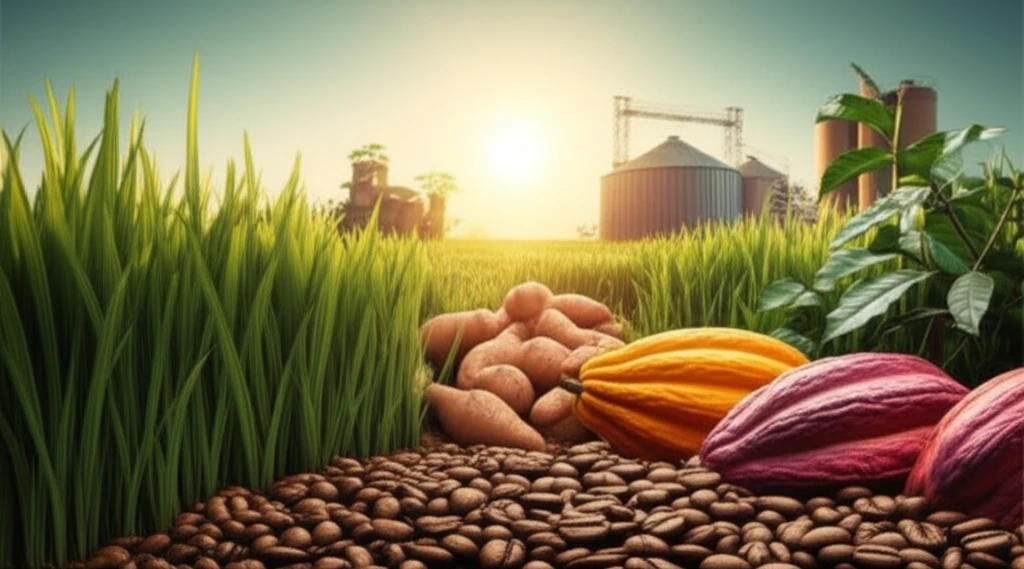
Lush green elephant grass fields with scattered agricultural byproducts and sustainable silos.

Elephant Grass Silage: The Secret to Sustainable Farming?

"Discover how agricultural waste can transform elephant grass into a nutrient-rich silage, boosting your farm's productivity and sustainability."


In the quest for sustainable farming solutions, livestock producers face the constant challenge of maintaining efficient and productive herds. A significant hurdle is the seasonal variability in forage production, leading to feed shortages during certain times of the year. Silage production, particularly using elephant grass (Pennisetum purpureum Schum.), emerges as a viable strategy to bridge this gap, capitalizing on the grass's high dry matter yield and nutritional value during the wet season.

However, elephant grass presents its own set of challenges. Its high moisture content and low soluble carbohydrate levels at the ideal harvest time can hinder proper fermentation, leading to poor-quality silage and substantial nutrient loss through effluent production. This is where innovative approaches to silage production come into play.

Recent research explores the use of agricultural byproducts as additives to enhance elephant grass silage. These additives, such as cassava meal, coffee hulls, and cocoa meal, not only aid in moisture absorption but also enrich the silage's nutritional profile. This article delves into the findings of a study examining the impact of these additives on silage quality, fermentation characteristics, and overall nutritional value.

Why Use Agricultural Waste in Elephant Grass Silage?

Lush green elephant grass fields with scattered agricultural byproducts and sustainable silos.

A study was conducted to evaluate the effects of adding cassava meal, coffee hulls, and cocoa meal to elephant grass silage. The experiment used a completely randomized design, testing three additives at four different levels (0, 10, 20, and 30% of natural matter), with five repetitions for each. The material was stored in PVC silos for 60 days to simulate practical silage production conditions. After opening the silos, researchers measured losses through effluent and gas production, and collected samples to analyze ammonia nitrogen content, pH levels, and chemical composition.

The results indicated that adding these agricultural byproducts significantly improved the silage. Here’s a breakdown of the key findings:

  • Increased Dry Matter Content: All three additives boosted the dry matter content of the silage, addressing a primary challenge in elephant grass silage production.
  • Reduced Effluent and Gas Losses: Cassava meal proved particularly effective in controlling effluent and gas losses, minimizing nutrient wastage.
  • Improved Fermentation Profile: Cassava meal and cocoa meal helped reduce pH values and ammonia nitrogen levels, indicating a better fermentation process.
  • Enhanced Nutritional Value: Silage containing cassava meal showed higher total digestible nutrient content and lower fiber levels (neutral detergent fiber, acid detergent fiber, cellulose, and lignin).
  • Cocoa Meal Benefits and Drawbacks: While cocoa meal increased total nitrogen content, it also elevated insoluble nitrogen levels, which might affect nutrient availability.
These findings highlight the potential of agricultural byproducts to transform elephant grass silage into a more valuable and sustainable feed source. By addressing the challenges of high moisture content and low soluble carbohydrates, these additives promote better fermentation, reduce nutrient losses, and enhance the silage's nutritional profile.

Embracing Sustainable Feed Solutions

Incorporating agricultural waste into elephant grass silage offers a promising pathway towards sustainable livestock farming. By optimizing feed quality, reducing waste, and leveraging readily available resources, farmers can enhance their productivity while minimizing their environmental impact. As research continues to uncover the benefits of these innovative approaches, the future of animal nutrition looks increasingly sustainable.

About this Article -

This article was crafted using a human-AI hybrid and collaborative approach. AI assisted our team with initial drafting, research insights, identifying key questions, and image generation. Our human editors guided topic selection, defined the angle, structured the content, ensured factual accuracy and relevance, refined the tone, and conducted thorough editing to deliver helpful, high-quality information.See our About page for more information.

This article is based on research published under:

DOI-LINK: 10.1590/s1516-35982010001200004, Alternate LINK

Title: Perdas, Características Fermentativas E Valor Nutritivo Da Silagem De Capim-Elefante Contendo Subprodutos Agrícolas

Subject: Animal Science and Zoology

Journal: Revista Brasileira de Zootecnia

Publisher: FapUNIFESP (SciELO)

Authors: Izabela Vieira Oliveira Andrade, Aureliano José Vieira Pires, Gleidson Giordano Pinto De Carvalho, Cristina Mattos Veloso, Paulo Bonomo

Published: 2010-12-01

Everything You Need To Know

1

Why is elephant grass silage considered a sustainable farming solution?

Elephant grass silage offers a sustainable farming solution by addressing the challenge of seasonal forage variability. It allows livestock producers to capitalize on elephant grass's high dry matter yield during the wet season, ensuring a consistent feed supply throughout the year. Furthermore, the incorporation of agricultural byproducts like cassava meal, coffee hulls, and cocoa meal optimizes feed quality and reduces waste, promoting environmental sustainability. While the text doesn't explicitly detail the environmental impact reduction, it implies that utilizing these byproducts minimizes waste and reliance on other less sustainable feed sources.

2

What are the main challenges in producing high-quality elephant grass silage, and how can they be overcome?

The primary challenges in producing high-quality elephant grass silage are its high moisture content and low soluble carbohydrate levels at harvest, which hinder proper fermentation. These challenges can be overcome by incorporating agricultural byproducts such as cassava meal, coffee hulls, and cocoa meal. These additives aid in moisture absorption, improve the fermentation process, and enhance the nutritional profile of the silage. Cassava meal, for instance, is effective in reducing effluent and gas losses, while cocoa meal can increase total nitrogen content. The article did not mention other methods like pre-wilting, or use of inoculants but the described method is clearly effective.

3

How do cassava meal, coffee hulls, and cocoa meal affect the fermentation and nutritional value of elephant grass silage?

Cassava meal, coffee hulls, and cocoa meal each have distinct effects on elephant grass silage. Cassava meal is particularly effective in increasing dry matter content, reducing effluent and gas losses, and improving the fermentation profile by lowering pH values and ammonia nitrogen levels. It also enhances the total digestible nutrient content while reducing fiber levels. Cocoa meal, while increasing total nitrogen content, can also elevate insoluble nitrogen levels, which may affect nutrient availability. The effects of coffee hulls on the fermentation profile and specific nutrient content were not explicitly detailed, but the text suggests they contribute to improving overall silage quality. Further research could explore the specific impacts of coffee hulls.

4

What are the implications of using cocoa meal in elephant grass silage, considering its impact on nitrogen content?

While cocoa meal can increase the total nitrogen content in elephant grass silage, it also elevates insoluble nitrogen levels. This is a double-edged sword. Increased total nitrogen is generally beneficial for animal nutrition, as nitrogen is a key component of protein. However, if a significant portion of the nitrogen is insoluble, it may not be readily available for digestion and absorption by livestock. This could reduce the overall nutritional benefit of the silage, as the animals may not be able to efficiently utilize the nitrogen. Therefore, the balance between total and soluble nitrogen is crucial when using cocoa meal as an additive. Further research could focus on optimizing the inclusion rate of cocoa meal to maximize nitrogen availability.

5

What specific measurements and analyses were conducted to determine the impact of agricultural waste on elephant grass silage quality?

To determine the impact of agricultural byproducts on elephant grass silage quality, several key measurements and analyses were conducted. Researchers measured losses through effluent and gas production to assess nutrient wastage. They also collected samples to analyze ammonia nitrogen content and pH levels to evaluate the fermentation process. Additionally, the chemical composition of the silage was analyzed, focusing on parameters such as dry matter content, total nitrogen content, neutral detergent fiber, acid detergent fiber, cellulose, and lignin. Silage containing cassava meal was observed to show higher total digestible nutrient content and lower fiber levels. These comprehensive analyses provided a detailed understanding of how each additive influenced the silage's nutritional profile and overall quality.

Newsletter Subscribe

Subscribe to get the latest articles and insights directly in your inbox.