
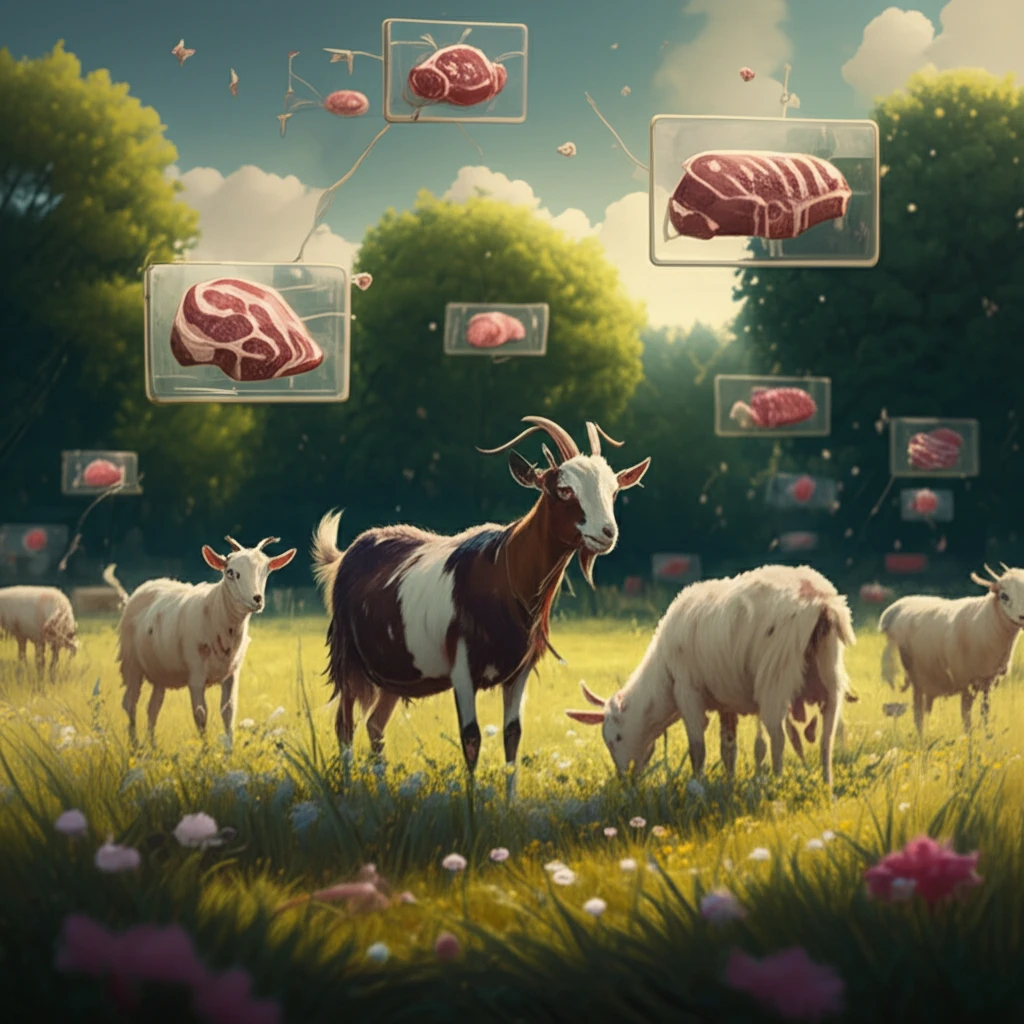
Unlock Better Goat Meat: How Supplementation Can Transform Pasture-Raised Cuts

"Discover the secrets to optimizing tissue composition in goat meat through strategic supplementation. A game-changer for farmers and conscious consumers alike."
In the rolling landscapes of northeastern Brazil, goats stand as a cornerstone of local agriculture. Yet, the unpredictable rainfall patterns of the 'caatinga' present significant hurdles. The scarcity and inconsistent quality of natural forage can drastically affect goat productivity and the quality of their meat. This directly impacts the livelihoods of farmers and the availability of quality protein for consumers.
To counteract these challenges, innovative grazing methods are being explored. Among the most promising is strategic supplementation—the practice of enriching the diets of pasture-grazing animals with protein concentrates, silage, and hay. This approach aims to bridge nutritional gaps and boost both animal yield and carcass quality. But how does supplementation really affect the final product? How does it transform the meat that reaches our tables?
Recent research dives into these critical questions, focusing on the tissue composition of goat meat under different supplementation regimes. The goal is to fine-tune feeding strategies, improving meat quality while supporting the economic sustainability of goat farming in challenging environments.
A Lean Protein on the Rise
Goat meat has been established as lean meat with favourable nutritional quality, and its attributes are concordant with present-day consumer demands for leaner and nutritious meat. The meat is popular globally for these same qualities. Quality, however, is highly sensitive to handling: goats are very sensitive to stress, and stress before slaughter impacts glycogen levels and overall meat quality. Many farmers who raise meat goats, meanwhile, know very little about this animal protein and its nutritional profile.
Quality Assurance from Farm to Table
The standard approach centers on total quality management and food-safety systems such as HACCP, which assure consumers of the wholesomeness and quality of U.S.-produced goat meat products. Because quality parameters are extremely important to consumers selecting meat, both pre- and post-mortem factors must be considered carefully to improve goat meat quality. Producers in turn emphasize quality livestock and traceable farm-to-table supply chains as the basis for healthy meat and unbeatable taste. Consumer expectations reinforce this, with reviews valuing standards that deliver goat meat with no gamey smell and fragrant skin and bones.
From Wild Goat to Global Staple
The domestic goat was domesticated from the wild goat of Southwest Asia and Eastern Europe and belongs to the family Bovidae, making it closely related to the sheep. Historically, goats have been valued as a remarkable source of high-quality milk, which contains less lactose and serves as a substitute for people sensitive to cow dairy. Goat meat also has deep roots in diaspora cuisine, with African markets and vendors offering fresh cuts, skin-on meat, and delivery services. Because the meat often has a distinctive odor, its preparation has long required special attention from cooks.
The Science of Supplementation: Muscle, Fat, and Bone
A groundbreaking study assessed the impact of concentrate supplementation on the tissue composition of commercial cuts from cross-bred F1 goats (Boer × SPRD) raised in native pastures. Twenty-four male goats, around 120 days old and weighing about 15.52 kg each, were divided into four groups. Each group received a different level of concentrate supplementation: 0.0%, 0.5%, 1.0%, and 1.5% of their body weight in dry matter. By the end of the 218-day study, the goats were slaughtered, revealing significant differences in their carcass composition.
- Muscle Boost: Supplementation increased the weight of muscle in all five commercial cuts.
- Fat Factor: Both the weight and yield of fat tissue were boosted by supplementation.
- Ratio Matters: Supplementation decreased the muscle-to-fat ratio, which impacts meat tenderness and flavor.
- No Muscle Proportion Change: The proportion of muscle within each cut remained consistent, regardless of supplementation level.
Feeding, Composition, and Quality Under Study
Scientific research has been conducted on the quality and composition of goat meat, as well as on the management, feeding, and genetic aspects of goat meat production. Reviews note that goat meat is increasing in popularity worldwide because of growing demand for lean and nutritious meat, making an understanding of the factors affecting quality essential. Recent work has examined the enrichment of goat meat with n-3 polyunsaturated fatty acids and the effects of such enrichment on meat quality and stability. Quality also differs across nutritional aspects and flavor, which lets consumers choose cuts that best suit their cooking and satisfaction.
Challenges in Quality, Logistics, and Uptake
A key counterpoint is that maintaining quality across borders is demanding: one exporter describes how goat meat must be carefully cleaned, cut, and hygienically packaged before freezing to preserve freshness for safe international delivery. Institutional demand can also be slow to build, though a signed MoU now has the ITBP procuring Pahadi sheep and goat meat from Himachal Pradesh's cooperative sector, opening an estimated ₹90 lakh annual business for local cooperatives in its first phase. Meanwhile, much popular attention to goats focuses on their hardy climbing behavior rather than on meat production, a reminder that perceptions of the animal are not always centered on its meat quality.
A Low-Fat Rival to Lamb and Beef
Goat meat is described as an alternative source of low-fat-content red meat with a healthy fatty acid profile compared to lamb and beef. In Australia, goat meat has been cast as the poor cousin of the red meat sector, though that could change. Meat scientists at the University of New England have been testing goat meat eating quality, and their results are promising. Together these accounts position goat meat as a favorable, underused alternative within a market long dominated by lamb and beef.
Transforming Goat Farming: A Path to Premium Meat
This research provides a strong foundation for transforming goat farming practices in regions like northeastern Brazil. By understanding the precise impacts of supplementation on meat composition, farmers can strategically manage their feeding regimes to produce higher-quality, more marketable cuts. This not only enhances their economic prospects but also meets the growing consumer demand for ethically raised, nutrient-rich meat. As the industry embraces these findings, expect to see better quality goat meat gracing our tables, supporting both rural communities and conscious consumers.
An Undervalued Protein with Growing Evidence
Taken together, the research consistently frames goat meat as a lean and nutritionally favorable red meat whose commercial potential has not yet been fully realized. The evidence suggests that animal welfare, production practices, and post-harvest handling all influence eating quality and consumer acceptance. Much of the work, however, is early-stage or region-specific, so conclusions should be read with appropriate caution. On balance, the literature points toward goat meat as an underused protein with room to grow if quality management advances alongside production.
Grading Systems, Processing, and Market Growth
Future trends point toward production, processing, and commercial potential for sheep and goat processed meat products. Recent studies are also mapping carcass and meat quality characteristics, including how live weight at slaughter affects meat quality and chemical composition in muscles of young goats. At the same time, limited research on goat meat quality and the lack of an adequate grading system are called out as major issues needing attention from industry and researchers. US market analysis adds that current trends, immigration policies, and marketing strategies will shape how goat meat is commercialized going forward.
Perception, Pricing, and Distribution Hurdles
Public perception remains a systemic obstacle: some Americans regard goat meat negatively, even though goats are actually fastidious eaters that prefer browsing on woody shrubs and trees rather than eating just anything. Market transparency is another layer of the challenge, with US farmgate, wholesale, and retail goat meat prices tracked through price histories, trends, and forecasts updated monthly. Wholesale foodservice suppliers, offering fresh and frozen meat alongside seafood, act as key distribution channels that determine how widely such products reach commercial kitchens.
Livelihoods Tied to a Growing Sector
Behind the production statistics are real livelihoods, from smallholder herders to diaspora communities whose culinary traditions revolve around goat meat. Whether raising goats translates into meaningful household income depends heavily on reliable markets and fair pricing, especially in rural and border regions. While region-specific figures remain unevenly documented, the human dimension of goat meat production is clearly bound up with cultural identity, food access, and economic opportunity. These impacts deserve closer attention as the sector expands.