
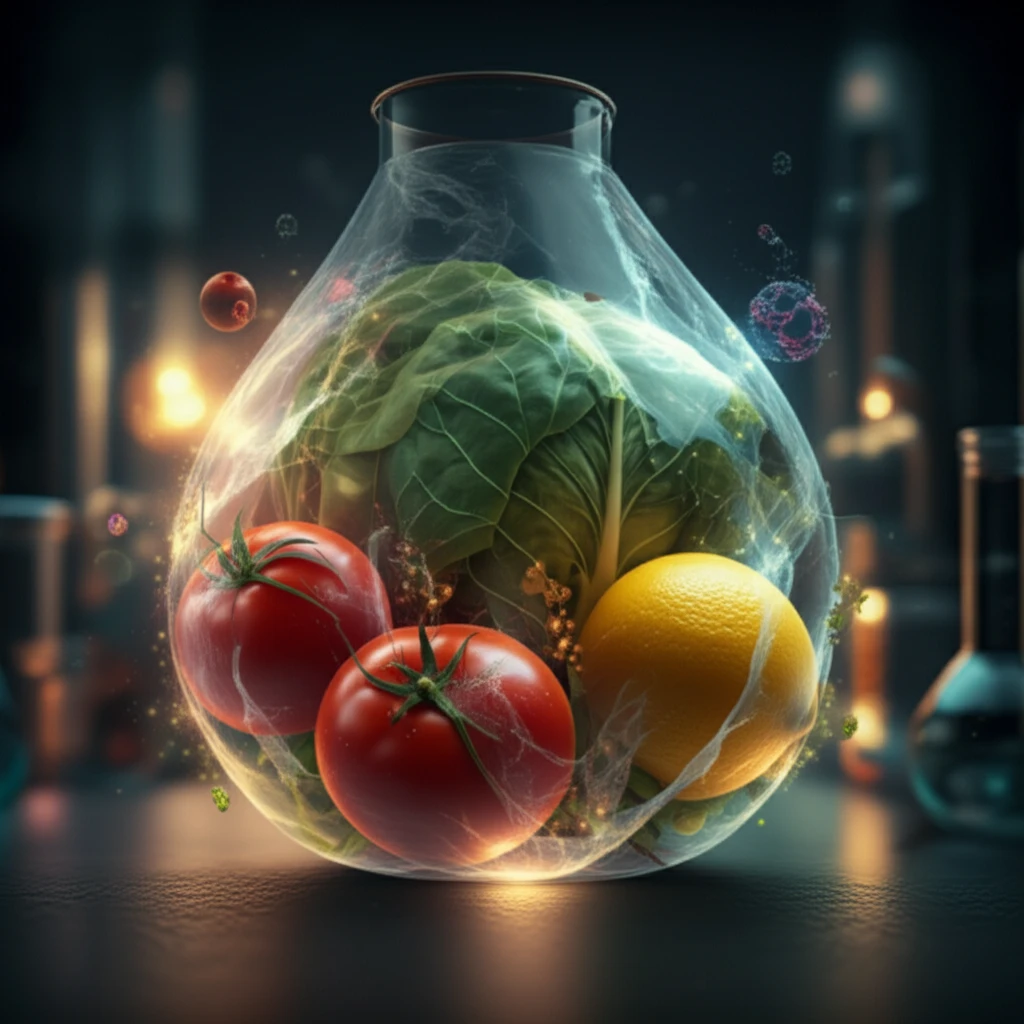
Edible film protecting food with antioxidants

Edible Films: The Natural Way to Keep Food Fresh Longer

"Unlock the science behind edible films and coatings packed with natural antioxidants for safer, longer-lasting food."


Food spoilage, primarily driven by lipid oxidation, is a significant concern for consumers and the food industry alike. Oxidation not only diminishes the quality of food but also leads to unpleasant flavors and potential health risks. While conventional methods like vacuum packaging and synthetic additives have been employed, a growing interest lies in harnessing the power of natural antioxidants.

Enter edible and active films and coatings: an innovative approach that integrates natural antioxidants directly into the packaging material. These films, made from edible polymers, act as carriers, slowly releasing antioxidants to protect food from spoilage. The beauty of this method lies in its potential to replace synthetic additives with safer, consumer-friendly alternatives.

This article explores the science behind these edible films, examining their composition, antioxidant properties, and effectiveness in extending the shelf life of various food products. We'll delve into the types of natural antioxidants used, how they interact with different film matrices, and the impact on the overall quality and safety of food.

The Science of Edible Films: A Natural Defense Against Spoilage

Edible film protecting food with antioxidants

Edible films and coatings are thin layers of edible material applied to food surfaces. They offer a dual benefit: acting as a barrier against external factors like moisture and oxygen while simultaneously delivering active ingredients, such as antioxidants, directly to the food. This targeted approach is particularly effective for combating lipid oxidation in foods high in fats and oils.

The effectiveness of edible films hinges on several key factors:

  • Film Composition: The type of edible polymer used (e.g., chitosan, cellulose derivatives, proteins, lipids) influences the film's barrier properties and its ability to release antioxidants.
  • Antioxidant Type: Various natural antioxidants, including plant extracts, essential oils, and by-products, possess different antioxidant capacities and interact differently with the film matrix.
  • Environmental Conditions: Temperature and humidity can significantly impact the release rate of antioxidants and the overall effectiveness of the film.
  • Film properties: Flexibility, Tension, Structural Resistance to Water
Researchers are actively exploring ways to optimize these factors to create edible films with enhanced antioxidant properties and controlled release mechanisms. This includes investigating novel combinations of polymers and antioxidants, as well as exploring new processing techniques.

The Future of Food Preservation: Natural, Sustainable, and Effective

Edible films and coatings represent a promising avenue for enhancing food preservation using natural and sustainable methods. By incorporating antioxidants directly into the packaging material, these films offer a targeted and effective way to combat lipid oxidation and extend the shelf life of food products.

While challenges remain in optimizing film composition and antioxidant release, ongoing research is paving the way for wider adoption of this technology. As consumers increasingly demand natural and eco-friendly food packaging options, edible films are poised to play a significant role in the future of food preservation.

Moreover, Edible films are not just limited to extending the shelf life of the product, but also help maintain the quality and freshness of food product.

About this Article -

This article was crafted using a human-AI hybrid and collaborative approach. AI assisted our team with initial drafting, research insights, identifying key questions, and image generation. Our human editors guided topic selection, defined the angle, structured the content, ensured factual accuracy and relevance, refined the tone, and conducted thorough editing to deliver helpful, high-quality information.See our About page for more information.

This article is based on research published under:

DOI-LINK: 10.1016/j.tifs.2017.08.009, Alternate LINK

Title: Edible And Active Films And Coatings As Carriers Of Natural Antioxidants For Lipid Food

Subject: Food Science

Journal: Trends in Food Science & Technology

Publisher: Elsevier BV

Authors: Sophie Ganiari, Evanthia Choulitoudi, Vassiliki Oreopoulou

Published: 2017-10-01

Everything You Need To Know

1

How do edible films and coatings work to keep food fresh for a longer period of time?

Edible films and coatings primarily combat food spoilage, especially lipid oxidation, by acting as a barrier against external factors like moisture and oxygen. Simultaneously, they release natural antioxidants directly onto the food surface, which helps in preserving its quality and extending shelf life. This targeted approach is effective for foods high in fats and oils, where lipid oxidation is a significant concern.

2

What are the key factors that determine how effective edible films are in preserving food?

The effectiveness of edible films is determined by several factors. These include the film composition or the type of edible polymer used (such as chitosan, cellulose derivatives, proteins, or lipids), the type of natural antioxidant incorporated (like plant extracts or essential oils), and the environmental conditions (such as temperature and humidity) under which the food is stored. Optimizing these factors is critical for creating films with enhanced antioxidant properties and controlled release mechanisms.

3

What role do natural antioxidants play in extending the shelf life of food when used in edible films?

Natural antioxidants play a critical role in edible films by preventing or slowing down lipid oxidation, which is a major cause of food spoilage. By incorporating these antioxidants directly into the film matrix, they can be slowly released onto the food surface, effectively protecting it from deterioration. This method offers a safer alternative to synthetic additives, aligning with consumer preferences for natural and sustainable food preservation methods.

4

What are the implications of using edible films and coatings beyond just replacing synthetic additives?

While the focus is on natural antioxidants, the broader implications extend to reducing reliance on synthetic additives in food packaging. Edible films and coatings also contribute to sustainability by potentially reducing food waste through extended shelf life and offering biodegradable packaging solutions. Further research could explore the use of edible films in conjunction with other preservation techniques to maximize food safety and quality.

5

What does the future hold for edible films and coatings in terms of advancements and potential applications in food preservation?

The future of edible films involves optimizing film composition, exploring novel combinations of polymers and antioxidants, and developing new processing techniques to enhance antioxidant properties and control release mechanisms. There is also potential for expanding their application to a wider range of food products and integrating them with smart packaging technologies for real-time monitoring of food quality. However, factors such as cost, scalability, and regulatory approval need to be addressed for widespread adoption.

Newsletter Subscribe

Subscribe to get the latest articles and insights directly in your inbox.